Stock markets plummet amid the risk of a protracted conflict with Iran
The Ibex 35 fell 4.55% in a day dominated by nervousness and selling, while oil experienced a further 7% increase, reaching $83.
-
CAT -
CAST
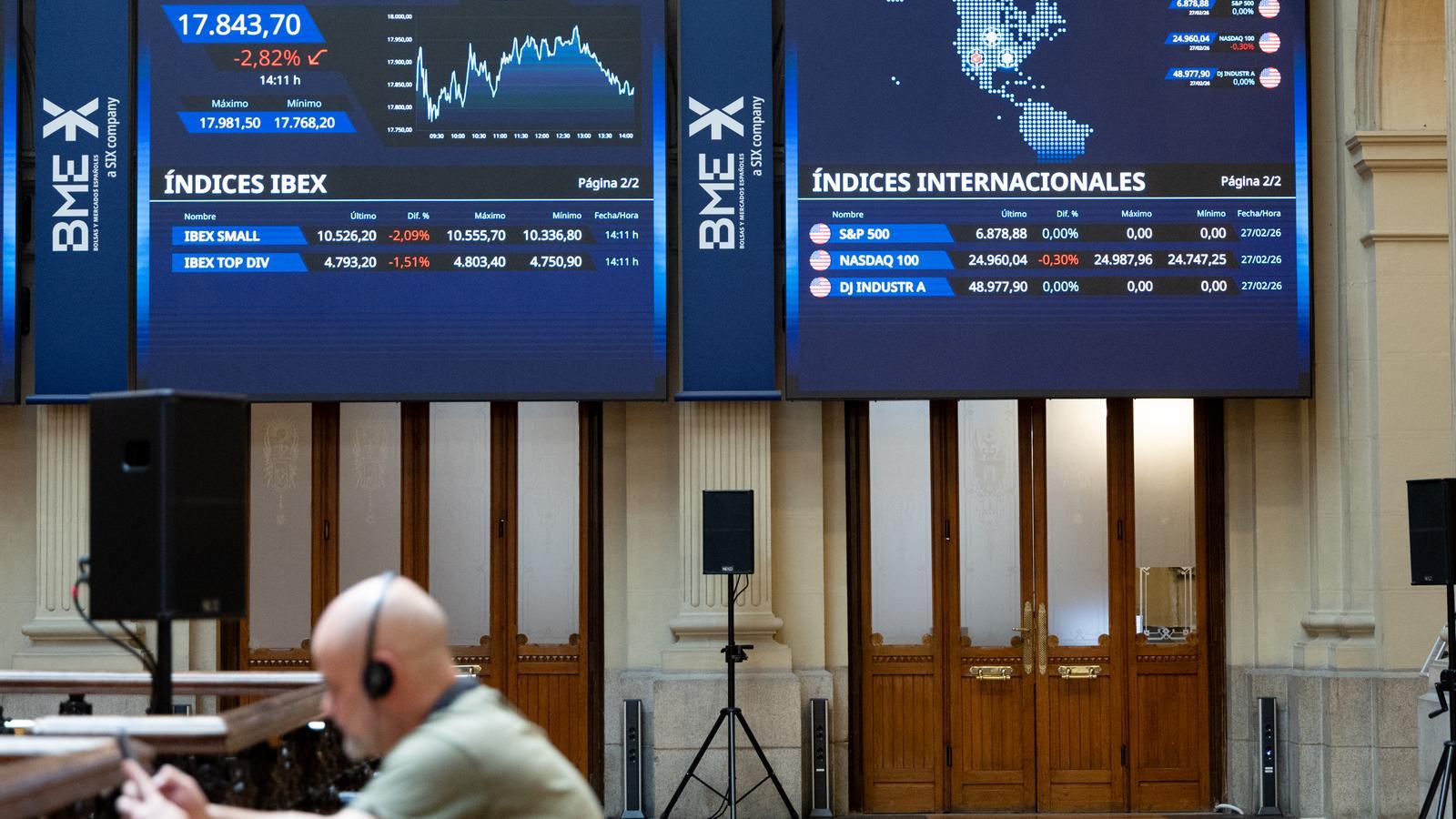
BarcelonaOn Monday the blow seemed less severe, although the trading session ended with losses, but this Tuesday the stock markets plummeted. The Ibex 35, the main benchmark of the Spanish stock market, fell 4.55% despite holding above the 17,000-point level, after reaching record highs well above 18,000. The only stock to gain ground was Repsol, with an advance of over 3%. The rest of the Ibex stocks accumulated declines; Acciona (-11.77%), Solaria (-10.46%), and Acerinox (-9.46%) were the hardest hit. The messages coming from the White House regarding the conflict with Iran, far from calming the situation, have made investors more nervous, who anticipate a longer conflict than expected.
The attacks by the US and Israel, on one side, and those by Iran, on the other, show no signs of slowing down, and the market has closed de facto The Strait of Hormuz, through which oil and gas flow to satisfy a large part of global demand, especially that of China and other Eastern countries. Analysts detect "significant" risks of an escalation of the war throughout the Middle East and of its duration.
In Tuesday's session, losses gained ground and the boards turned red. The other European markets also experienced a day dominated by selling. The Euro Stoxx 50, which includes the largest companies in Europe by market capitalization, fell by more than 3%.
The rest of the European stock exchanges followed the same trend, moving further away from recent all-time highs. The British FTSE lost 2.75%; the German DAX, 3.44%; The French CAC fell 3.46%, and the Milan stock exchange registered the steepest decline, at 3.92%. The trend is less pronounced across the Atlantic, where, despite the drop in Dow Jones futures before the opening bell, the benchmark Wall Street index in the US ended the day with a decline of nearly 1%. Bonds are rising.
In contrast, fixed income has seen an upward shift in terms of bond yields. The 10-year US Treasury note is showing a 0.2% increase, reaching 4.06%. In Europe, the German Bund—the benchmark for the European debt market—is yielding over 2.75%, and the Spanish bond is hovering around 3.20%. The shift of funds towards lower-risk assets is a common market response, as explained by Jan Jonckheere, professor of international trade at OBS Business School: "In times of war, capital flees to safe-haven assets such as gold, US bonds, or the Swiss franc." "There are significant risks of escalation and longevity" in the conflict with Iran, according to experts. Brent crude, the European benchmark, has climbed above $83 a barrel, with an increase of around 7% today. The price of natural gas, meanwhile, has risen by over 40%, reaching new highs since February 2025 following the confirmation of the closure of the Strait of Hormuz, through which 20% of the world's oil and gas passes. All of this also suggests potential increases in electricity prices.
In this context, the euro is losing value against the dollar, falling to around $1.15, as the US currency regains its status as a safe haven in times of uncertainty, as does gold, which, nevertheless, saw its value decline by around 4% on Tuesday.
But this escalation of tension could be just the prelude to a deeper crisis. According to Joan Escuer, a geologist and professor at Charlemagne University in Andorra, "the world may be forced to rely on lower-quality, more technically complex deposits, which establishes a structurally higher price floor. If the conflict drags on, a global crisis is imminent, with prices potentially exceeding $130 per neighborhood."
