Joan Tubau: "Spend aggressively on what you love and cut back on everything else"
Economist
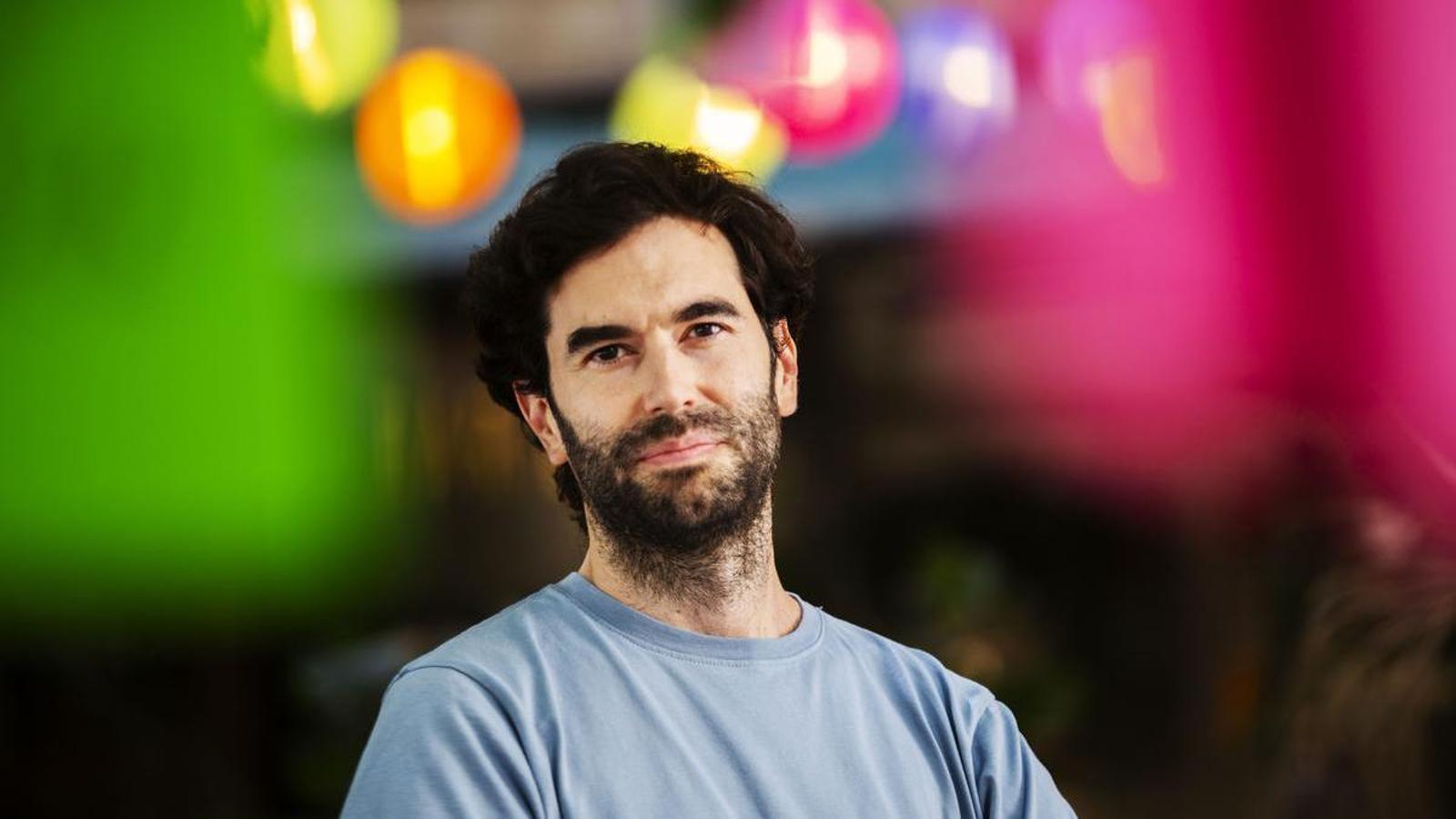

BarcelonaHe wants to explain economics in jeans and the photo on his phone doesn't lie: casual, on a trip to Morocco ten years ago. He never wears a tie and doesn't have LinkedIn either. He studied economics because he listened to Fabià Estapé on TV3 and now he uses economics to explain day-to-day decisions. He is an associate professor at UPF and UVic-UCC, founder of the Kapital platform (which has 23,000 subscribers on Substack and 30,000 listeners on Spotify) and author of fuck you money (Península).
Do you ask for the bank account on the first date?
— I haven't done it, but I do like talking about money. Couples work if they are on the same page from a financial point of view. I can get to know someone by seeing how they spend and save.
What do you see?
— If they prioritize enjoying the present, building something long-term, if money is important to him or her. It would be difficult for me to be friends with someone with whom I disagree on how they spend or who does not treat others.
What should the money be spent on?
— The mistake we make is spending a little bit on everything. The best advice is to spend aggressively, without feeling guilty, on what you truly love, but then cut back on everything else. Because resources are always scarce, whether it's money or time.
Does earning money depend on me? Or on my conditions?
— Both things. We live in a consumerist environment that pushes us to spend, and you can either fall for it or ignore it. As social animals, we often spend more than we should. Then we have the economic context: costs have risen a lot, inflation is not at all controlled, there may be low wages, skyrocketing housing prices, et cetera, and this means that the money we have left at the end of the month is scarce. This complicates everything, but you have to face it and think about how you can earn more capital to be able to save, even if it is to leave it to the next generation. This is how countries have grown.
Saving was the parents' mantra.
— And it is a good mantra. Today's savings mean that I am keeping options for tomorrow.
If I want to earn more money, what should I do? Help me. What am I doing wrong?
— First, the money you have saved must be invested; it is mandatory in a context where there is inflation. Because if you only save, the down payment for an apartment moves further away every day, because savings grow by 2% but the apartment by 5% or 7%. The sensible way to invest in the stock market, if you believe the economy will do better, is to look for a diversified and indexed portfolio, which should cost you at most 0.5% annually. And second, money must be spent. I would invest in human capital, because it is what will make you earn more money tomorrow. Whoever has more human capital is the one who has the highest salary.
What is human capital?
— Three things. One, the knowledge you have, which must be specific and, therefore, difficult to acquire, because if I can get it from ChatGPT, it is worth nothing. Two, your reputation in the market, which is how you are perceived. And three, the people you know, your network. A carpenter knows how to do a specific thing, which is useful and few people know how to do today, and therefore has the ability to negotiate prices. A lawyer or an economist are more replaceable.
And if I don't trust that the economy will get better, what do I do?
— Buy gold and wait for it to rise. Safe-haven assets behave in a way that is uncorrelated with the stock market. I am optimistic in the long term, but I see that the world will be very unstable in the coming years. I like to have gold in my portfolio.
I read on your Substack that when your son was born you bought him a gold coin as a gift.
— I want to explain to you that money can give you a lot of happiness when you spend it but it can also be useful when you have it in an asset that does not lose value with inflation, because it allows you to decide what you want to do tomorrow.
Is this fuck you money?
— It is the idea that money is also useful in the negative, when you save it, because it gives you the option to say no to something you do not agree with, to break up if someone does not treat you well, to leave if you are not happy in a job. If my son uses the currency to overcome any of these situations, it will have fulfilled its function. But I would like to think that, when he recovers, he will buy another currency, because you can make decisions more calmly if you have a safety cushion.
You say that the middle class does not want to be free. Let me dispute that.
— Money buys the freedom to decide what you do with your 24 hours. You have to be very rich internally to give meaning to the day when you don't have to go to work. Because society tells you that happiness is in consumption. I believe it is in having control of your life.
Man, a house with a pool sounds good.
— Of course, money buys happiness, let's not be hypocrites, but up to a point. There are studies that say that in the United States starting from 70,000-80,000 dollars a year, earning an extra euro has a cost that you have to value: perhaps you have been promoted at work and that is good, if you like it, but perhaps the job does not suit you and it demands more hours, and it does not allow you to see your family as much.
Where is this threshold, in our home?
— With inflation it is hard to say, but it would be between 50,000 and 60,000 euros. If you go from earning 25,000 to 50,000 euros, your life changes in a very positive way, but if you go from 50,000 to 100,000, even if the increase is greater, your life will change less. And if you go from 100,000 to 1 million, the same. That is why you must obsess over increasing your income in these initial stages, but not as much when each additional euro buys you less well-being and steals more of your time.
What would be a good savings percentage?
— It depends on income. The point is that, even when you earn little, there is always room to save. Everything is financed now. But just because you can pay for it doesn't mean you can afford it. It's a bad sign when Amazon or MediaMarkt finance a 100 euro purchase for you, because the interest rate is 20-30%, bordering on usury, and they don't hide it, the fine print is clear. It is insane to dedicate a month of your work to buying an iPhone.
What is the last thing you bought that you consider a luxury?
— A designer lamp by Miguel Milà. It is expensive, if we look at utility, but it is very beautiful, and I think I will see it every day. It surprises me that the luxury market exists, that a handbag is worth 10,000 or 20,000 euros, because it is a losing game: there will always be someone who will have a bigger boat than yours. There is a moment when wealth is absurd and even unnecessary. It generates rejection and pity in me for people who need to spend to feel like they are someone.
