Banking talks about banking again
Banco Sabadell defends a future in "solitude", at least "in the short term"

-
CAT -
CAST
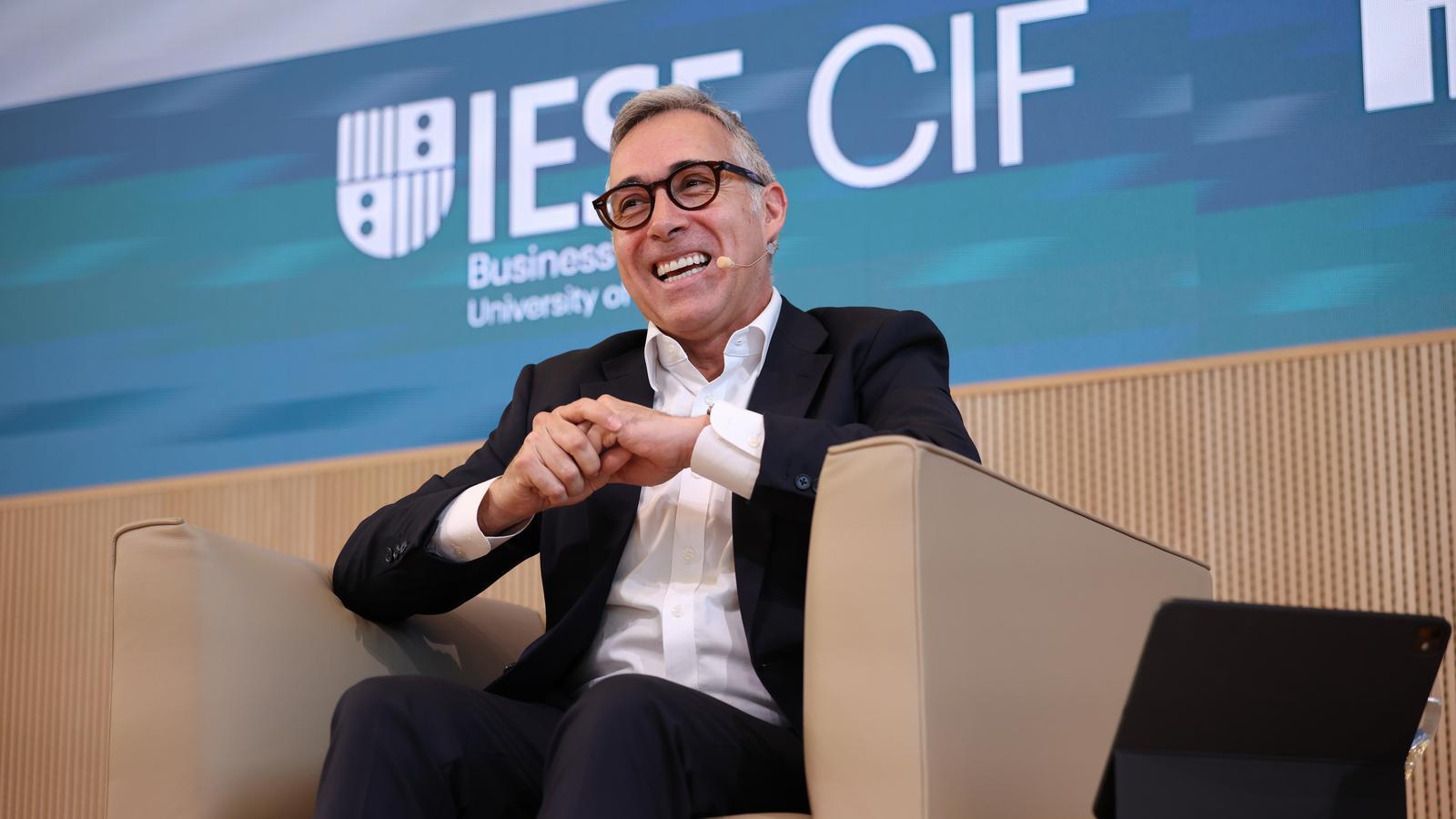
MadridSpain's largest banks are once again talking about the banking business at financial conclaves. It's not that they haven't talked about it until now, but there was an "elephant in the room" that overshadowed the media spotlight: BBVA's hostile takeover bid for Banco Sabadell. Even though senior executives in the financial sector strived to explain how the business worked, headlines in the media didn't move beyond this framework – it also helped that at these meetings no one hesitated to ask about the operation. But since the majority of Sabadell's shareholders decided not to accept BBVA's offer, that chapter is now history, and the sector's conclaves are witnessing it, as attendees at the first day of the financial forum organized annually by the Iese business school in Madrid were able to verify this Wednesday. The meeting ends tomorrow, Thursday, and will feature the main figures of Spanish banking, but also other players in the sector.
Beyond a few questions about what's happening outside the financial world – CaixaBank's CEO, Gonzalo Gortázar, was asked as a Real Madrid fan about the elections at Real Madrid, although he dodged any controversy by leaving the debate "for next year" – Wednesday's discussions in the Iese's main auditorium revolved around the sector's transformation, investment in technology, mortgages, and dividends. The impact of geopolitics on banking, the taxes paid by entities, and the regulation to which they are subject are also back on the agenda.
The sector applauds it – the economy sections are identified by their salmon color, but those who star in them are usually wary of gossip – while others find it less "exciting," as was commented in informal conversations during the days. "We are a bit boring," joked a former executive from the sector who admits he finds geopolitics or macroeconomics more "fascinating."
If one looks at the horizon, a similar movement to that of BBVA-Sabadell is not foreseen, or not in the short term and not hostile either. One of the protagonists, in fact, has made it clear: "We will continue alone, at least in the short term," stated the CEO of Banco Sabadell, Marc Armengol, for whom Wednesday's event was his first major public appearance in Madrid since becoming the bank's number two. Armengol has only opened the door to possible acquisitions in the future, provided they do not involve any of the large entities. "They already have a considerable size and it surely affects the health of [banking] competition in the country," he said. Sabadell is now looking to strengthen itself in the Catalan and Spanish market, streamline its operations, especially customer relations, and fulfill promises to investors. since he became the bank's number two. Armengol has only opened the door to possible acquisitions in the future, provided they do not involve any of the large entities. "They already have a considerable size and it surely affects the health of [banking] competition in the country," he said. Sabadell is now looking to strengthen itself in the Catalan and Spanish market, streamline its operations, especially customer relations, and fulfill promises to investors.
Faced with an audience predominantly of young, suited finance and business students, Spanish banking executives agreed that, despite the international context, marked by the war in the Middle East, the Spanish economy is holding its own, which helps the sector and the banking business, which once again promises good results. However, there are those who do not want to fall into "complacency": "It is necessary not to lose sight of growth," indicated Gortázar.
In fact, despite the optimism that prevails, the sector is not exempt from challenges. One is technological, the implementation of artificial intelligence, and the investment this will entail. "It is a paradigm shift," acknowledged the CEO of CaixaBank about AI. Armengol and the president of Unicaja, Jordi Sevilla, expressed similar views. However, this has a direct impact on branches and employees, although they have all been quick to dispel fears of branch closures or layoffs: "When I look to the future, I see branches and employees," said Gortázar. "[Branches] will not become obsolete," pointed out Sabadell's number two. On the other hand, what the sector would like to see reduced, and has long expressed without mincing words, is regulation, especially European regulation. "[In Europe] we are diagnosed, perhaps over-diagnosed," stated the president of Unicaja.
