Alella becomes the municipality with the highest income in Catalonia
Five Barcelona regions exceed the average family income in Catalonia, which was €20,789 per person
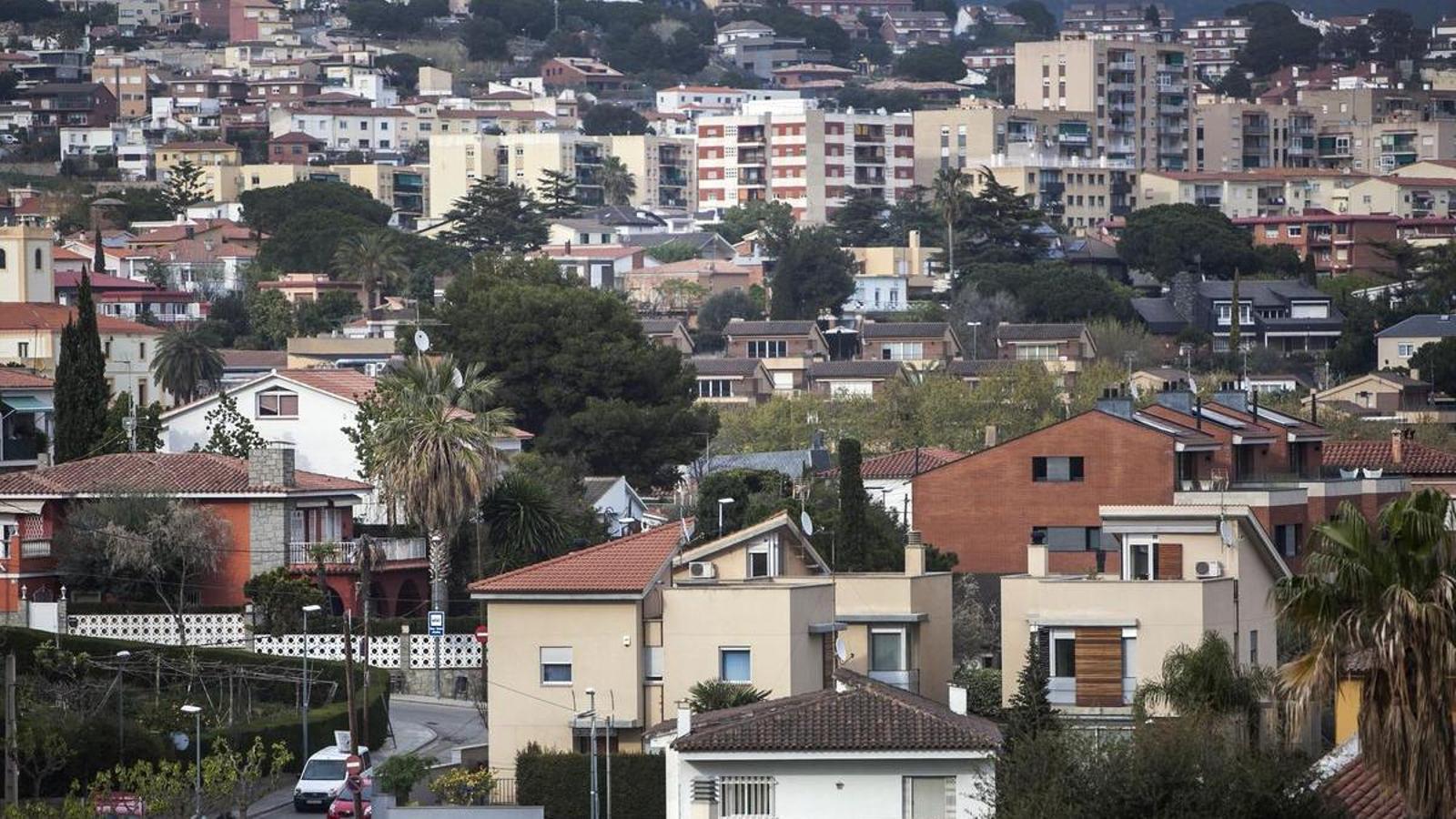

BarcelonaAlella, in Maresme, and Salt, in Gironès, were in 2023 the Catalan municipalities with the highest and lowest family income, respectively, according to data from Idescat, the statistical agency of the Generalitat. This is the first time that the Maresme locality has topped the ranking of the richest municipalities. In total, only five regions –all from the Barcelona demarcation– exceeded the average income of Catalonia, which was 20,789 euros per inhabitant.
Thus, Alella closed 2023 with a gross available family income of 35,425 euros per year per person, above Matadepera (Vallès Occidental), which registered an income of 34,776 euros per inhabitant. Sant Just Desvern (Baix Llobregat), which had topped the 2022 ranking, was the third richest town, with 34,766 euros per capita. The three municipalities, along with Cabrils (Maresme), exceeded the Catalan average by more than 50%, Idescat reported this Wednesday in a statement.
At the other end, Salt (Gironès) closed the ranking with a gross available family income in 2023 of 13,663 euros per person; that is, less than half of the richest locality. It was followed by Lloret de Mar (Selva) and Castelló d'Empúries (Alt Empordà), with 14,009 euros and 14,136 euros, respectively. Two more municipalities, El Perelló (Baix Ebre) and Santa Margarida de Montbui (Anoia) have an income below 70% of the country's average.
According to Idescat, gross available family income is the indicator that "measures the income available to residents of a territory to allocate to consumption or savings." The statistic, which covers the 470 municipalities in Catalonia with a population of more than one thousand inhabitants, offers an average, so it may be partially distorted in some municipalities with a large income disparity depending on the neighborhood or urbanization.
By regions, Barcelonès tops the ranking once again with 23,632 euros per person per year, above Vallès Occidental, with 21,314 euros, and Baix Llobregat, with 21,188 euros. Two more regions, Maresme and Garraf, are above the average for Catalonia, while the remaining 38 regions are below.
At the lower end, Montsià closes the ranking as the only region with an income per inhabitant below 16,000 euros – specifically, 15,287 euros –, above Terra Alta and Noguera, with 16,072 and 16,203 euros per person, respectively.
Increases throughout Catalonia
Statistics show that in 2023, the first full year without the effects of covid on the economy, increases in family income were recorded in all Catalan regions, with Alt Camp being the region where it rose the most, by 12.8% compared to the previous year. It should be taken into account, however, that that year there was still a significant increase in the cost of living, although lower than in 2022, so, in real terms, increases in family income are cushioned by the rise in prices of goods and services that families usually consume, as well as by the increase in housing costs.
Gross disposable family income is broken down into three elements. The first, remuneration for employees, which is families' main income. In this case, Gironès is the region where this variable has the greatest weight on total income, with more than 63%.
A second element is the gross operating surplus, which is the income of the self-employed and property owners. In this case, Cerdanya, with 30%, is the region where the average weight on total family income is highest. Finally, Berguedà, with 29%, is where social benefits (pensions and subsidies) represent a higher proportion of income in all regions.
