When civilization dissolves into the ineffable
Vienna publishes the cult novel 'Picnic at Hanging Rock', by Joan Lindsay, which tells the mysterious disappearance of two girls and a governess during an excursion

-
CAT -
CAST
- Joan LindsayViena EditionsTranslated by Jordi Martín Lloret272 pages / 24 euros
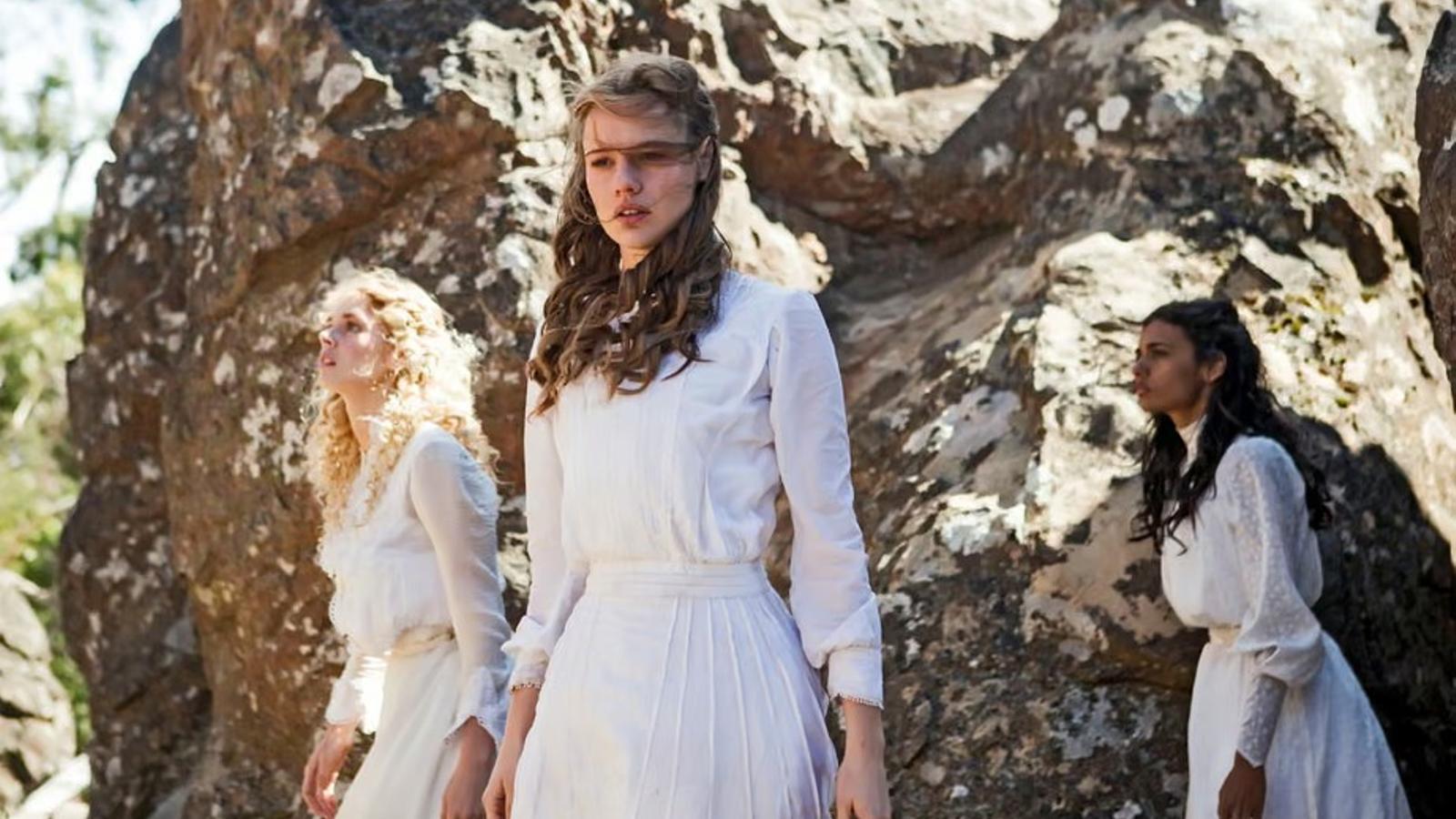
The plot premise of Picnic at Hanging Rock could not be more suggestive, purer, and more perverse at the same time. We are in Australia, on Valentine's Day in the year 1900. A group of adolescent girls from good families at a Victorian boarding school go for a picnic in an imposing spot, in the middle of wild nature, at the foot of an enormous and fascinating volcanic mesa. During the picnic, three of the girls – virginal, innocent, full of joy and curiosity, neatly dressed in white, like angels – and one of the governesses accompanying them disappear while exploring the Rock, basaltic black in color, full of caves and cavities. Of the four who disappeared, only one of the girls reappears. The others are never heard from again.When Joan Lindsay (1896-1984) published the novel in 1967, it was immediately successful and became a cult work, to the point that many readers thought that the events described in it were real. The cult surrounding the work grew even more when filmmaker Peter Weir, author of masterpieces such as Gallipoli, Witness and Master and Commander, adapted it in 1975 and made a wonderful film, full of impure poetry, of grim purity, of enigma and subtle perversity. In this sense, it is very good news that Lindsay's novel has been published for the first time in Catalan, even though the novel is inferior to the film. When I say it is inferior, I mean it is more conventional and has a less hypnotic and less turbulently seductive expressive richness. In any case, the edition published by Viena, in a good translation by Jordi Martín Lloret, is excellent.The irresistible attraction to primordial nature
The symbolic play of forces proposed by the novel could not be more clear, but it has an impactful expressive and emotional power, and allows for multiple readings that not only do not exclude each other but complement and enrich each other. The girls, with their European education, with their meticulously regulated and directed lives, with their showy dresses – boots, petticoats, corsets, gloves...– that physically protect them from direct contact with the exuberant and unknown sensory world that surrounds them, represent the order and civilization of the old continent, they are daughters of the immutable moral and civic-political rigidity that articulates the British Empire and Englishness. During the picnic, however, three of the girls, led by the most beautiful and charismatic of them all, separate from the others. They feel an irresistible attraction to the telluric forces of primordial nature, and they pay the price.As I have already said, this interpretation based on the binary of civilized England-savage Australia extends to other contrasts: childhood and adulthood; virginity and the discovery of sexuality; rationality and atavisms; reality and dream; the familiar and the exotic; the radiance of what is understood and the dark fog of the ineffable... From the disappearance of the two girls and the governess, Joan Lindsay unfolds a narrative in a tone of realistic chronicle that initially focuses on the police attempt to resolve the mystery and the search for the missing, but which, soon, upon realizing that the search is fruitless and that the mystery is irresolvable, focuses on the succession of dramas caused by the incomprehensible disappearance. This is what happens when, in the heart of a rational and civilized world, you introduce a fact or an element that, with its impenetrable existence, disrupts everything: the secure solidity of civilization dissolves into the uncertainty of mystery.Precisely, what makes Peter Weir's excellent film better than Joan Lindsay's notable novel is that the filmmaker never abandons a tone of telluric poetry and oneirism, as the writer does in many chapters to adopt more realistic ways. Even more so: Weir underlines the grimly ineffable dimension of what he tells with a general dreamlike atmosphere and a soundtrack –sustained by the hypnotic melodies of a pan flute– that is of a precious and unsettling primitive delicacy.
