Liadan Ní Chuinn: "Some people believe that not explaining what happened is progressive"
Publish the storybook 'Encara hi sou tots'

-
CAT -
CAST
BarcelonaLiadan Ní Chuinn (Northern Ireland, 1998) is the pseudonym of a writer – who also does not reveal their gender or allow themselves to be photographed – who has revolutionized the English publishing market with their debut. Encara hi sou tots (La Segona Perifèria / Feltrinelli) collects six unsettling and striking stories about the still-open wound of the Northern Ireland conflict in today's society. Translated into Catalan by Ariadna Pous, the book deeply portrays the silences that beat within Irish families and that, despite the passage of time, have become a festering pain passed down from generation to generation. The interview with ARA is a conversation by email.
The book is made up of six very different stories but with several elements in common. How did you decide to bring them together in a single volume?
— Three of them had not been published before. The book has been forming over several years. I had the feeling that getting here and having them all ready was a long process. Tots desapareixem and Daisy Hill were the first. I knew I wanted them at the beginning and at the end.
“There is no one left who can answer my questions,” says the narrator of the first story, We All Disappear. How does the collective silence about the past influence the characters?
— You are right to say that there is a collective silence about the past. In Great Britain there is an ignorance and denial of the truth, of the facts, but even here, within the same territory, an effort is made to maintain this silence. Some people believe that forgetting and not discussing what happened, not explaining it to children, is progressive. It does more harm than good to deny young people their history, to deny them what they need to make sense of the context in which they live. This tension is manifested most clearly, perhaps, between Rowan and his cousin, Shane, in Daisy Hill.
In all stories there is the imprint of a latent violence, often inherited from generation to generation. Does his literature seek to break the silence on this trauma?
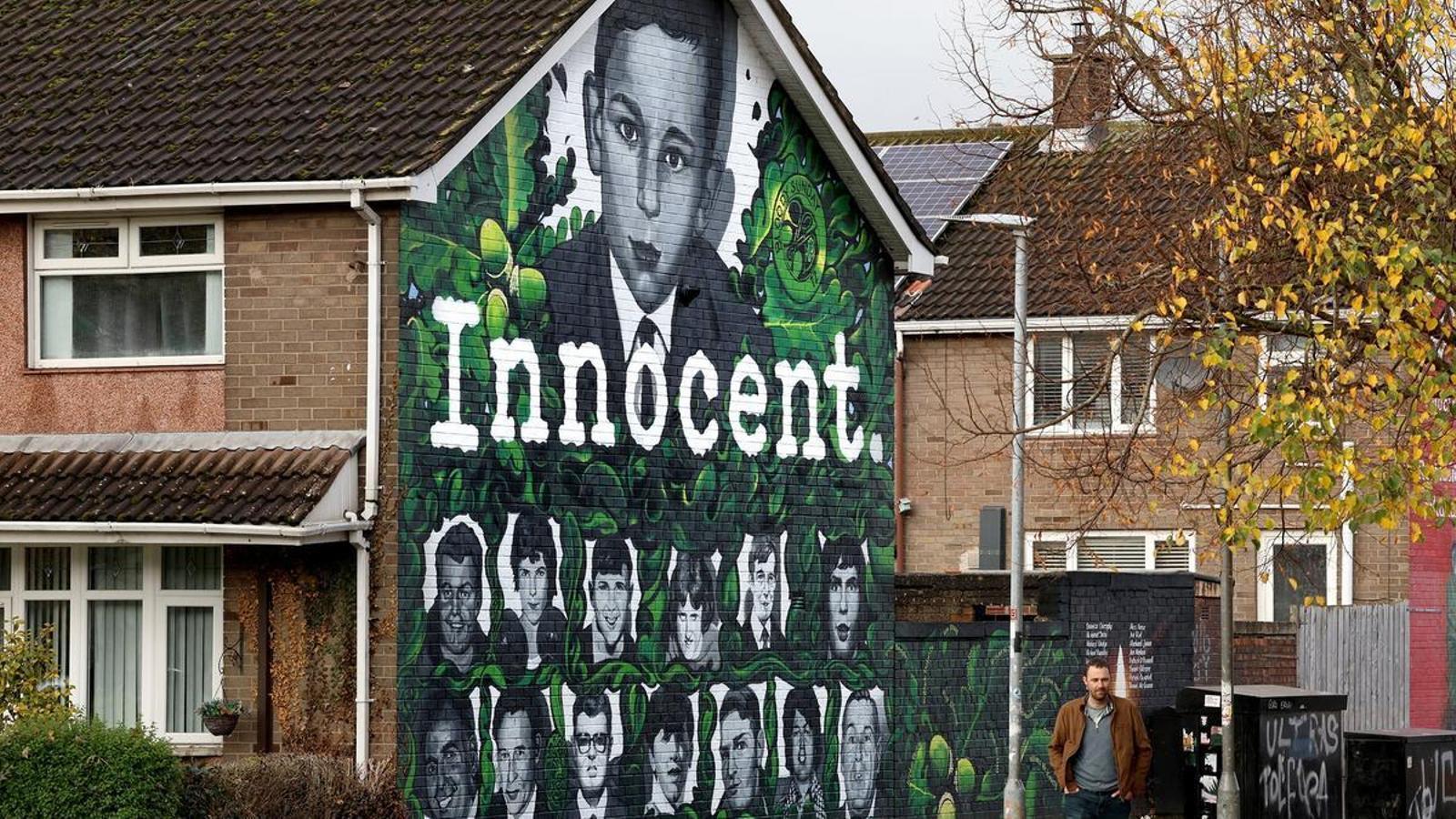
— Growing up is a process of learning about yourself and others, about seeing yourself in your family and seeing them in you. It's important to learn about why your family members are the way they are, and how that has shaped you. It's precisely what Jackie struggles with in "We All Disappear": "What does all this make me?" As a young person growing up here, I feel there's been a push to forget, following the idea that we need to "move on." And I reject that idea, it's false and useless. We need to understand ourselves, understand our communities and our families, and we need to be honest about what was done here and how people are still living with it. I hope these stories can serve as a counternarrative. With the intense efforts of the British state to cover up and hide, remembering what was done here can be seen as a form of resistance.
Some of the characters live with guilt and regret. "The bad guys are the bad guys and the good guys do nothing," writes in the story Mary. Why was she interested in turning all these contradictions into literary material?
— This made me laugh, as, in fact, I would say that all the characters live with guilt and regret! I'm interested in thinking about what we do to each other and why. These emotions, although difficult and dark, stem from a very real and deep sense of empathy. So I wonder how we can consider guilt and regret, and live with and learn from them. As for complicity, I think we all need to think about it more. Why do we do what we do and what is it that we don't prevent?
Bodies are very present in many of the stories. Why do they give them so much importance?
— Before writing Russia, I visited the Ulster Museum, which openly exhibits both the body of a young African woman and human bones found in Ireland. I was thinking a lot about humanization and dehumanization, and what the museum was doing bothered me. I felt very bad for having seen these people and not having brought them flowers. It seemed horrible to me that they were there. To have ripped a person from the ground where they lay and exhibited them for visitors to observe far from their home is a violent act. And this violence affects us all in different ways. It is as this story explains: doesn't it affect the way we see others, the way we see ourselves?
How do you think current society can address the pain caused by British soldiers in the past in Northern Ireland?
— The first step must be to tell the truth. The British state killed men, women and children here; it waged a dirty war that is responsible for the murder of countless people. Its soldiers terrorised generations of people. But the British state maintains that its army was merely a neutral force. The British government recently postponed the release of files on the murder of 14-year-old Julie Livingstone until 2059, by which time all of that girl's siblings will probably be dead. It is not enough, and it never will be. We must demand the truth. One of the largest and most sophisticated armies in the world was deployed here, on its longest "mission" yet, and it killed, tortured and interned civilians; it conspired with loyalist paramilitaries who supported the British, who then committed further atrocities. And the British army is still here, it has bases in Northern Ireland. These loyalist paramilitaries still exist, they still have a hold over their own communities and our police service is not a police service at all.
What impact does the existence of these paramilitaries currently have on the territory?
— On June 18, 1994, local people watched as Ireland played Italy in the World Cup in a pub in Loughinisland, a small village in Northern Ireland. Loyalist paramilitaries who supported the British burst in and shot eleven people, six of whom died. To date, no one has been charged with the massacre. The collusion between the police service and loyalist paramilitaries has been painfully clear. When an eyewitness gave a clear description of the driver of the car in which the killers fled, the police service did not record important details, did not ask her to identify the suspects, and then gave the witness's details to a relative of the alleged getaway driver, who made her fear for her life. In 2016, it was determined that there was collusion between the police service and loyalist paramilitaries. In 2018, when two journalists began working on the case, the police service – despite never having charged any suspect with the murders – arrested both journalists and raided their homes and offices. It was later admitted that the arrest had been "false", i.e., without legal basis, but, as far as I know, no police officer has been sanctioned or disciplined for it.
Is there any closed wound?
— It's not that everything has been buried. These are the police officers driving up and down my street; this is the truth of this rotten little state. As a teenager, I saw them arrest journalists interviewing witnesses to the massacre, and I was scared. Two weeks ago, there was a racist pogrom in the loyalist areas of Belfast. There were damages quantified in millions of pounds, but the police service, as it always does, issued a statement while the houses were still burning to say that it had ruled out the involvement of loyalist paramilitaries. Loyalists set up illegal checkpoints on the roads, stopping cars and demanding to see identity documents. A nurse who called the police service and asked what she should do was told she had to obey. They are the same loyalists who will burn bonfires of pallets with their banners saying "All "}taigs are targetstaigs are Irish, Catholic. This region is, reportedly, the most dangerous place for a woman in Europe. For this book, I have been thinking a lot about the forgotten violence of the British state in Northern Ireland, and this has been, in many ways, my purpose. But I don't want to imply that everything is over. And, ultimately, I want our liberation. This is how we will heal.
