The Brecht of Marta Pazos: aseptic and freeze-dried
The Grec inaugurates with 'The Threepenny Opera' in a monochromatic production with good musical and performer direction
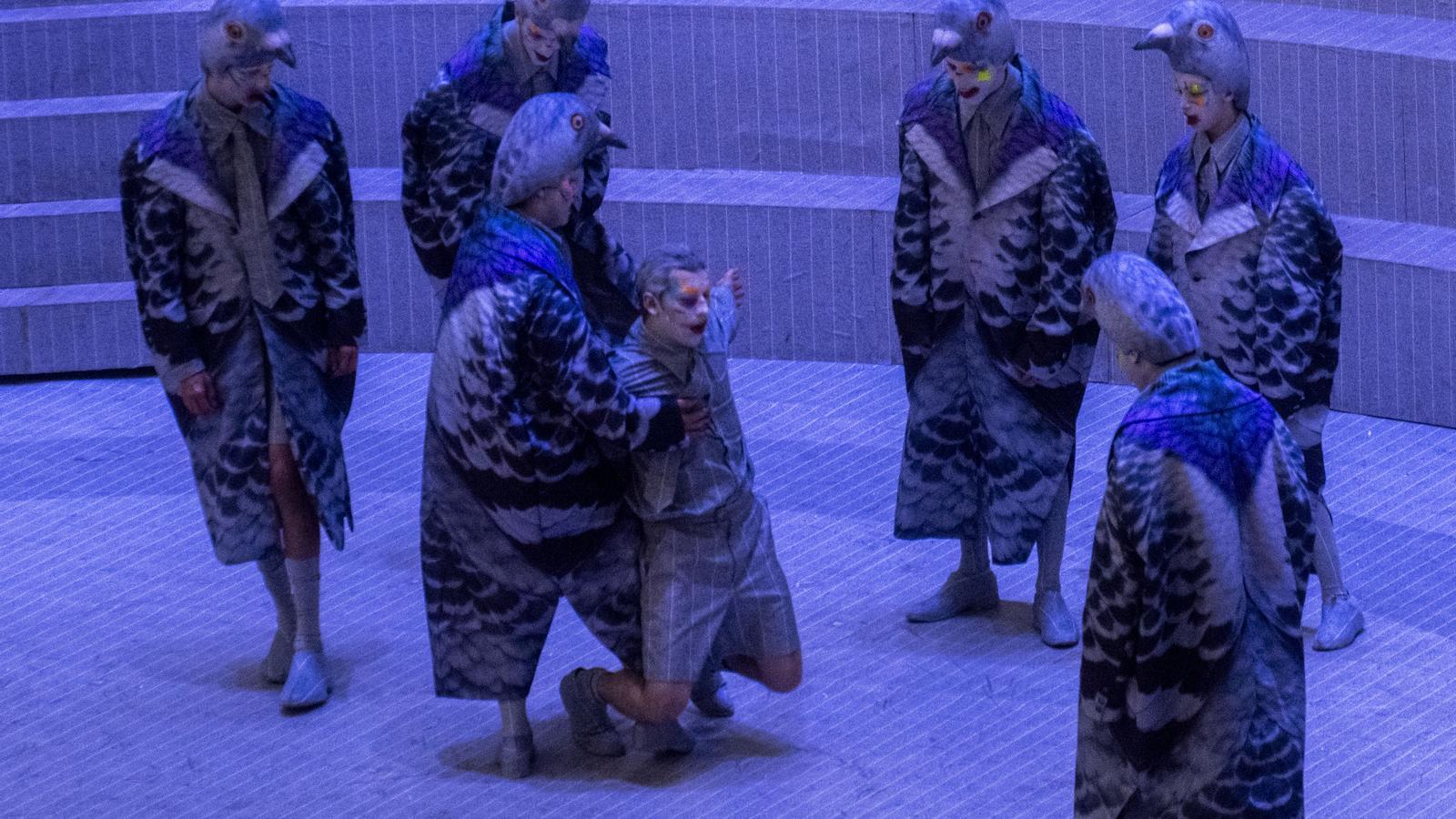
-
CAT -
CAST
- Authorship: Bertolt Brecht and Kurt WeillSet design and direction: Marta PazosMusical direction: Dani EspasaTranslation: Marc RosichPerformers: Nao Albet, Roc Bernadí, Marta Bernal, Arnau Boces, Pablo Capuz, Joan Esteve, Eduard Farelo, Marc Domingo, Clara Mingueza, Miriam Moukhles, Biel Rossell and Júlia Truyol.Teatre Grec. June 29, 2026
Bertolt Brecht and Kurt Weill conceived The Threepenny Opera in a specific context, Victorian London, and in a determined physical space, the underbelly of Soho, inhabited by traitors, murderers, prostitutes, and exploiters. The versions we have known among us — Mario Gas's, premiered at the Romea Theatre in 1984, and Calixto Bieito's, premiered precisely at the Grec Festival in 2002 — varied the context but maintained the physical space. Above all, they maintained the characteristics that define the characters (from stage presence to costume) and the brutality of the capitalist society they describe and satirize.

Marta Pazos, however, has dispensed with all of that with a monochromatic proposal that unifies the scenography, the costumes, and the characters through textures of the color gray. She does this, from the outset, by turning the court of beggars into a flock of friendly pigeons, surely Barcelonans, who liven up the preface of the comedy by strolling among the audience. The director moves away from the many bright colors with which she has dressed the opera The Marriage of Figaro at the Liceu, but maintains its will to imprint a dominant visual mark on any production it directs. However, with this decision, the contrasts disappear, the individuality of the characters fades, and the whole becomes a caricature without depth, closer to the futile elegance of a Marivaux comedy than to the roguish spirit of the German cabaret from which the original work is born; closer to the kind photographs of David Hamilton than to the stark ones of Weegee (Arthur Fellig).
At the beginning, Pazos promises a cabaret that breaks the fourth wall, but in the end there is no interaction with the audience. Among the play's successes are the choreographies (Mabel Olea), good musical direction (Dani Espasa), and careful direction of actors and actresses. It is a committed cast in which Marta Bernal stands out as alter ego of a clownish Marta Pazos and as Mrs. Peachum; the vocal clarity of Eduard Farelo (Peachum); the powerful Song of Solomon from Jenny (Júlia Truyol), and especially Polly by Miriam Moukhles interpreting both the Jenny of the pirates as in the fantastic Jealousy Duo with Clara Mingueza (a wonderful Lucy). Nao Albet's Mackie the Knife is almost a very agitated and unempathetic comic book drawing that improves towards the end, whether in prison or at the gallows. We greatly fear that the fifty years of the Grec will not be remembered for this Brecht.
