Macba Foundation Award for a project about the memory of the patients of the Bétera psychiatric hospital
The Valencians Patricia Gómez and María Jesús González receive the award for an exhibition at the Helga de Alvear Museum

-
CAT -
CAST
BarcelonaThe large psychiatric health city in Bétera (Valencia) went into operation in 1973, but it was never actually inaugurated. When it was built, international psychiatry was already abandoning the model of large isolated hospitals, where patients were separated from society. That is why, in the mid-eighties, the process of transferring patients to general hospitals and other centers began. Twenty-five years ago, only about 80 residents remained there, and about five years ago, there were fewer than 20 left. The drift of this facility had a bizarre moment when, in 2002, the Provincial Council of Valencia announced at the Fitur tourism fair the project for the 'Parc dels Pobles' complex on the grounds of this psychiatric hospital, with attractions such as a recreation of the Albufera and a wax museum.
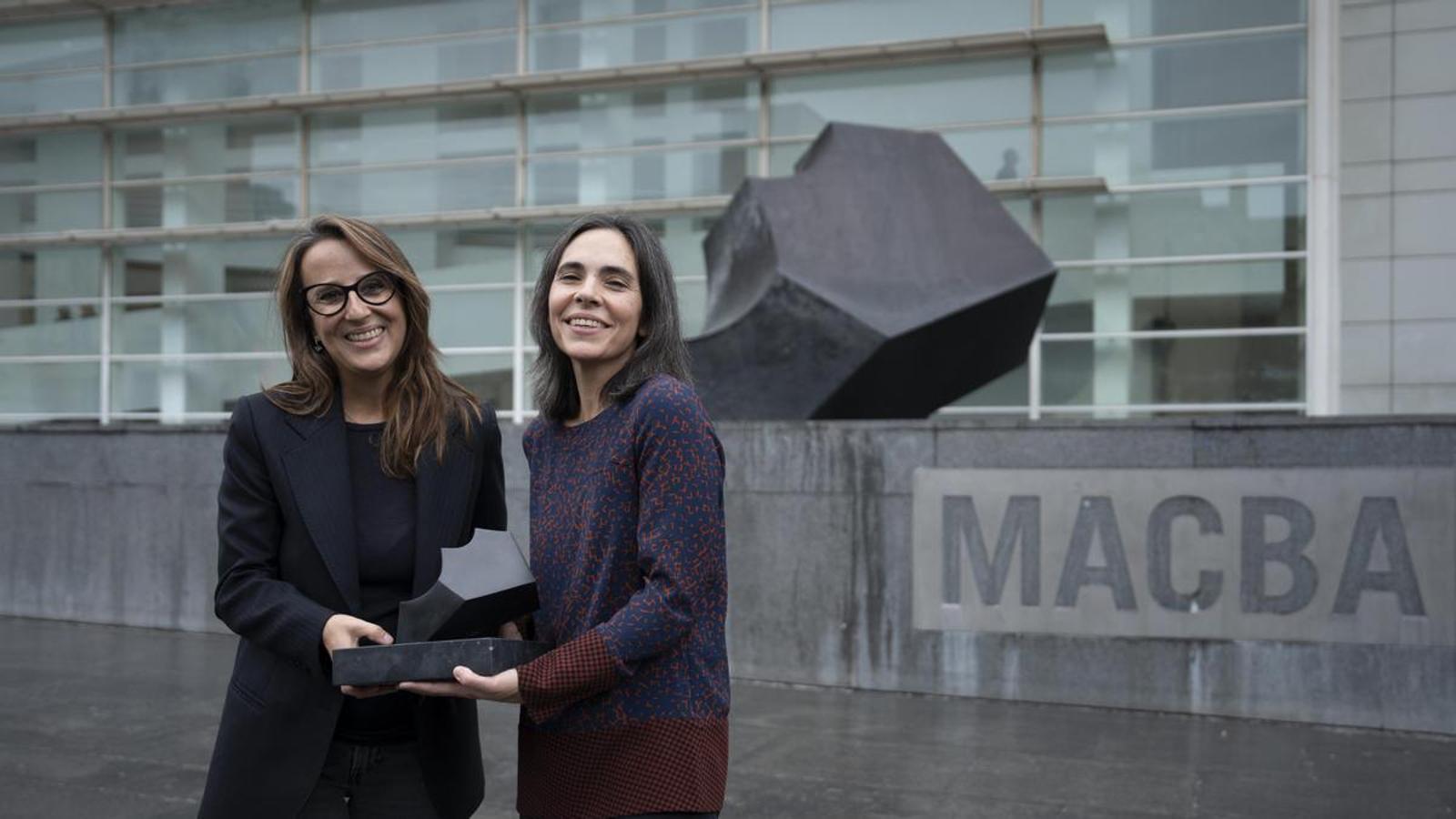
This Monday, Valencian artists Patricia Gómez and María Jesús González, known for making the memory of the vulnerable visible, won the second Fundació Macba Prize for Mirall del món, the exhibition that includes all the work done collecting the traces that the inmates of Bétera left at the site. The exhibition could be seen until a week ago at the Helga de Alvear Museum in Cáceres, and will have a second chapter at the TEA Tenerife Espai de les Arts.
Mirall del món includes photographs, videos, documents, and mural removals using the strappo technique, the same one that was used more than a century ago in the Romanesque churches of the Pyrenees. And for the jury, the work of Gómez and González stands out for "the conceptual and methodological solidity of their work, as well as for the singularity of a proposal that transforms research on memory and human rights into a rigorous, innovative, and interdisciplinary artistic practice." On the other hand, in addition to the Bétera psychiatric hospital, the exhibition includes works arising from the Old Prison of Cáceres, among which is a mural removal of about 23 meters.
The Fundació Macba Award is biennial, national in scope, and is endowed with 80,000 euros, 50,000 of which go to the winner and the rest to the finalists. It is the most economically significant award after the Velázquez Prize. "It is important to me that the Fundació Macba Award be an award of the present," states the president of the Fundació Macba, Ainhoa Grandes. "We award what artists are currently doing," Grandes emphasizes, "because we want them to be present in conversations, to appear in the press, and for collectors, gallery owners, museums, and art centers to talk about them."
Regarding the finalists, in this edition the jury has selected three: Dora García, for the exhibition A Hole in the Real: Dora García, Pablo Picasso and the Legacy of Mining, presented at the Kin Museum of Contemporary Art in Sweden in 2025; Patricia Esquivias, for the exhibitions Al puro ver se ve, at the National Museum of Decorative Arts in Madrid (2025-2026), and Atentamente, at the Fabra Centre d’Art Contemporani in Barcelona in 2026, and Alegría & Piñero, the duo formed by Alegría Castillo and José Antonio Sánchez Piñero, for the exhibition D'anada i tornada, presented at the Andalusian Centre for Contemporary Creation (C3A) in Córdoba in 2025.
The jury for the Fundació Macba Award was composed of the director of the Macba, Valentín Roma; Manuel Segade, director of the Reina Sofia Museum; Manuel Borja-Villel, former director of the Reina Sofia and the Macba, currently a professor at New York University; the journalist and art critic Ángela Molina, and José Roca, the director of the 37th Ljubljana Biennale. The sponsors and benefactors of the award are La Roca Village, Grifols, Fundació Banc Sabadell, Fundació Occident, and Boston Consulting Group (BCG). And as partners, it has Hotel Alma, Majestic Hotel Group, and Bodega Enate.
