Lola Herrera: "I have never been told beautiful so many times as now, when I am 90 years old"
The actress stars in 'Camino a la Meca' at the Goya Theatre, accompanied by Natalia Dicenta and Carlos Olalla

-
CAT -
CAST
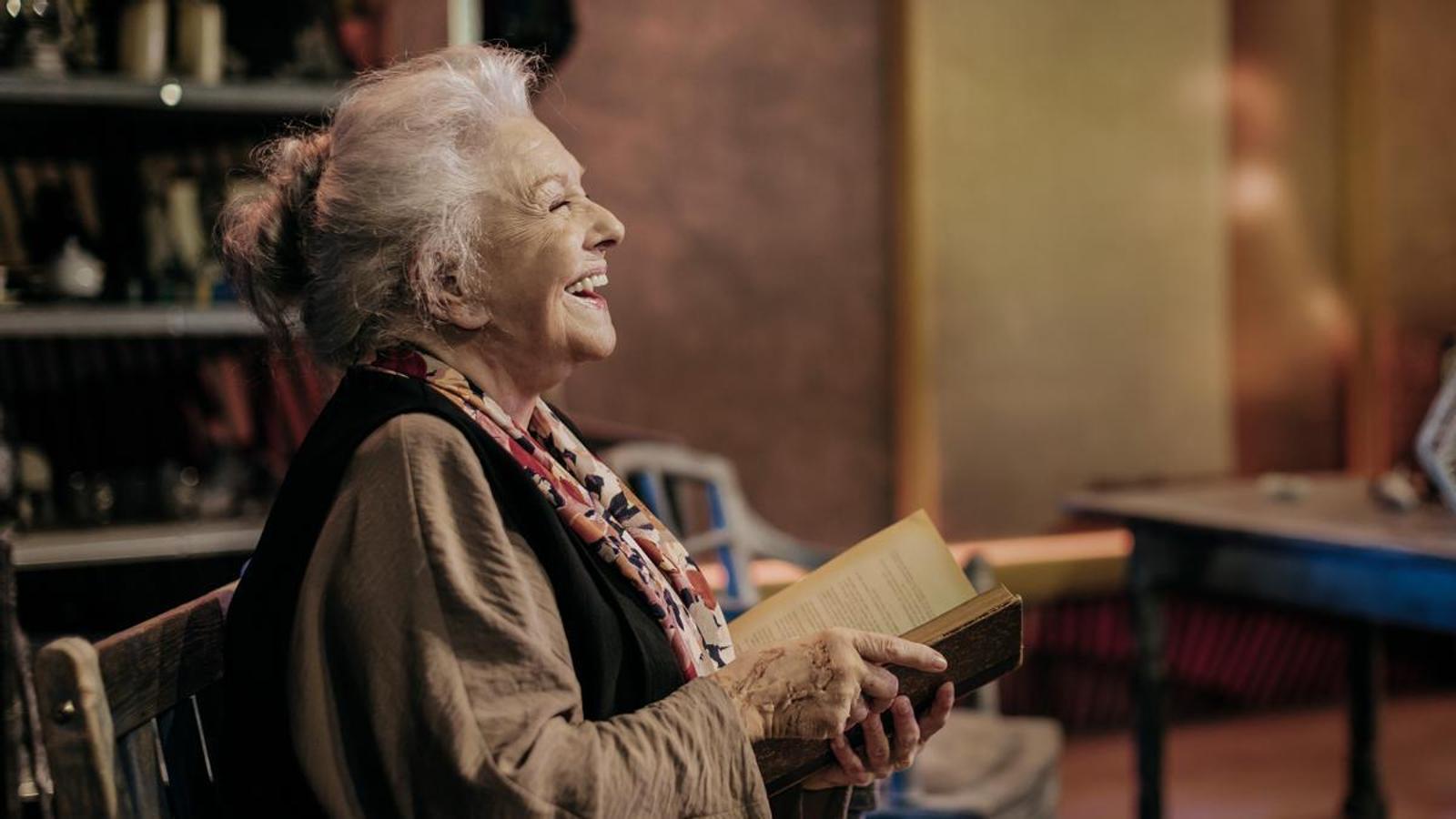
BarcelonaActress Lola Herrera (Valladolid, 1935) explains that she fell and injured her hip, but that when the play begins all pains vanish. "It is a complete liberation to stop being myself and dive into the lives of other women with different problems," points out the performer, who has almost seven decades on stage. For a year now, Herrera has been touring the country with Camino a la Meca, a play written by Athol Fugard and directed by Claudio Tolcachir, which has just arrived at the Goya Theatre, where it will be seen from this Wednesday until May 24. The play is inspired by the true story of Helen Martins, a South African sculptor who fought to embrace the life she desired during the 70s. Accompanied by Natalia Dicenta and Carlos Olalla, Herrera has already performed it nearly 150 times and the audience has not stopped celebrating it.
"I have never been called beautiful so many times as now, when I am 90 years old. My audience comes from afar, from when there was only one television channel and we had 15 million viewers. I feel very loved and grateful," explains Herrera, who adds that she feels "completely identified" with the character she plays. Helen Martins confronted all the authorities of her time from a small desert town led by an authoritarian and repressive priest (played in the play by Olalla). "It is a story of freedom. In my case, for some years of my life freedom was forbidden. I am the daughter of a working-class family and in 1956 I left Valladolid to work in Madrid. My parents gave me all their support and opened the doors of freedom to me. Since then I have always fought to preserve it," explains Herrera.
In the play, Helen weaves a deep friendship with Elsa (Dicenta), a younger woman who hasn't yet found her way in life. "They have an absolute understanding of what life is and the importance of helping others. They form a pact of silence and both decide to fight for freedom and against injustices," says Herrera. For Dicenta, this bond –which is largely fictional, but also inspired by a real relationship of Martins– "is a beautiful story of sisterhood about the freedom of choice and decision." Unlike Helen, Elsa is still looking for her life's purpose (the Mecca of the title) and faces professional, emotional, and social justice problems. "She is at war, she needs to find peace. Helen represents her refuge and her embrace, and vice versa. When Elsa receives Helen's letter, she is able to travel for 12 hours, all the way to the desert, to find her and offer her comfort," says Dicenta.
A space for struggle
The two women are the heart of the production, which finds its antagonist in the character of Olalla, the village shepherd. "He is a conservative man, the leader of a backward community. He has his own shades of gray, but also his humanity. The character represents the Church and the society that oppresses women, the patriarchy that must be denounced," explains the actor. For all three, being part of this show has a certain point of activism and a claim for freedom. "The extreme right scares me and I think Donald Trump is a danger," says Herrera, who adds that, in this sense, "stages and theater must be a space for struggle".
