Joan Busquets: "In Barcelona we must avoid wild tourism"
Architect. Honorary President of the UIA Architects Congress

-
CAT -
CAST
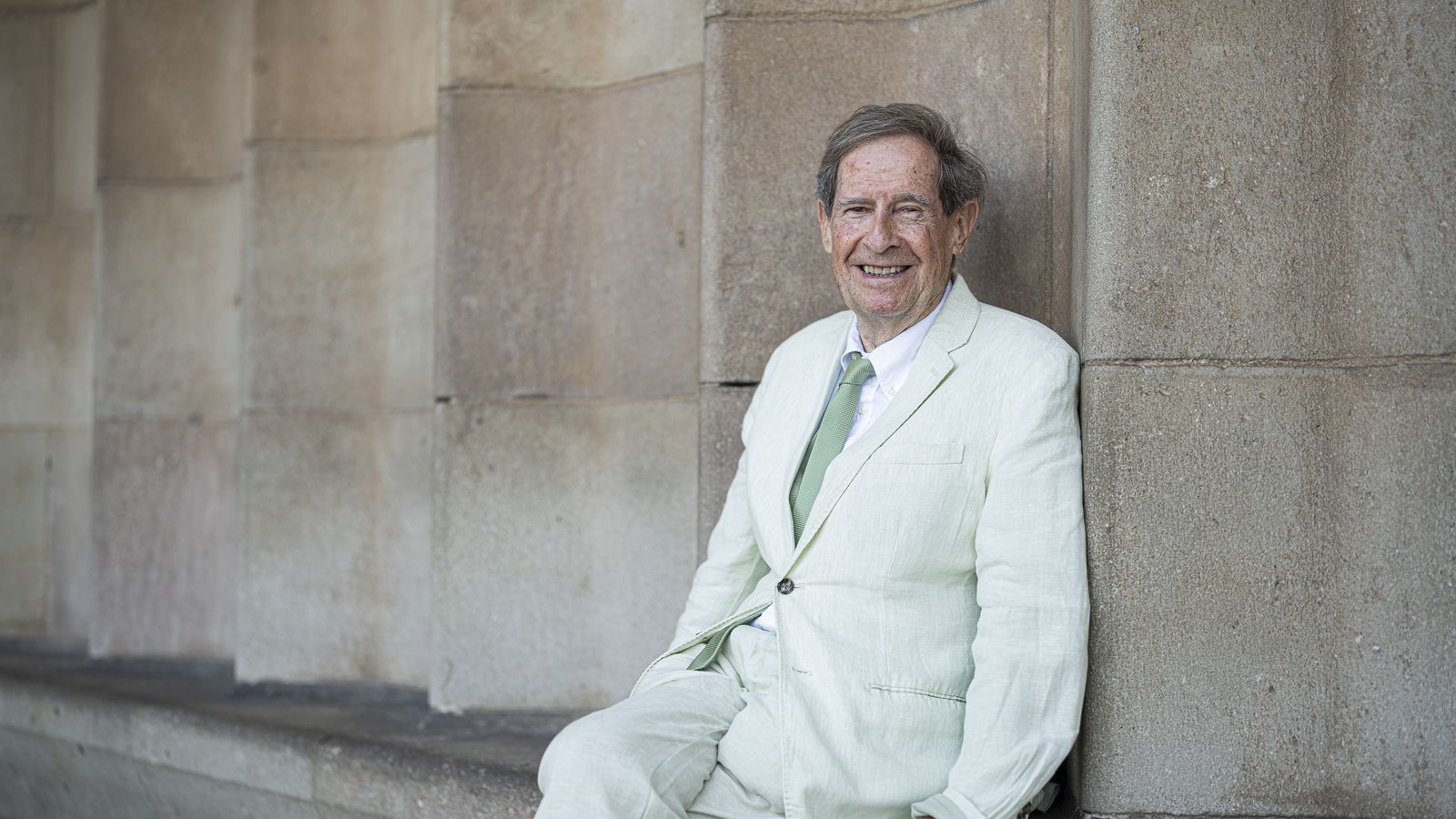
BarcelonaThe honorary presidency of the UIA World Congress of Architects has fallen to a dean of urbanism, Joan Busquets (El Prat de Llobregat, 1946). Busquets directed the Planning Department of Barcelona City Council between 1983 and 1989 and during the preparations for the Olympic Games, has worked in cities across Europe and was a professor at Harvard University. "A congress like this must open the eyes of the youngest ones," he states.
Barcelona is the only city that has hosted the UIA congress on two occasions. The 1996 edition is remembered as that of the star architects.
— The most important thing is the difference between that congress and the current one. Obviously, in the 90s, architecture had different challenges than today, and architecture that could be called spectacular was very frequent and highly appreciated. The current situation has nothing to do with that; there continues to be singular architecture, but it is not dominant. About 50 years ago, it was already being said that development leads nowhere, but it was a minority discourse, and today the majority agrees that there is an excess and that intervention is necessary. The big difference this congress brings is how we can correct excesses, the propositional question. Today we already know that the correction of all these problems has already been invented; the only thing we have to do is apply it. COVID was another matter, because we didn't know what it was or how to remedy it, but in the field of architecture, there have been practices, albeit minority ones, that can offer solutions. Architects must be among the mediators capable of putting it into practice. We must prepare ourselves and act responsibly, and call on society to do so.
Give me an example.
— The problem of rising sea levels: the Dutch have had it for eight centuries, and they are alive, and they are one of the most developed societies in Europe. What happens is that 50 years ago they built hard barriers against the water, with concrete dikes, and now they are rethinking it, and the idea is that rivers must have more space, so that they do not overflow, and that solutions must be as natural as possible, like floodable parks.
Housing is one of the big problems. What can be done about it?
— In the Western world, there is a lot of talk about housing, but be careful, because the world is growing for the rest of the planet and 50% of housing is of terrible quality. So we have to create mechanisms to solve it. It worries me a bit when I hear that they will build 500,000 homes, because I don't know if they are thinking it through well and will build blocks like in the 70s but prettier. That's not it: there are many different forms of housing. We have to produce housing in different forms, because people want different things, nowadays. There are many families where children become independent, others that break up and are rebuilt. Fifty years ago the standard Catalan family had three children, and now it's less than two. The demand for housing is totally fair, but we have to study what these homes should be like.
Catalonia is considered a benchmark for innovation.
— For example, cooperatives work, people feel good there because they can choose what the housing should be like. The most important thing about housing is that people feel good in it.
Were architects more influential thirty years ago than today?
— We have lost the ability to influence, to intervene. An architect is not someone who primarily wants to make money, but someone who wants to help you solve a problem; they are a person who has a role in society, not a phantom who only makes money. Architects are necessary, just like doctors and lawyers are. On the other hand, in the first democratic period, there was a time when politicians were usually people who were very committed to society. Society was very dynamic, and conditions were created in which architects were welcomed to make improvements and changes. Now we must insist that architects can bring solutions beyond housing, to other fundamental social issues, such as water management. Nowadays, all big cities want the knowledge economy. How is this achieved? It is achieved by offering certain strategies so that creative people settle there. The 22@ district has become saturated, so we need to look for other places.
In Barcelona, tourism generates many complaints.
— Tourism must be managed, it is not a negative element in itself. We are all tourists, but what we must avoid is wild, stupid tourism. A city is like when you go to the doctor, it solves one problem but then another one arises. I don't think tourism is a problem, but rather it must be controlled.
He was the director of Olympic Games Planning. How do you think Barcelona has changed?
— Before the Games, Barcelona had no hotels, now it has too many, it's an issue that needs managing. The problem is that everything is very dynamic. Airbnb was sold as a solution so that everyone could have some small savings, and it has become something else. Well, let's stop, there are cities that have faced it and have succeeded, it's about negotiating. Everything is tremendously dynamic, and that's why architecture must also be, you have to be always on the lookout, in a good sense. Now, when you see Venice, which has 100,000 inhabitants and 25 million tourists, you already see that this is not working, they should have realized it a long time ago. In this congress, there has been much talk of transition, which is more a logic of gently preparing for changes than a logic of transformation. And in all this, architects can take on more roles, beyond the most obvious and easiest processes.
