Basel Adra: "I have the same life as before the Oscar. We live a torture"
Palestinian filmmaker. Oscar winner with the documentary 'No other land'
-
CAT -
CAST
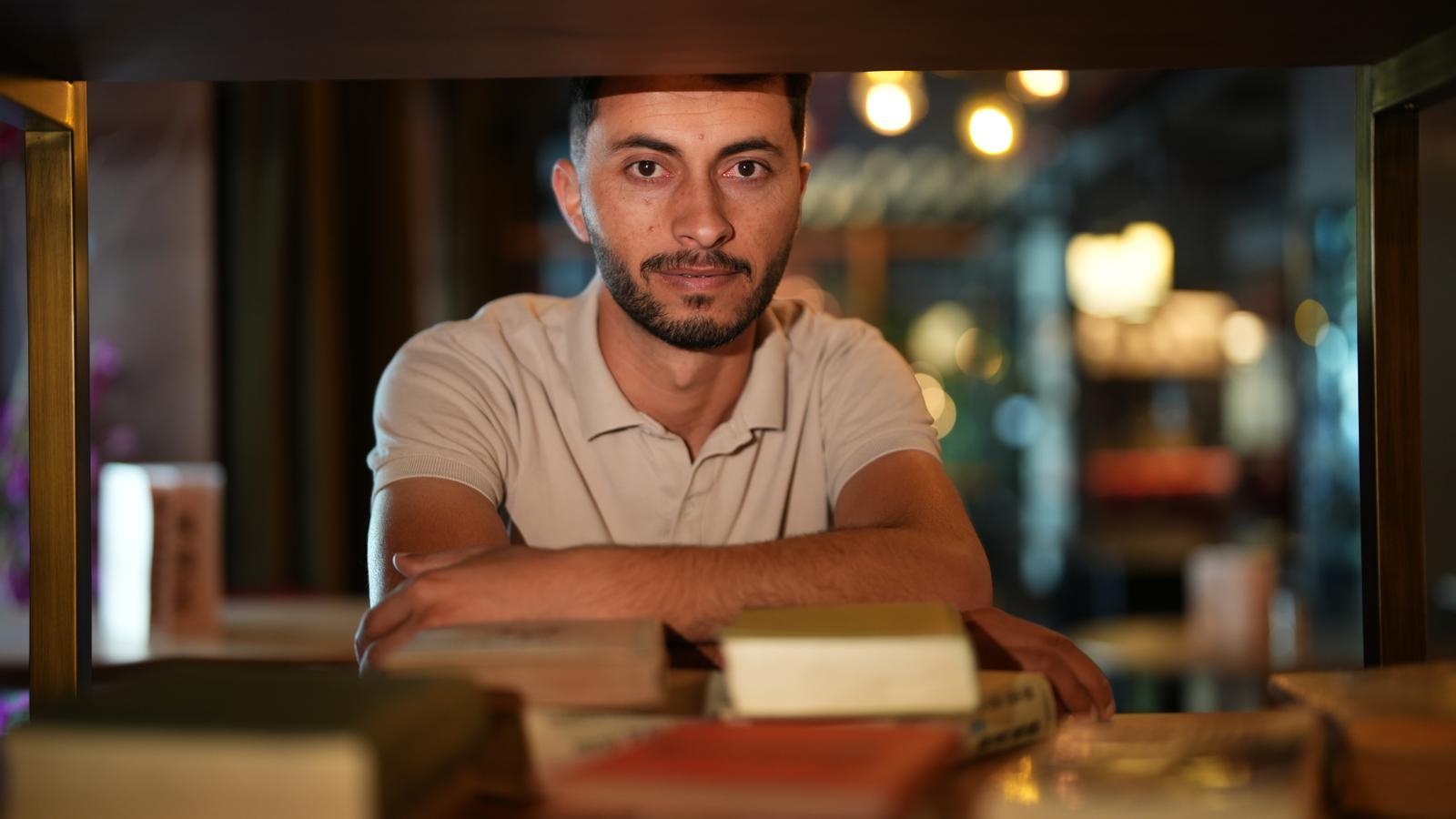
MadridThe violence of the Israeli occupation of the West Bank gives no respite to Basel Adra (At-Tuwani, 1996), not even during a brief stay in Madrid. On the same day he is participating in the inauguration of an international summit on the cultural reconstruction of Palestine, co-organized by the Spanish and Palestinian Ministries of Culture, the multi-award-winning director of the documentary No other land wakes up to the news of a "brutal attack" by Israeli settlers on a village adjacent to his own. Before speaking to ARA in a hotel in the center of the Spanish capital, Adra contemplates on his mobile phone images he has received from injured neighbors. "In March, settlers already shot at two brothers from this same family. One of them, 28 years old, was murdered, and the other has been left paralyzed," he explains. This is the daily reality in Masafer Yatta, a cluster of small villages in the southern West Bank that has been fighting for years against Israel's plans to eliminate it. The story of resistance of this Palestinian community became famous following Adra's film, winner of an Oscar in 2025, which has also turned him into an international voice for the Palestinian cause. "The documentary had a great impact worldwide, but it is very difficult for us because on the ground the situation keeps getting worse," he reflects, visibly tired both of this role, which so far has not provided solutions for his people, and of the "inhumane" journey required to leave the territory occupied by Israel and to live under the constant harassment of settlers and the Israeli army.
No other land portrays Masafer Yatta between 2019 and 2023. What is the current situation?
— The demolition of houses, the attacks by settlers, the blocking of roads, the cutting of water pipes... nothing has stopped. What you see in the movie is happening, but much, much worse. The same crimes multiplied. We have about fifteen new illegal settlements around. It is reaching nightmarish, torture levels. There are Israelis who even enter Palestinians' homes to steal their food and clothes when they are not there. But in 99% of cases there are no consequences for the settlers. The one who shot my cousin, the attack seen at the end of the documentary, is still at large. And this is always the case.
Are you still filming it?
— A little. Not like before. It is more dangerous to move around and film. I try to do it with a group of people, never alone, and with great care. It is a matter that goes beyond cultural creation, they are evidence to protect ourselves and that can be useful if we end up in prison.
Has your life changed after the success of the documentary?
— I have the same life as before winning the Oscar. I live in the same house, in the same situation. I am more scared, because I am more recognized. Sometimes settlers try to bother me, they stop me, they try to take selfies. I also feel more pressure and responsibility that I have to do more things that can help my community. There is no option to give up.
What has also emerged is that you have suffered raids by the Israeli army at your home after the Oscar.
— Yes, it has happened a few times. The last time was recently, on May 17th. I have a video recorded secretly.
How is your family?
— Physically they are all well, but emotionally no one is. Everyone is depressed. I suffer for my daughter of a year and a half. There is a lot of pressure due to the bad economic and security situation. We still have the gas station that appears in the film, but it doesn't work because the roads are blocked and there are no cars.
You have come to Madrid to talk about Palestinian culture. How can it be protected in this context?
— Protecting our culture means protecting our daily lives and our land. Israelis, historically, have tried to appropriate our culture. The food, the music, the architecture. They have done so, for example, with archaeological sites near our homes, which they now claim are Jewish. But it is another excuse to steal more land from us. I come from a community of shepherds. The settlers steal our fields and sheep. With the help of the state, they become shepherds themselves. Many Palestinian families have been left without their main income. But it's not just that, herding and making cheese or yogurt is our culture.
What is your opinion of the summit against the cultural genocide of Palestine?
— It is a very good opportunity. We must support more Palestinian artists. The Spanish government has been doing good things, but we expect more. The truth is that the international community has failed. With the film, I wanted to have a certain political influence, but unfortunately, it has not happened.

What actions can imply real change?
— The Israeli system must be punished and sanctioned until it stops. It has reached a point where one can no longer talk to them. The problem is not just Benjamin Netanyahu, it is society as a whole. They should be treated like South Africa during apartheid. It is insane that international markets are still open for settlement goods. One cannot have a normal relationship with such a system.
The Spanish Minister of Culture, Ernest Urtasun, said he hopes that the next edition of the summit can be held in Palestine. Can you imagine it, with things as they are?
— You never know when things can change politically. In fact, I would love international artists to come to Palestine to create and collaborate with the local people. I have this hope to have a cultural center in Masafer Yatta. It would also give opportunities to our children, who have access to a very poor education. I believe it can be possible, we need to find a way to make it work.
