A dance myth and a breakdance dancer united by Jacques Brel
Anne Teresa de Keersmaeker and Solal Mariotte conjure Brel's ghost at the Teatre Grec

-
CAT -
CAST
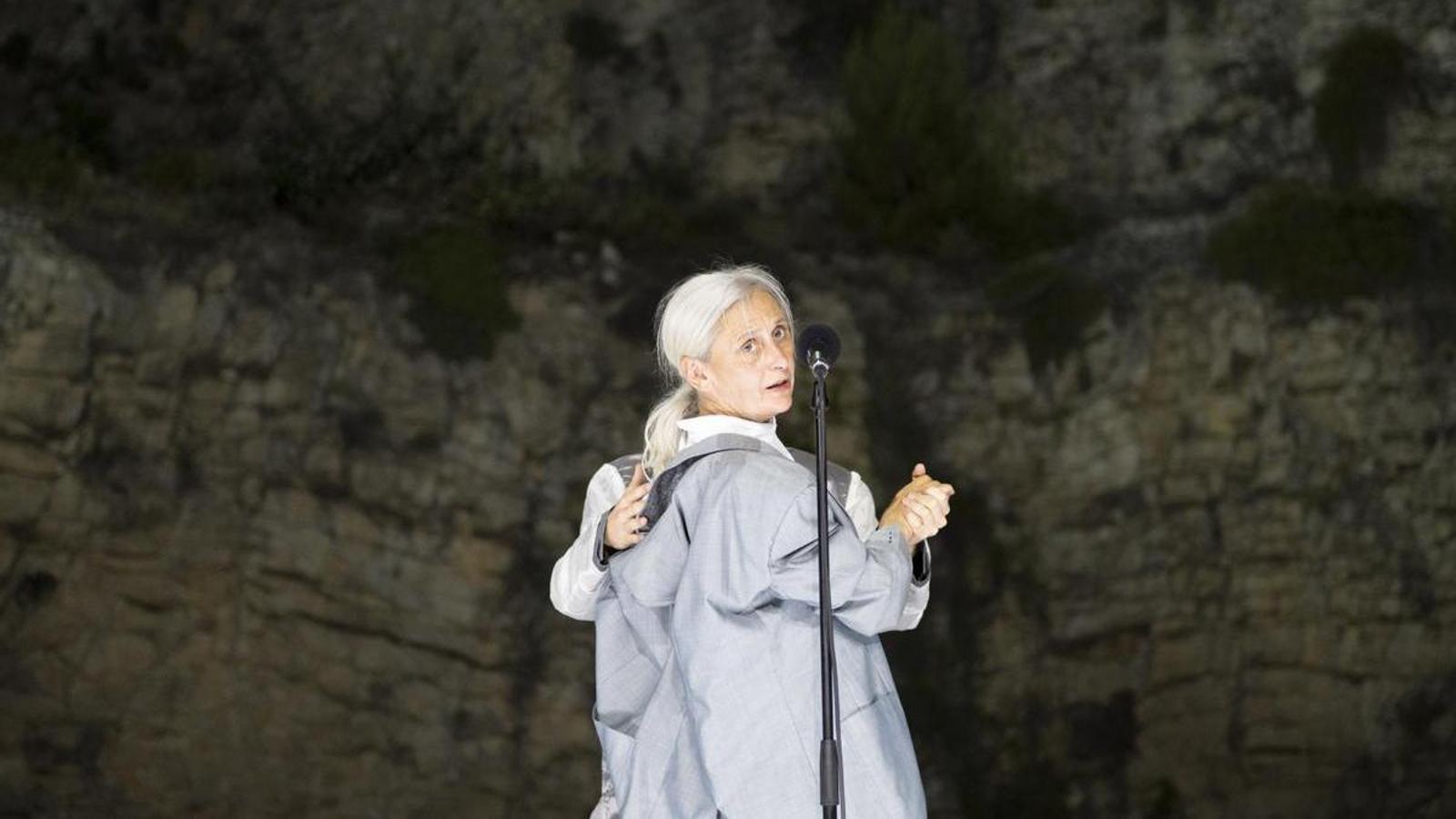
BarcelonaIt is likely that nothing would have united Anne Teresa de Keersmaeker and Solal Mariotte if it weren't for the dance and music of Jacques Brel (1929-1978). She is a renowned 66-year-old Flemish choreographer, one of the great names in contemporary European dance, creator of some seventy shows, founder of the company Rosas and the P.A.R.T.S. school. He, a 25-year-old French dancer, trained first in breakdance, then at the Annecy conservatory and Keersmaeker's school, where they discovered their common passion for the Belgian singer. "Jacques Brel is part of my history, while he discovered Brel on YouTube when he was a teenager," explains the choreographer. "She has taught me everything," admits Mariotte, provocatively. He is joking, but really few artists so young have had the opportunity to create and perform a duet with a living totem of dance, in a project with a large budget and an extensive tour, which arrives at the Teatre Grec this Thursday and Friday.
Brel is a show that approaches Brel's discography from all angles: the music, the lyrics, the orchestration, the musical structures, the performance, the themes of each song, his life. They do so with 25 songs arranged even chronologically, but not to create a documentary biography, but to show the evolution of an artist who, in very few years, fifteen, in the fifties and sixties, was able to profoundly and poetically convey melodies and ideas that still resonate today about "love, friendship, childhood, identity, and death," says Keersmaeker. "Brel basically wanted to be an author, but he started singing because no one wanted to sing his songs. He had a very intense life, with three hundred performances a year, but he paid a price," observes the choreographer, who admits that his lyrics and statements still cause controversy and debate today.

On stage, a trio unfolds, showcasing the personal relationship of the two dancers with Brel and the gaze they share. "We approach it very differently, from two generations, but this allows us to see what remains so many years later. There is a whole arc from Quand on n'a que l'amour, the song with which he became famous, to his retirement in the Marquesas Islands and his return to Paris to record the last album, shortly before his death. I think you can feel Brel's ghost during the show, with the microphone, the images, the irony, and how we interpret him with our bodies," says Mariotte, who quotes the provocative Le diable (ça va).
Between a singer born between wars, a woman from the sixties, and a centennial, what can they have in common? The dancers believe "the big human questions," she says. "What is it like to fall in love today? What is friendship like? And what is the formula for a pop song today? Brel is very current and universal. Ne me quitte pas, La chanson des vieux amants, Quand on n'a que l'amour... Everyone knows them, everyone feels these emotions, and they continue to impact us," says the young man, who admits he listened to him as a teenager lying in his bed, suffering from love and heartbreak. "We have all had friendships or love affairs in which we have felt lost. And yes, it can be extreme, I wouldn't want to be theombre de ton chien, but to a certain extent we have all been able to feel submissive, or victorious in love, or committed..." he adds. "Especially when he talks about love, Brel asks many questions. And basically, that's the best an artist can do: not to send messages but to ask questions that resonate differently for each viewer," concludes De Keersmaeker.
