Benet Casablancas: "The best prize is that the music is played"
The composer from Sabadell will receive the Tomás Luis de Victoria award on May 26
-
CAT -
CAST
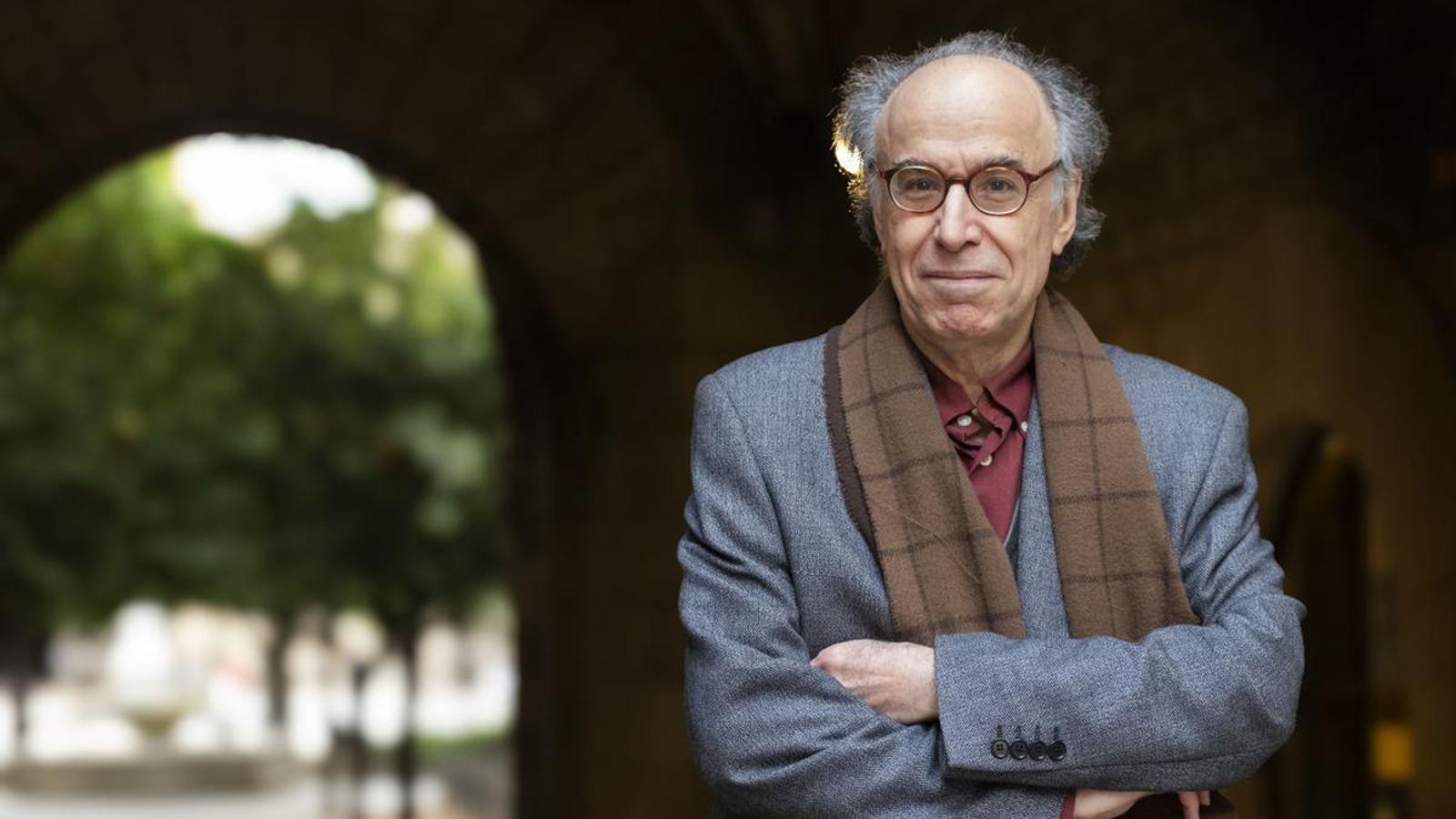
Barcelona"The best prize is that the music is played, but, obviously, I am very grateful for the prizes. And this one makes me very happy because the surprise was tremendous," explains the composer Benet Casablancas (Sabadell, 1959). The award in question is the XX SGAE Prize for Ibero-American Music Tomás Luis de Victoria, which he will receive on May 26 in the Manuel de Falla hall at the SGAE headquarters in Madrid. "May it be welcome. We will try to be up to the task," he says during a conversation in which unforgettable memories emerge, such as the "fabulous" recording of Set escenes de Hamlet with the BBC Symphony Orchestra, with a juicy and quite significant anecdote about a ghost verse; the meeting with George Benjamin in the glorious days of the Teatre Lliure Chamber Orchestra in the early nineties, and, further back, "the small orchestra" that Casablancas put together "as a youngster" and with which he performed the central nocturne of Vistes al mar, by Eduard Toldrà, in front of Frederic Mompou, Xavier Montsalvatge and Xavier Turull, "a moment when the history of Catalan music passed through Sabadell".
And from the past to the present, because 2026 is a very prolific year for Casablancas: in March, the première in the United States (in San Francisco) of Quadern de Haikus; in April, the premiere of Albrícias y diferencias para órgano, in homage to Montserrat Torrent in Madrid; on June 6 the Concerto for horn and orchestra no. 2 by the Franz Schubert Filharmonia and Stefan Dohr at the Palau de la Música, and on June 15 Cal·ligrafies, a commission from violinist Anna Urbina that will premiere at the Ateneu Barcelonès. That is to say, a good example of the formal versatility of the composer of .
The conversation includes reflections on Felip Pedrell as "the inventor of Spanish music known in the world", as Pedrell was the teacher of Albéniz, Granados and Falla. Reflections also on Viennese musical mestizaje, because "mixtures are good"; on initiatives that did not have the continuity they deserved; on efforts that do not yield results and lead us "to melancholy, if not to anger"; and on musical heritage, "which is only preserved if it is played". "Think that when works are premiered, the heritage of the future is being built," warns the composer from Sabadell, who this year has also been appointed a member of the Royal Academy of Fine Arts of San Fernando.
The Tomás Luis de Victoria award recognizes "the unquestionable quality of Benet Casablancas's work, the ability to aesthetically appeal to the listener's emotions, the mastery of orchestration, academic merits, and contributions to musical culture". "I can only reciprocate the awards in the best way I know how, which is by making the best music I can", says Casablancas, looking to "put things in perspective, as with criticism, because sometimes a not entirely favorable review can be more enriching". But he does not hide his excitement for an award that in previous editions has been received by other Catalan composers such as "Xavier Montsalvatge, Joan Guinjoan, Josep Soler, and Xavier Benguerel". At the award ceremony, the "laudatio" will be delivered by musicologist Germán Gan, and in the second part of the event there will be a concert by pianist Juan Carlos Gravayo, clarinetist Joan Enric Lluna, and cellist Salvador Bolón. In the repertoire, the delicate haikus from the Memorial Arraona (2024), the Estampas de Kwaidan (2023), and the absolute premiere of In modo di Saeta. Haiku para Cañizares y Mariko (2025). "It will be something beautiful", anticipates a composer who assures that he does not yet feel outdated. "What fault is it of mine to be the oldest of the gang", he says before advocating for intergenerational dialogue, "as the English do".
Casablancas, essential
"Bad when we only focus on what's fashionable. In England they are very clear that there are different generations, and the masters who are no longer here but whom they revere are found in the programming; Britten and Elgar are performed. And also those of other generations and the new ones, because there is room for everyone. On the other hand, in many Latin countries they sometimes put a name up there and then forget to program it. Here we had to wait for Gerhard Year to play Gerhard, and do it halfway... I don't think it's a good sign of musical health," he laments. Precisely in England, the BBC Symphony Orchestra recorded Set escenes de Hamlet when it was programmed at the Barbican in 2008. And that recording is now included in the compilation album Casablancas. The essential collection (Columna Música, 2026), along with a compilation of works performed by the London Sinfonietta, the Quartet Casals, the Quator Diotima, and the Orquestra de Cambra del Teatre Lliure.
From the rehearsals in London of Set escenes de Hamlet he recalls a very curious anecdote about how highly the public is regarded in the United Kingdom. "There was a person who one day approached me and said: 'Excuse me, in this passage there is a missing verse from Hamlet. It must be a mistake.' And I told him no, that I had deliberately omitted it for dramaturgical reasons. And then he commented: 'Ah, very well, but do you know what happens? That listeners might call us to let us know that a verse is missing.' The person in question was one of the BBC bosses. It's not to make a bad comparison, but what would happen here if we skipped a verse from Verdaguer?" he explains.
Without leaving the English context, he recalls another anecdote about the first time the London Sinfonietta recorded a work by Casablancas. "We went to a church, and everything went very well. After three days of work, I thanked the sound technician for his work and asked him if he could do me a favor. 'I already know what you're going to ask me: the recording of the first take. It's the best.' He was the technician who had recorded Britten's operas!"
Casablancas conveys both exuberant enthusiasm and a serious demeanor when considering that things could be better. The compilation album closes with Celebración (a variation of the Patum de Berga), a work from 2001 performed by the Teatre Lliure Chamber Orchestra, the same ensemble that had premiered Set escenes de Hamlet (1989). "It was a brilliant concert, at the Lliure's new venue just opened in the Palau de l'Agricultura, in Montjuïc. And then everything went to waste," recalls Casablancas about the end of that orchestra created in 1985 by Josep Pons, Lluís Vidal, and Jaume Cortadellas and promoted by Fabià Puigserver to create a stable music core at the Teatre Lliure. "The Lliure orchestra was very important for the cultural heartbeat of the city, and everyone knows who destroyed it," says Casablancas. The ensemble disappeared when Àlex Rigola took over the theater's direction in the 2002-2003 season. "In the Teatre Lliure Chamber Orchestra, there were extraordinary musicians, and one of its great virtues was that there were people who came from jazz. They were very open and basically played the music they believed in, in very diverse styles and languages," he explains. Casablancas, as the jury of the Tomás Luis de Victoria prize acknowledges, fully resonates with that spirit.
