Artur Blasco: 'The accordion was a revolutionary instrument'
The musician and researcher of Pyrenean heritage receives the Enderrock Honorary Award

-
CAT -
CAST
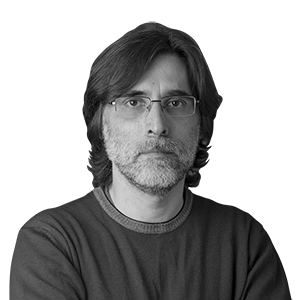
Barcelona"It's been a big surprise," he says. Artur Blasco (Barcelona, 1933) before ordering a carajillo (a coffee with anise liqueur) at the Laie bookstore café in Barcelona. The surprise is the Enderrock Honorary Award, which he will receive this Thursday in Girona. "I'm very happy, because an award like this paves the way for those of us with projects," says the founder of the Meeting with the Accordionists of the Pyrenees in Arsèguel (Alt Urgell) in 1976. Because yes, because at 92 years old, Blasco, "the most outstanding researcher and popularizer of the folk music of the Catalan Pyrenees", as the magazine confirms EnderrockThe hero behind the revival of the diatonic accordion still has projects in the works. For example, the twelfth volume ofOn foot along the paths of the songbookwhich is "about to go to print" and a concert with accordionist Cati Plana at the Tradicionàrius Artisan Center on April 17. All the fieldwork for the songbook began in 1965 in the Pyrenees and is "digitized and stored for public consultation" at the Department of Culture of the Generalitat. "There are 1,535 songs, from 417 singers and informants, from 244 villages," he explains while stirring his coffee.
"Cati, who is a professor at Esmuc, is the leading figure of the diatonic accordion. She is very special within our world. First and foremost, because she is a concert performer and a teacher of great talent," says Blasco. "And also because she was born the same year we held the first Accordion Meeting in Plaza, in my mother's womb. You could say I put the accordion in her lap." Several coincidences have shaped Artur Blasco's life. In the early 1960s, he accompanied a friend on a trip through Alt Urgell. "It made a huge impression on me," he recalls. So much so that he bought a dilapidated house in Arsèguel. He also met Ricard Muntané, "El Fité," the last street accordionist in the Pyrenees, and in 1965, the great adventure began. He has spoken many times about his love for the diatonic accordion. And every time he talks about it, he exudes an infectious enthusiasm. "The accordion fostered community. It was a revolutionary instrument among rural mountain communities. The population was very scattered, grouped in small settlements of fifteen, twenty, or thirty inhabitants. They had a very routine life, with little access to any cultural expression, hardly any music at the main festival, and that was only from the regional capital. The accordion, played by a single man, led people to gather more often in the town square to dance and socialize through physical contact." The priests preached the opposite, but they had to reach an agreement with the musicians. "The parish priest of a village in the Alta Cerdanya told Sebastià, an accordionist: 'I've noticed that you're the one who makes the couples, because I ring the bell at the time of the rosary, which opens at four in the afternoon, and nobody comes to the parish. But then they end up coming to the parish.'"
Over time, those accordionists from the Pyrenees came down to Barcelona to expand their repertoire. At first they played mazurkas, polkas, waltzes... "And in the 1920s they would spend a week on the Paral·lel. Everyone was in love with Raquel Meller. In cafes and theaters they would catch up on the new trends arriving from America: the foxtrot, the Charleston, jazz," Bla explains. This festive repertoire returned to the mountains where it coexisted with work songs, those sung while working, which gradually disappeared as the tractor individualized many tasks. One of Artur Blasco's projects was to document and record those Pyrenean songs.
Just as there was an oral transmission of the songbook, there has also been a documentary transmission among researchers and musicians. "I was with a woman from Odèn, in the Solsonès region, who showed me a photo of herself as a child with her mother. Joan Amades had taken the photo!" she exclaims, still amazed. And Blasco's work is followed in other regions by initiatives such as Càntut, Tradicionàrius, and the Mediterranean Fair of Manresa, as well as dozens of groups and artists. "We're lucky that there are always groups and people interested," he says, sharing the credit—a man who also founded the group El Pont d'Arcalís with the much-missed Jordi Fàbregas, another essential figure in Catalan culture.
Artur Blasco deserves every award. And his life, a film, a novel, or even an epic poem. After completing his secondary education in Manresa, he began studying biology at the University of Barcelona, but halfway through his degree, he decided he wanted to see the world. "I bought a new pair of jeans, and with 1,500 pesetas in my pocket, I took a train to Figueres. And hitchhiking, I made it to Stockholm," he summarizes. His European journey took him to Germany, Iceland, Greenland... He worked as a telegraph operator on a cod ship and in public relations for a Stockholm theater, translated Swedish authors like Stig Dagerman into Spanish for Seix Barral, worked in the statistics department of Scandinavian airlines, and in Bavaria, who was Czech and with whom he had three children. Back in Catalonia, Blasco got a job at the Official Agricultural Union Chamber. Later, with the Generalitat (Catalan government), he pulled every string to remain connected to the Pyrenees. He turned down the position of head of the Agricultural Relations Service; instead, he accepted the position of head of the Territorial Service of the Department of Agriculture in the Alt Pirineu (High Pyrenees). All for the love of the diatonic accordion.
