Xantal Llavina: "There must be more respect for entrepreneurs"
The journalist, businesswoman and presenter explains her relationship with work and money
-
CAT -
CAST
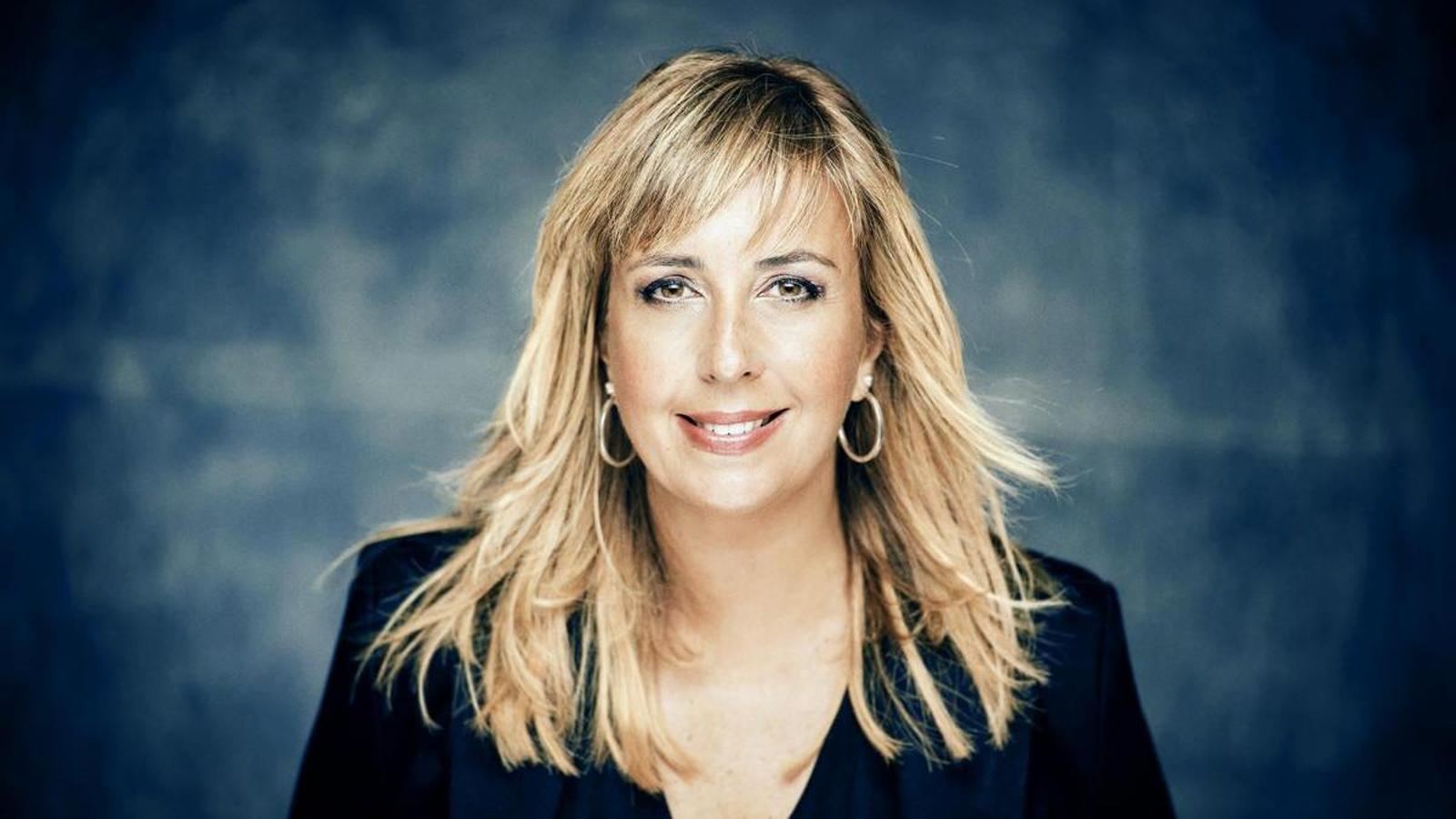
Since she was 15 years old, Xantal Llavina (1975) has been clear that she wants to be a journalist, but with a family of entrepreneurs, she opted to graduate in journalism and business: "I'm a humanities person and accounting was a bit complicated for me. In fact, I begged the teacher to average my grades with the theoretical exams because I would never be an accountant, only a journalist. A year later, when I was already on television, I ran into the teacher and she told me that I was right, that I wanted to be a journalist," she explains. Restless and hardworking, Llavina has ended up building a career that goes far beyond journalism.
She entered the working world with an internship at Betevé: "I've always been very diligent, studious, and hardworking in my job. And I think that's why I've never lacked anything." She has always been chaining jobs; in fact, she stayed working at Betevé: "It was my first salary, which was around 120,000 pesetas, about 700 or 800 euros, not bad." She has been enriched by great mentors, working with Joaquim Maria Puyal or Albert Om, and also by great publications, such as TV3, from which she says she took away "brutal learning."
As a young woman, Llavina began to become interested in what has become her specialty – the internet, social media, and technology–: "I've always looked to the future, to what was coming." And since the newspaper where she worked didn't talk about it, she proposed addressing the topic: "And even now, technology companies are the most powerful in the world; they are deciding current geopolitics."

In 2011, she founded her own production company and took on all the roles in the play: presenter, director, and executive producer. And so she began to direct and produce her projects for the media, talking about ICT. But it wasn't new to her, as she had grown up in a family of entrepreneurs: "My parents set up car companies in Barcelona and Catalonia. And my father brought Toyota in the 90s; it was a bold move for a Japanese brand to come here."
In this regard, she believes that freelancers and entrepreneurs should have more prestige: "Private enterprise is also necessary and generates many jobs, and I think there should be a lot of respect for the person who invests their money and even their assets to create employment. More value should be given to this undervalued figure." "And for me, as a woman, it worries me that in Catalonia only 4 out of 10 female entrepreneurs are women. And when we talk about technology companies, female presence falls below 20%." Talent is there, she assures, but representation is lacking.
In fact, she herself has prioritized jobs that have allowed her to balance motherhood: "Before my daughter was born, I had different schedules and jobs, I used to do the afternoons at Ràdio 4." But she wanted a more compatible job: "The education of my daughter is very important to me, and I went out on my own because I am a mother."
"I have worked in almost all the media: Betevé, TVE, Catalunya Ràdio, RAC1, El Punt Avui, and I have also collaborated with El Periódico", she explains. In fact, working in so many teams has allowed her to grow professionally. She defines herself as a person with many ideas and a constant desire to do things: "I couldn't have stayed in one place doing the same thing all the time."
AI Expert
Llavina, an expert in artificial intelligence (AI), currently presents the
Revolution 4.0 on Catalunya Ràdio: "To celebrate the tenth season we went to Silicon Valley, where technological entrepreneurship begins". There they interviewed Catalans who work in big tech companies like Netflix, Nvidia and Apple, explains the winner of the Premi Alumni Ambassador 2024 from the Universitat Ramon Llull.
Her concern, besides leading her to give lectures, has also driven her to write three books. The latest, published in 2024, Emprender tu futuro: "I have done more than 800 interview programs with more than 2,000 entrepreneurs from Catalonia, such as Nandu Jubany, Rosa Tous, Ferran Adrià, but also Casa Tarradellas, Munich... We have many examples and they all have three things in common: attitude, a lot of perseverance, and above all, patience." And that's what the book talks about.
On a personal level, she considers herself a saver: "I have worked a lot, but I haven't believed that money was the most important thing in my work, but rather doing what I liked. It's clear that I have worked for many years and haven't stopped, and in my case, that has allowed me to save, which not everyone can do." With the money, she has chosen to buy an apartment and travel: "One of my dreams is to travel around the world in stages. Counting Europe, I have already visited about 20 or 30 countries."
