The chemical giant that hides in thousands of products
BASF invoiced €59,657 million in 2025, earned 1,600 from it and has more than 108,000 employees around the world
-
CAT -
CAST
You open the fridge and grab a bag of salad. The plastics used to package food can contain materials like Lupolen or Ultramid. They are manufactured by the chemical company BASF. You put on your Adidas to go for a run. Some models in the Boost range incorporate a material called Infinergy in the sole. Also from BASF. On the way back, you pass by a toy store and see some Playmobil: the hands and joints of the figures have been manufactured with a plastic called Ultraform. From BASF. Even the building where you live may be insulated with Styropor, a type of expanded polystyrene. It has been manufactured by BASF since 1951.
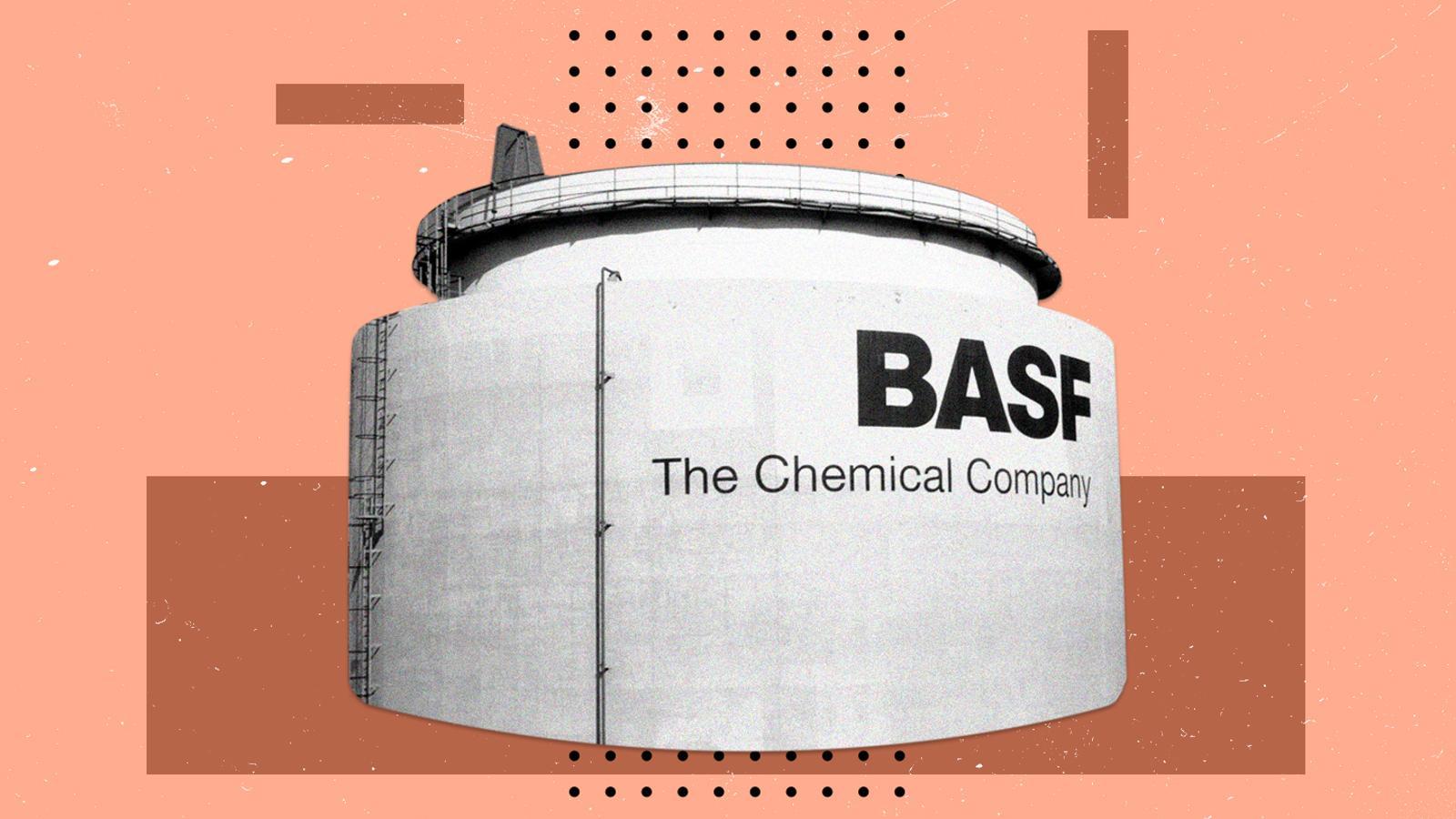
BASF is a German chemical multinational that, despite going quite unnoticed by the consumer, is present in many areas of daily life. Founded more than 160 years ago, today it is one of the great global giants of the chemical industry. In 2025 it had a turnover of 59.657 billion euros, obtained a net profit of about 1.6 billion, and has more than 108,000 employees around the world. In Catalonia, where it opened the headquarters of its Spanish subsidiary in 1966, it has production centers in Tarragona, Rubí, Castellbisbal, and the Zona Franca of Barcelona, among others. But how was this chemical empire born?
The discovery of chemical dyes
The history of BASF begins in 1865 in Mannheim, in southwestern Germany. Friedrich Engelhorn, an entrepreneur who had made his fortune producing gas from coal, had found a new use for one of the residues it generated: coal tar. It could be used to manufacture synthetic dyes. He began to produce fuchsine, a reddish pigment, and aniline, a substance obtained from tar used to make dyes. But Engelhorn wanted to go further: to create a company capable of controlling the entire manufacturing process, from raw materials to finished dyes. Thus, Badische Anilin & Sodafabrik was born, known by the acronym BASF.
The business grew rapidly. In 1869, it succeeded in synthesizing alizarin, a red dye that became its first great international success. And in 1897, after seventeen years of research, it began marketing synthetic indigo, the blue pigment that decades later would become especially popular with jeans.
At the beginning of the 20th century, however, BASF had already understood that its future could not depend solely on dyes. One of the great leaps forward came in 1913, when it managed to manufacture synthetic ammonia on an industrial scale thanks to the Haber-Bosch process, developed by the chemist Fritz Haber and adapted for industrial production by Carl Bosch. The invention revolutionized the manufacture of fertilizers, but it also had military applications: during the First World War, ammonia was used to produce explosives.
From war to global expansion
BASF's growth, however, was also marked by wars and tragedies. In 1921, an explosion at the Oppau plant caused more than 500 deaths. Four years later, the company merged with Bayer, Hoechst, and three other German chemical companies to create IG Farben, one of the country's major industrial conglomerates. During the 1930s, the group promoted the manufacturing of rubber, synthetic fuels, and plastics, but it also became closely linked to the Nazi regime.
During the Second World War, it participated in the German war economy and used forced labor, including prisoners from the Auschwitz concentration camp. After the conflict ended, the Allies ordered the dismantling of IG Farben, and in 1952, BASF was re-established as an independent company. From then on, it focused on plastics, industrial chemicals, and international expansion.
It was during this new phase that BASF arrived in Catalonia. In 1966, it established BASF Española, headquartered in Barcelona, and in 1969, it inaugurated a Styropor production plant in Tarragona. Those facilities were gradually expanded, while the company acquired businesses like Curtex in L'Hospitalet de Llobregat or entered the polyurethane business in Rubí. At the same time, BASF continued to grow around the world. Over the years, the dye business that Friedrich Engelhorn had promoted eventually became a conglomerate with activities ranging from agriculture to automotive, including construction, food, and consumer products.
