Gori Masip: "I have always been reluctant to spend my money"
The youngest meteorologist from TV3 explains his relationship with money and work
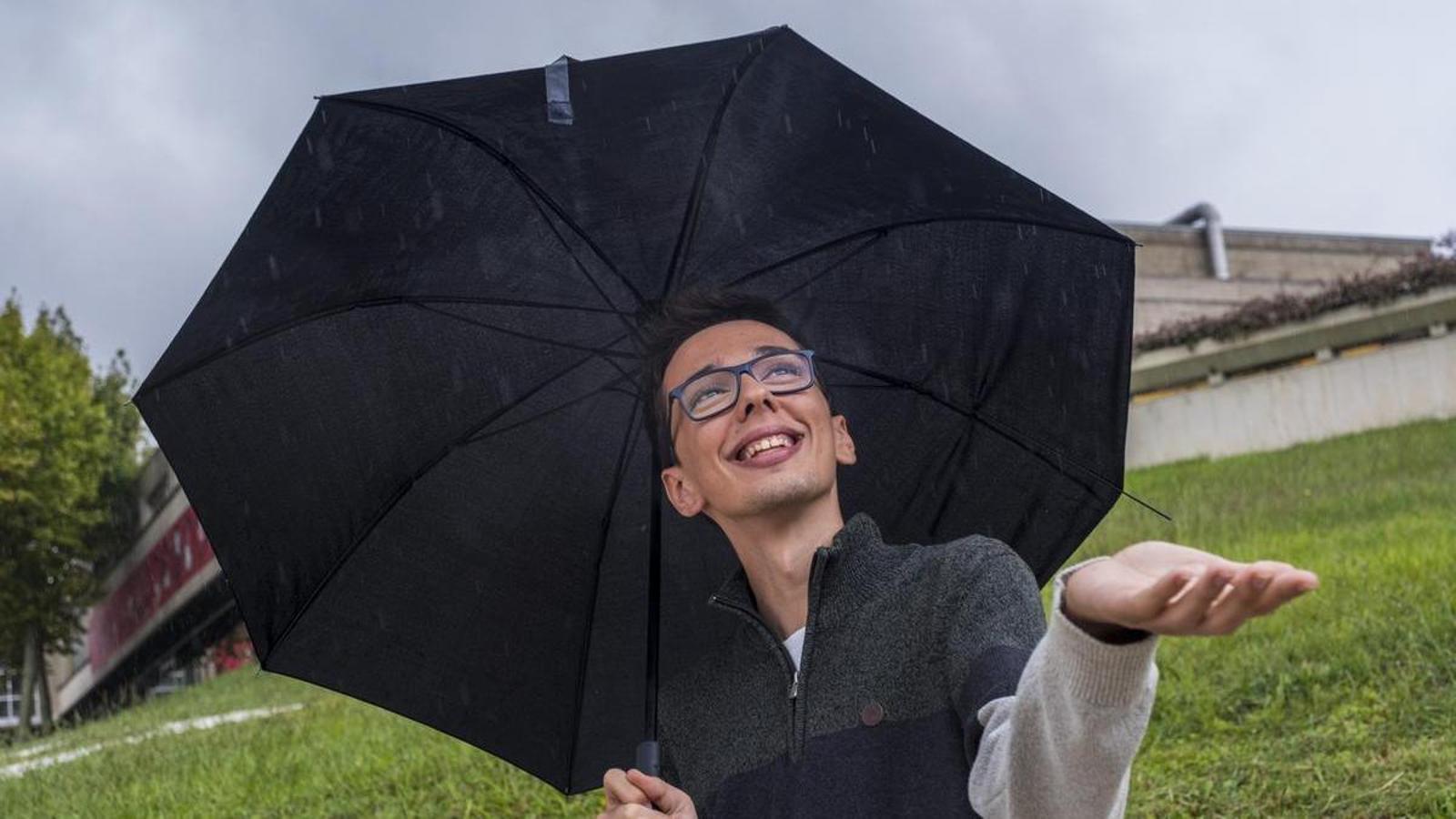
TV3's youngest meteorologist, Gori Masip (2002), still remembers the day he discovered what snow was. He was very young when his brother ran into his room to tell him it was snowing in Sitges, his hometown: “Automatically I asked him what snow was. I had no idea,” he explains in statements to Empreses.
Although he was clear he wanted to become a weatherman, before that he took revision classes and worked as a waiter. However, the experience was short-lived: “It's a very physically demanding job. Eight hours standing, serving the public. I saw that wasn't for me.” Those were his only jobs outside of meteorology. His commitment to this field began during secondary school when he created a Twitter profile to share meteorological content: “Probably, it wasn't even legal for me to have a public profile.” “I posted things that no one looked at, but that I liked,” he explains.
He studied geography and soon began to gain experience in the sector with an internship at the Meteorological Service of Catalonia. Then he did cover work at Sitges local radio, a scholarship at RAC1, and another internship at TV3 where he stayed doing cover work, thus becoming the youngest face on air and fulfilling his dream: “It wasn't just about being a weatherman, but being one on TV3.” That was two years ago now.
Regarding personal finances, Masip defines himself as a saver: “As a good Catalan, I've always been hesitant to spend money.” In fact, he wouldn't even know where to spend it; fashion and material purchases don't interest him: “I've never bought an iPhone because I don't think it's worth 1,400 euros. If I want a good camera, I'll buy it directly.” And since he started working, when he makes a purchase, he compares it to the days of work it will take to earn it back: “Then you're even more aware of how much it costs.”
However, his philosophy changes when it comes to sharing experiences:
His savings goals are clear: to finish paying off the car and, one day, become independent. The vehicle has been his most important purchase: "It was the first time I thought, how cool to be able to work! It's the first thing I own." The big dream, however, is to be able to live in Sitges. He would like to achieve it soon, but he is aware of the difficulties: "There are many seasonal rentals and finding an apartment is complicated." For this reason, he is considering the option of buying a home directly: "I have always lived in Sitges, I haven't even left to do an Erasmus."
He currently lives with his family in a rented apartment, but one rented from a relative: "We are the resistance, because we know they won't kick us out or turn the apartment into a tourist rental." A situation that contrasts with what he sees around him. Masip warns that the tourist success is taking its toll on the town of 32,000 inhabitants: “There are many events, more than 200 a year. We will die of success.” “It is a very important economic engine, but it should be reconsidered. You leave home on an August day and it seems like you are joining a highway; running into someone you know is almost a miracle,” he points out. This reality worries him especially because it makes it difficult for young people to put down roots: "As a town, we are losing if a person who grew up here has to leave because they cannot pursue their project in their hometown."
Professionally, he admits that he achieved his great goal sooner than he imagined: "Suddenly, being very young, my goal was met and I thought: 'And now what?'" Now he wants to consolidate his career and learn a lot: "I work with people I have always admired, it's a dream to learn from them."
Masip vindicates the relationship between his profession and the economy: "A very hot and dry summer affects tourism, agriculture, or energy consumption." That is why he argues that the main economic indicators also have a daily dimension: “Sometimes we talk about the economy as if it were just numbers, but behind it there are small things from our daily lives, as basic as the weather, that end up conditioning everyone's life."
