"I go to a village where you have one foot in nowhere and another in civilization"
For more than twenty years the writer and editor Antònia Carré-Pons spends a few days in Torroella de Montgrí

-
CAT -
CAST
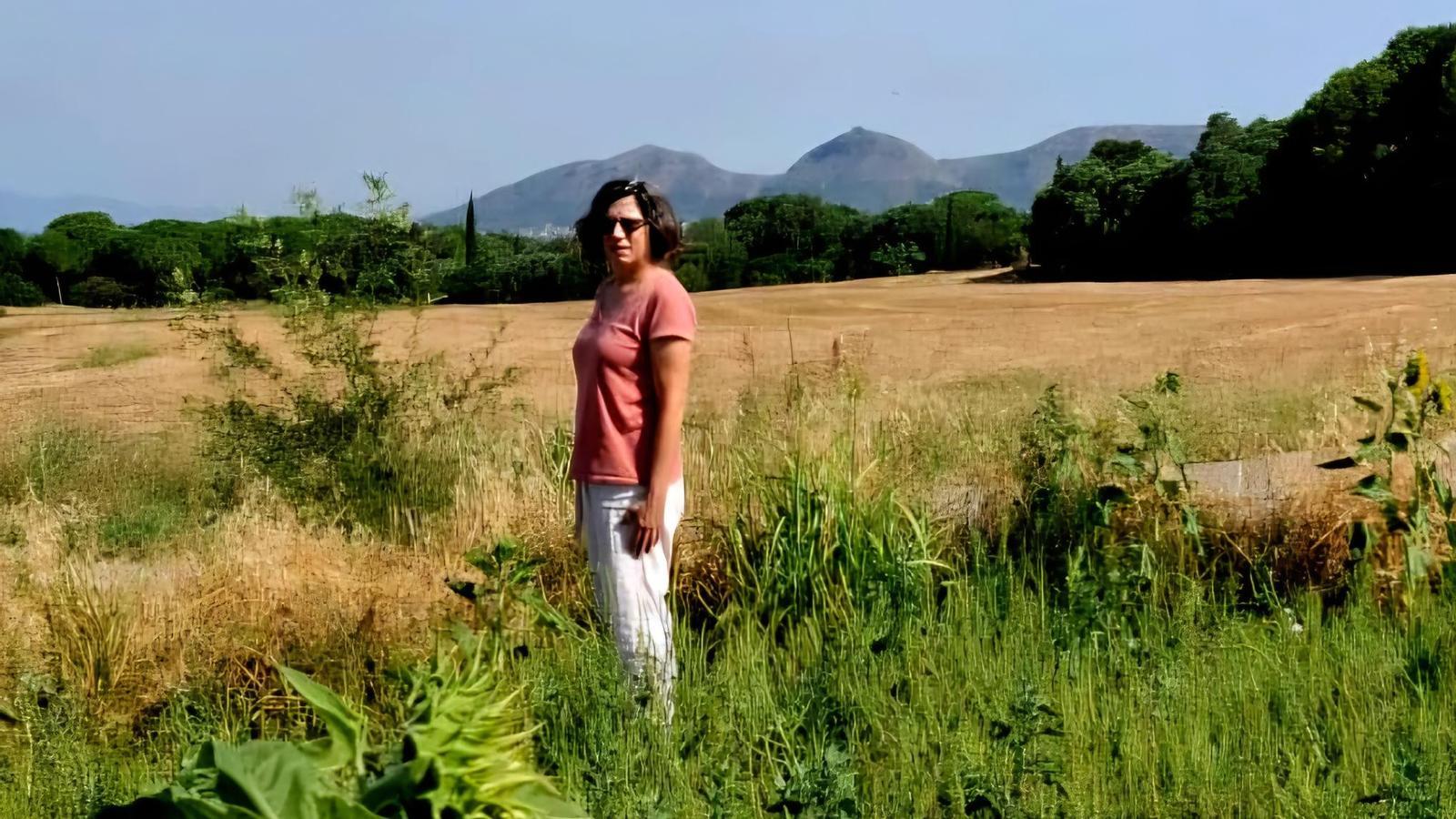
Torroella de Montgrí is the favorite place in Catalonia of Antònia Carré-Pons, an eclectic reader, editor, writer, winner of the Òmnium prize for best novel of 2025 for La gran família, and founder of the Cal Carré publishing house, which publishes medieval, modern, and contemporary classics. Antònia maintains the theory that nature is a state of mind, depending on how your soul is, it is valued in one way or another, therefore, it's not just beauty that counts, what makes the difference is the people who accompany you and how you feel with them. For more than twenty years, he has spent a few days at the home of some friends in Torroella de Montgrí, “where you have one foot in the middle of nowhere and the other in civilization,” he states. He had been to the town a few times before, but going there assiduously has allowed him to make it his own. He explains that it is a town that, despite being a summer resort, retains its soul because it has a cinema, the Vila Casas Foundation, the Pere Blasi library, a bookstore as fantastic as El Cucut, and many shops: “These are places that accompany you and allow you not to be absolutely isolated or to be without seeing anyone.” There is also Montgrí Castle, the hermitage of Santa Caterina, where Víctor Català was inspired to write Solitud, and nearby the Foixà forest, where King John I died in 1398 after falling from his horse during a hunt.Torroella is liked even before arriving, when from the road you can already see the silhouette of Montgrí welcoming you. The days spent in Torroella are used to go to the beach, take a little walk, visit surrounding villages and above all to stay at home: “It has an extraordinary courtyard with shade where we chat, which is one of the most pleasant things to do, chatting with nice people, no heated discussions”. In summer, he stays there for about ten days, but he also goes at other times throughout the year. He admits that in winter it gains intensity, both the house, where it is colder and gives off warmth, and the town, which is more authentic without summer visitors. It is gratifying to walk down the street, where even if people don't know each other, they greet each other: “Nothing to do with summer, when it's full of tourists in shorts, who bother me a bit. We should limit tourism, they are eating up our country,” he proposes. She loves Pals beach, which is very long and from where the Medes Islands can be seen: “A free beach where nudists and non-nudists coexist, and where there are practically no people. I go first thing in the morning, move away from the houses and walk through the dunes until I decide where to set up my umbrella”. She finds it a magical landscape, from where she contemplates the immensity of the sea, nothingness, combined with the Medes, a generous nature, “two antithetical but complementary elements, and if you're lucky, every now and then you see a boat go by”.
