Everything you need to know to enjoy (and not suffer) at the Tour de France
The race that begins on July 4th will cross Catalonia and will cause various traffic disruptions: we explain all the details of the competition
-
CAT -
CAST
We explain everything you need to know to enjoy the Tour de France that will cross Catalonia: from mobility impacts to activities organized by the cycling race.
Where does the Tour pass and on which days?
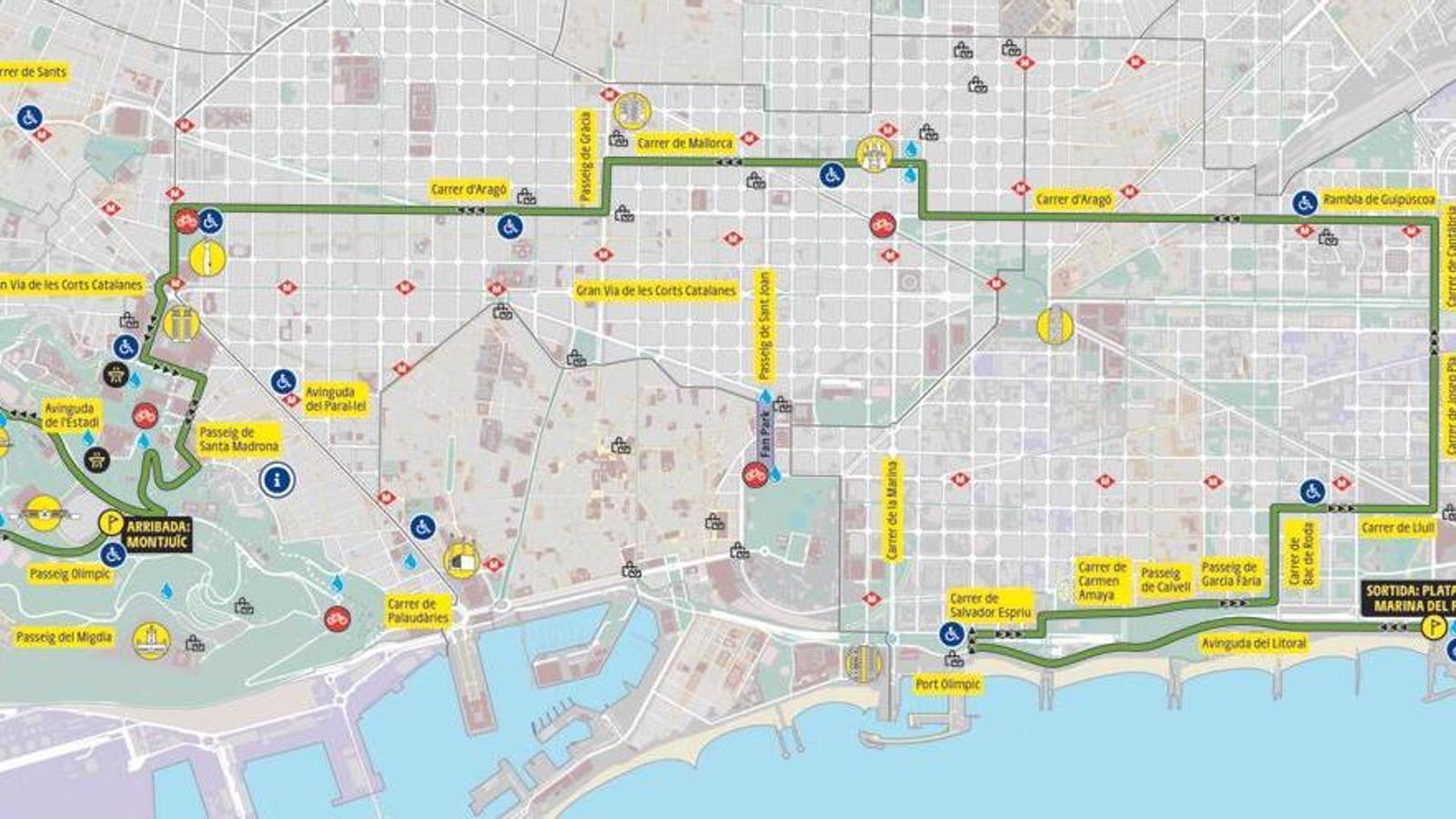
The race begins in Barcelona on Saturday, July 4th at 5:05 PM with a team time trial. The start is on the waterfront and ends in Montjuïc, touring the city's iconic sites.
The second stage is on July 5th: it starts in Tarragona and arrives in Barcelona on a route that lasts 178 km and passes through municipalities such as Torredembarra, Sitges, or El Garraf.
The third stage, on Monday, July 6th, starts in Granollers and passes through Centelles, Vic, and Ripoll until reaching the Pyrenees.
Disruptions in Barcelona
On July 2nd, the first road closures will begin with the presentation of the teams, but mobility will only be affected around the Sagrada Família:

Traffic disruptions will begin on the night of the 1st on Gaudí Avenue, but definitive traffic closures will be from 2:00 PM onwards. Reopening will be progressive from 9:30 PM onwards. If you want to know more specifically how the closures will affect you, where you can catch a bus, which streets are closed, you can ask your question directly to the City Council, using this email address.
Saturday 4, start of the race
Regarding the day the race begins, the city will see some of its main road axes affected:

The disruptions will begin around 12:00 PM, with the total closure of the circuit at 1:30 PM, and there will be restrictions on access by private vehicle to areas closest to the route. This affects road axes such as Avinguda del Litoral, streets such as Bac de Roda, Llull, and Josep Pla, in Sant Martí, and structural roads of L'Eixample such as Rambla de Guipúscoa, Passeig de Gràcia, and streets such as Aragó, Mallorca, or Lepant. The route will continue towards Tarragona, Plaça d'Espanya, and Reina Maria Cristina until reaching Montjuïc. Normalcy will be gradually restored from 8:30 PM onwards.
On July 5th, there are fewer affected neighborhoods and everything is centered on Montjuïc: restrictions also begin at midday and traffic will be restored from 6:00 PM onwards.

Will we be able to move around the city?
The answer is yes: a network of pedestrian crossings will be enabled to cross the race route. In addition, it is recommended to use the metro on July 2, 4, and 5: the usual service will be increased by up to 40%.
Buses, on the other hand, will be more affected and some lines will not provide service on the 4th and 5th.

Which other municipalities does it pass through?
In total, it passes through 63 Catalan municipalities, which implies significant impacts on the road network. This is the complete route:

- If you want to investigate the graph in more detail, open the high-resolution version in another tab.
Will there be special activities during the Tour?
In addition to going to see the cycling race, Barcelona has prepared a series of activities. Programming for the little ones, concerts, theater and popular culture for all audiences under the name of La Festa del Tour, which will fill the city with things to do.
Where can I follow all the news about the race?
At the ARA newspaper, we have prepared live coverage to explain the latest news about the Tour de France to you, day by day. You can access it at this link.
