According to the World Health Organization (WHO), one in four people will experience a mental health problem at some point in their lives. It is in this context that the National Mental Health Pact was born, an initiative of the Government of Catalonia that promotes a new way of understanding mental health, through a cross-cutting approach that puts people at the center and integrates all areas—healthcare, education, social services, and community—with the aim of guaranteeing genuine and meaningful emotional well-being. The goal is to move from a treatment-based approach to a participatory one, in which people with mental health problems are no longer seen solely as patients but become the protagonists of their own recovery process.
La importància de la prevenció del suïcidi a les universitats
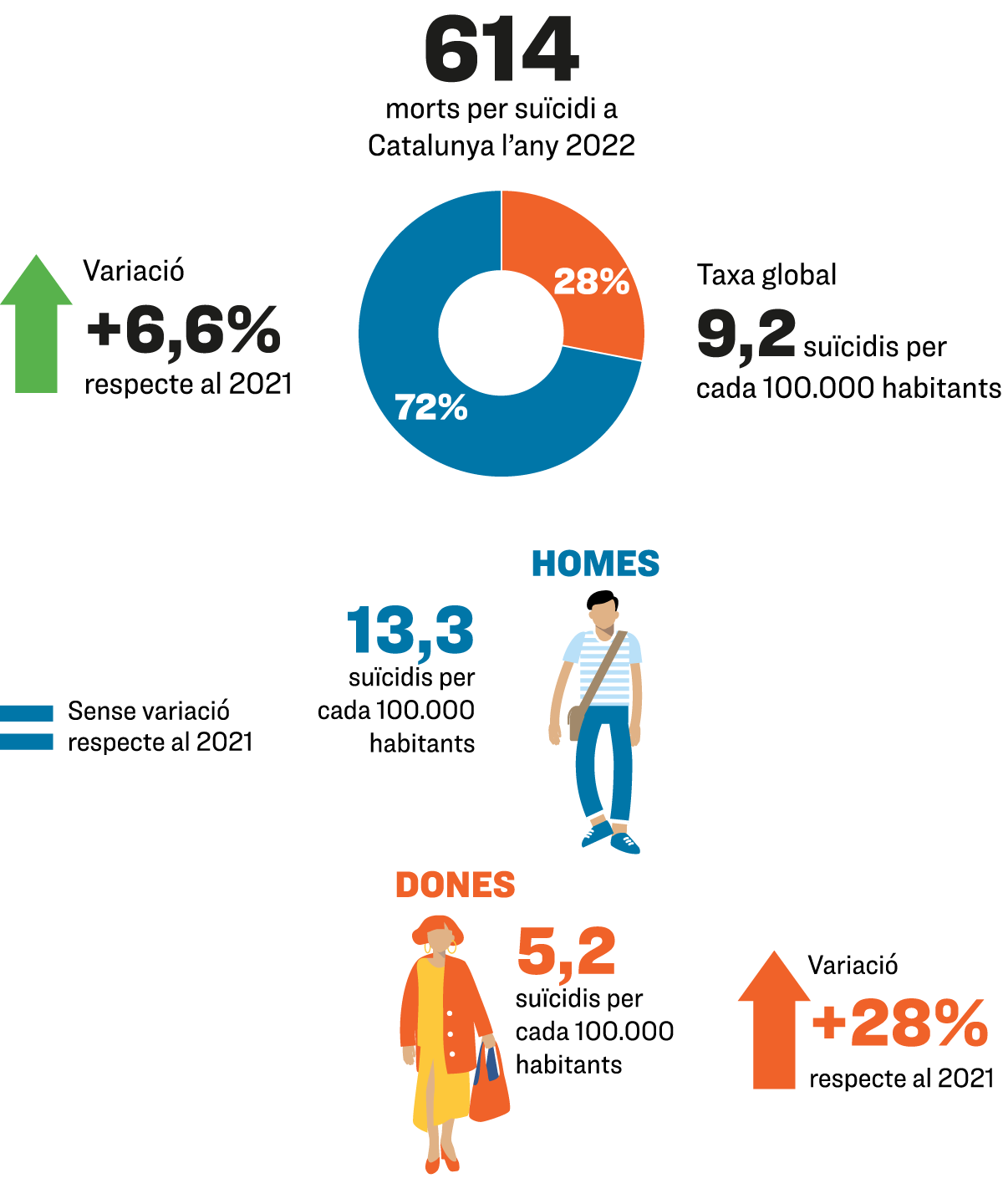
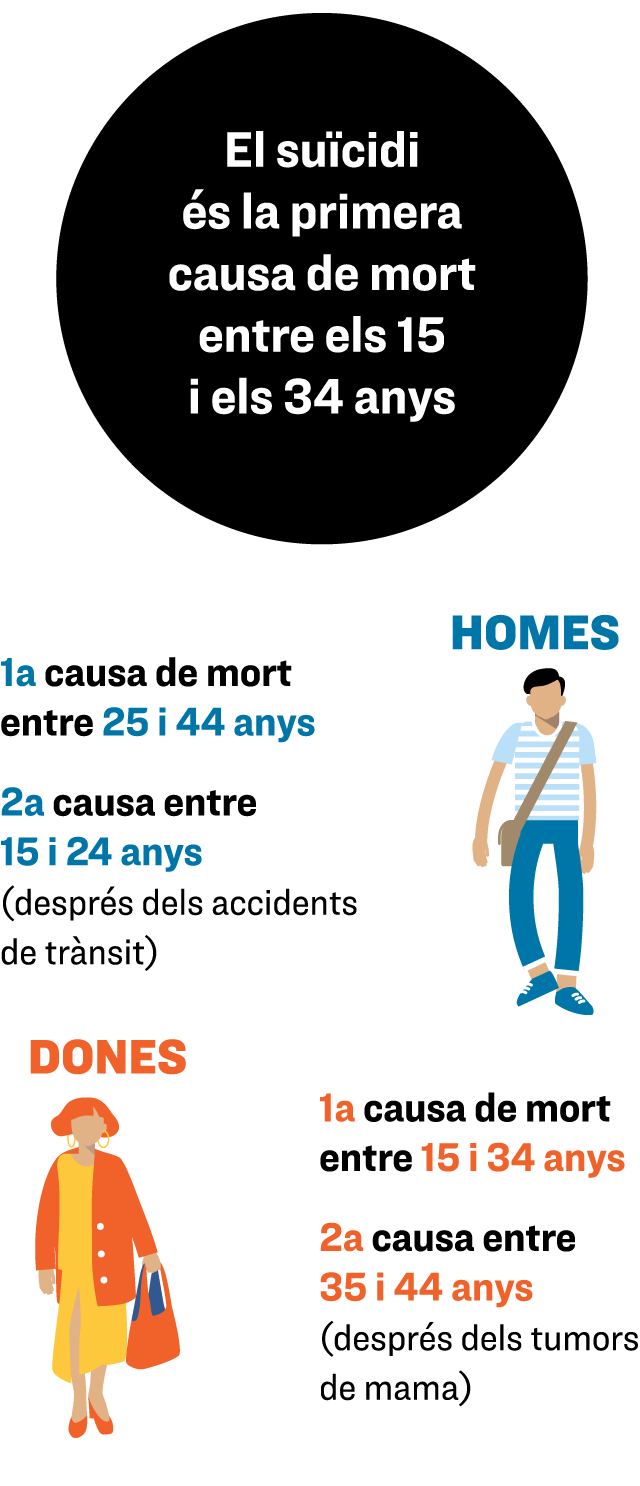
Situació general a Catalunya. Xifres del 2022
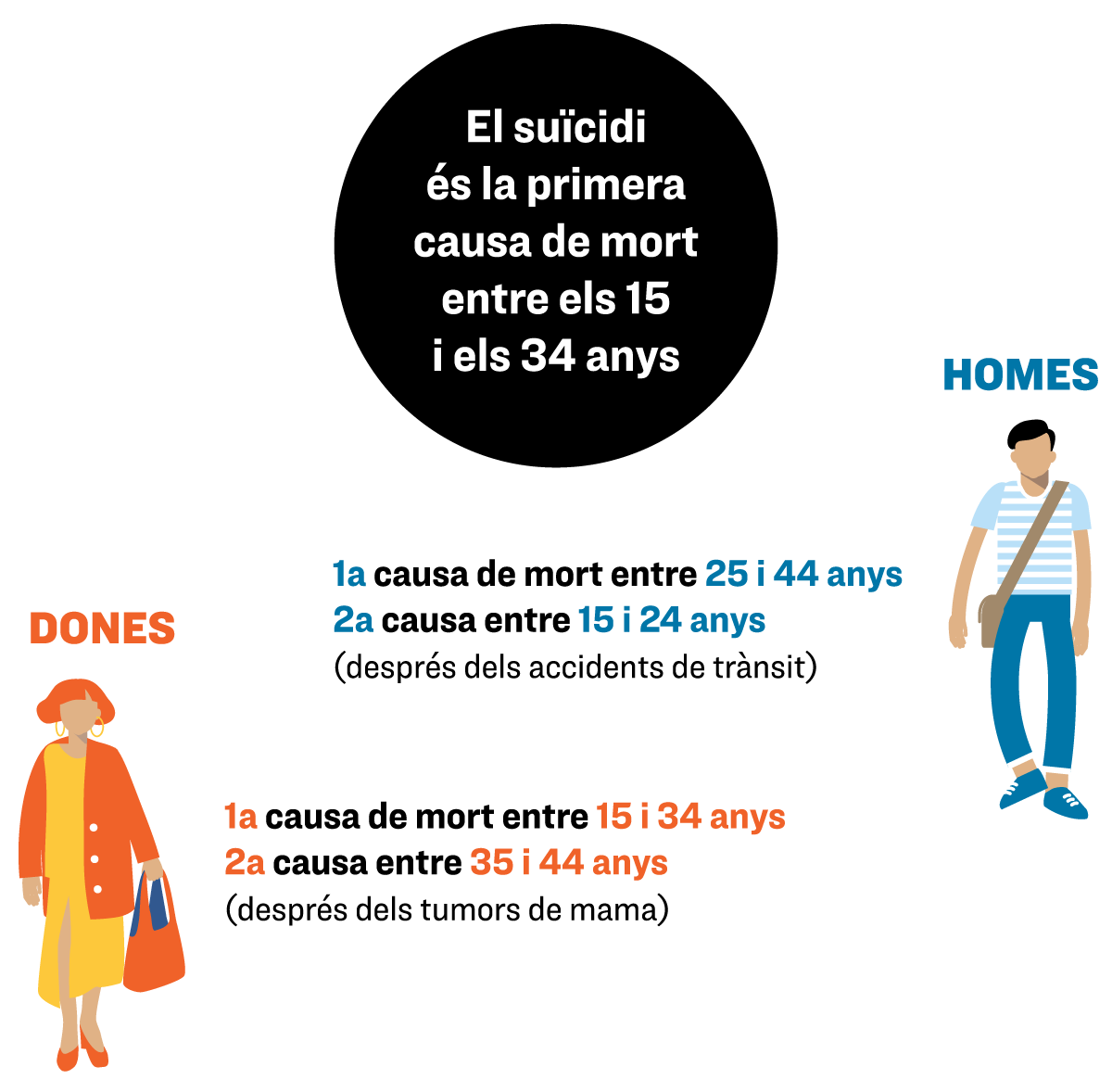
Causes principals per grup d’edat
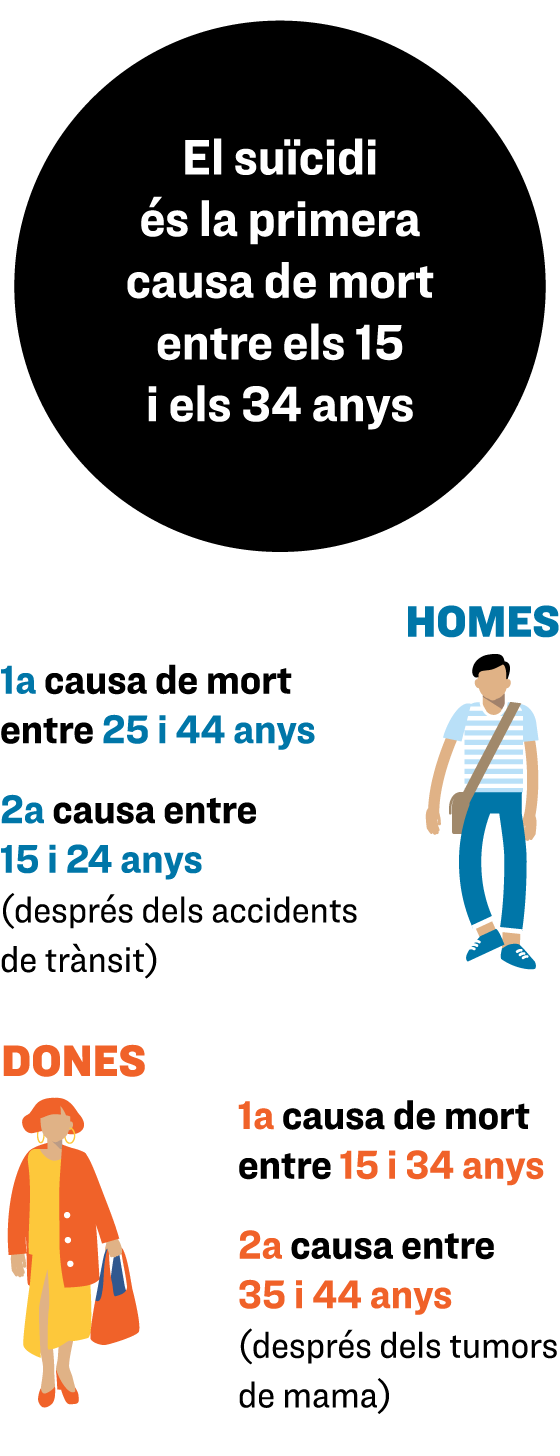
Catalunya. Xifres del 2021
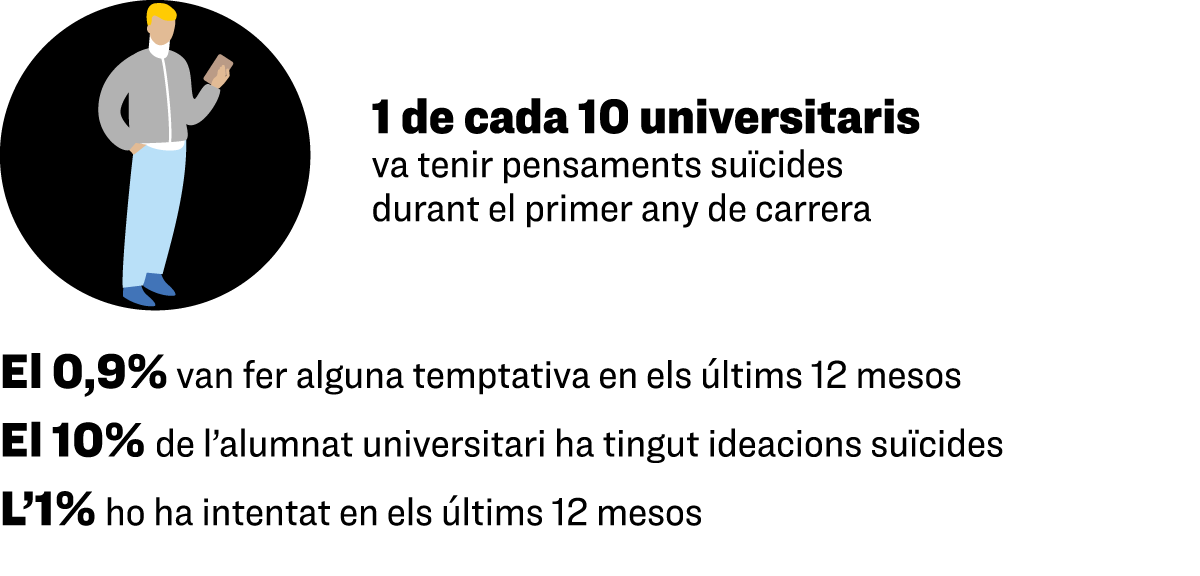
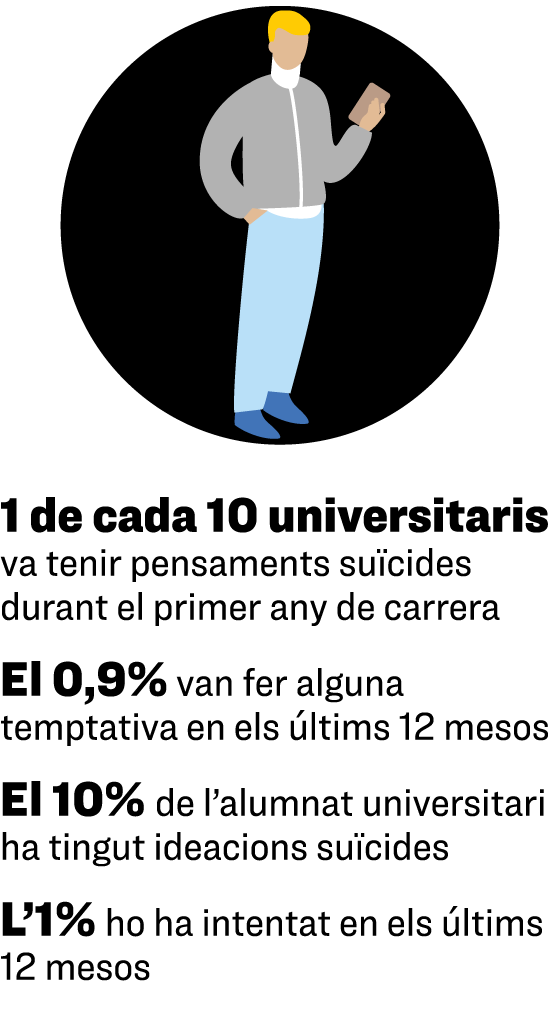
Suïcidi en l’àmbit universitari
Espanya. Estudi Blasco et al. (2019)
When and how to ask for help
Mental health and emotional well-being is a broad concept related to how we feel, think, and act in our daily lives. It can be defined as a state of balance and well-being in which a person is aware of their abilities and can develop their cognitive and emotional skills, live in society, and adequately meet the demands of daily life. Seek professional help if: You feel lonely/and believe you don't have the opportunity to connect with others as much as you would like
You have feelings, thoughts, or a level of anxiety that make it difficult to carry on with your responsibilities and routines, to relate to others, or to get adequate rest, for more than two consecutive weeks, or for a shorter period of time if you experience these changes very intensely or suddenly.
He/She has suicidal thoughts or knows someone who does.
Although asking for help when needed is one of the most important ways to care for emotional well-being and mental health, it's not always easy. To make this decision easier, the public healthcare system offers various in-person and remote support resources.
Mental health and emotional well-being is a broad concept related to how we feel, think, or act in our daily lives.Getty
Care resources
1.
061 Health Responds
The 061 Salut Respon service has a team of specialist professionals in psychiatry, psychology, and mental health nursing. Available 24 hours a day, 365 days a year, the service can offer emotional support and in-person psychological care in complex situations. Additionally, it also provides specialized care to individuals with suicidal thoughts or behaviors and their close circle, and, based on the identified needs, determines the necessary intervention: sending an ambulance to the scene or referring the person to outpatient mental health services.
2.
"Obro Feel": mental health chat for teenagers and young adults
"Obro Feel" is an emotional support chat service that helps detect mental health issues among teenagers and young adults, especially depression, suicidal thoughts, and eating disorders.
The service provides an accessible, intimate, safe, and judgment-free space where young people can openly express their concerns and receive support and help, as well as the tools they need to cope with their distress and contribute positively to their daily lives.
To access "Obro Feel," which operates 24/7, simply add the number 680 354 155 to your phone's contacts and start a conversation using the WhatsApp application.
3.
All OK: protection against violence
Tot OK is another key tool in protecting the well-being of children and young people. It is a digital platform for reporting situations of mistreatment, abuse, or violence that may affect children or adolescents. The service offers direct and confidential contact via web, chat, WhatsApp, or telephone and is managed by professionals specializing in childhood and adolescence.
4.
Primary care center
Primary care is key to the early detection and treatment of milder mental health problems, such as anxiety and depression. A team of mental health specialists supports primary care teams and is integrated into primary care centers (CAPs). Your GP will be able to: Give you tools to care for your emotional health, such as helping you find activities in your community to participate in.
Feeling accompanied and feeling part of a group can improve quality of life, emotional well-being, mood and self-perception of health, as well as reduce anxiety.
Prescribe treatment for mild mental health problems.
Referral to a specialized mental health care service, if deemed necessary.
Although asking for help when needed is one of the most important ways to take care of emotional well-being and mental health, it is not always easy to do so.Getty
Recommendations for taking care of yourself on a daily basis
Just as with other aspects of health, such as cardiovascular or respiratory health, a person can positively influence their mental health and emotional well-being and take action to improve them as much as possible. It's important to understand that there is no single solution, as each person has particular predispositions, personal circumstances, and living conditions. Controlling anxiety and stress
Currently, there are different techniques available to combat anxiety and reduce stress, especially those related to relaxation and positive thinking.
Stay physically active
Regular physical activity is associated with greater mental well-being and has been shown to have positive effects on reducing the risk of depression.
Learn new things
Participating in learning activities is associated with numerous positive effects, including improved psychological well-being and self-confidence.
Nurturing personal relationships
Having a social support network is a protective factor against some mental health problems.
Get enough rest
It is advisable to get enough rest, both physical and mental, and to avoid states of tiredness or fatigue, especially if they are prolonged.
Drink less alcohol and monitor drug use
Excessive consumption of alcohol and other drugs has significant effects on emotional well-being and increases the risk of developing a mental disorder.
Follow a healthy diet
Maintaining a good diet is essential for our nervous system to function properly and allows us to enjoy good mental health.
Seek contact with nature
Regular contact with nature improves health and well-being: it allows you to be physically active, relax, learn new things and nurture personal relationships.
Participate in cultural activities
Cultural activities bring benefits such as the release or control of emotions, the strengthening of self-esteem and sociability.
Reflect on what is important for your own emotional well-being
Whenever possible, it is advisable to try to complement these general guidelines with personal reflection on the things that are considered important for one's own emotional well-being and that perhaps should be prioritized more in daily life.
Generally speaking, a good approach is to try to increase the time spent on activities you already do that are known to improve your well-being (and also reduce those that harm it) while starting a new and motivating activity. This combination can be easier to implement than trying to incorporate a whole set of new activities or changes in habits.
Regular contact with nature improves health and well-being.Getty
The impact on mental health
Mental disorders have a significant impact on people's quality of life and affect all areas (family, work, education, and social life). Additionally, they can contribute to the development of harmful habits, increase the risk of other illnesses or health problems, and lead to disability and dependency. Mental health problems can... cause social isolation
Overburdening the family
Affecting work performance
To cause school failure
Encouraging the abuse of alcohol and other drugs
Increase the risk of developing other diseases
To cause disability
Behaving dependency
Factors in mental health
Mental health and emotional well-being are determined by the interaction of biological, socioeconomic, cultural, and environmental factors. Generally speaking, we can talk about:
Individual factors: psychological characteristics, emotional skills, lifestyle, or also the genetic predisposition of the person.
Environmental factors:family and friends, employment situation, gender, sociocultural level, place of residence, culture, public policies on work and health, etc.
Myths and misconceptions about mental health
They are violent and aggressive
People with mental disorders are no more violent than others; in fact, they are at greater risk of being victims of aggression.
They're not intelligent.
A mental disorder does not imply a low IQ or a cognitive disability.
They are weak
Anyone can suffer from a mental disorder. The causes are multiple: genetic, social, traumatic, or physical.
They are adults
Mental health problems also affect children and adolescents, with a notable increase in cases of eating disorders, depression, and anxiety.
They have problems with drugs
Substance use can be a risk factor, but most people with mental health problems do not use substances.
They never recover
Many disorders are temporary or can be managed with treatment and support, achieving a good quality of life.
They cannot work or live in society
With support and appropriate conditions, they can work, live independently, and participate fully in the community.
They need to be locked up in a psychiatric hospital.
Hospital admission is temporary and only for acute episodes. Most patients continue outpatient treatment with good results.
Mental disorders have a significant impact on people's quality of life and affect all areas.Getty Images
Actions and resources in Catalan universities
Free psychological support
All Catalan universities have psychological support services. free and confidential.
Emotional support, guidance and brief intervention in the face of:
stress
anxiety
situations of discomfort or personal difficulties
Professional teams that provide a fast and coordinated response.
The Department of Research and Universities has strengthened these services to guarantee homogeneous coverage in all centers.
Guide for addressing suicidal behavior
Prepared by the Department of Research and Universities, the Department of Health and the CIC.
Provides specific protocols and guidelines to detect, prevent and act in risk situations.
It includes tools so that faculty and administrative staff can:
identify warning signs
activate the corresponding resources
accompany with sensitivity and confidence
#TrioLaVida events
Annual meeting coinciding with the World Suicide Prevention Day.
Participation of students, teachers and professionals.
Goals:
break the silence
share experiences and resources
to promote mutual support within the university community.
The motto #TrioLaVida It has become established as a call to ask for help and take care of oneself.
PIDUC — Catalan Universities Inclusion Plan
It promotes a university model inclusive and equitable.
Goals:
to guarantee access and academic success for all students
reduce physical, social or academic barriers
incorporate the emotional well-being in university policies.
You support projects focused on emotional well-being.
Funding for:
prevention programs
emotional skills workshops
awareness-raising activities
inclusion and coexistence projects on campuses.
US.cat Network — Healthy Universities of Catalonia
It brings together all the universities of the Catalan university system.
It is used for:
share good practices
coordinate health promotion actions
foster more university environments safe, sustainable and humane
[UNIVERSITY INFOGRAPHIC]
All Catalan universities offer free and confidential psychological support services.Getty Images