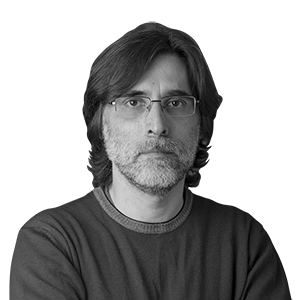
Valentí Fuster: "I'm a very positive mosquito"
The cardiologist, in conversation with Mònica Planas, values humility and trusts in society's reaction to turn things around in these dire times.
-
CAT -
CAST
Barcelona“We are like mosquitoes in the vastness of the universe, and there is so much to discover,” said cardiologist Valentí Fuster at the end of his conversation this Saturday with journalist Mònica Planas at Enfoquem: el Foro de las Soluciones (Focus: The Solutions Forum) organized by ARA at the CCCB. “We’re not going to use that as a headline,” Planas assured him. They both laughed, and Fuster, president of the Mount Sinai Fuster Heart Hospital in New York, added, “I’m a very positive mosquito.” It feels wrong to contradict Planas, but the journalist is like the scorpion in the fable of the frog: faced with the possibility of a headline, he can’t suppress his nature.
The anecdote of the positive mosquito summarizes two of the concepts that guided the conversation: humility and trust in society. The purpose was to find out how science can help us in a time of uncertainty like the present. Fuster, sensible by nature and resistant to catastrophism, responded remotely from New York that "science has a long-term impact rather than a short-term one," and then noted that "China takes a long-term view and in science is surpassing scientists from the rest of the world." In any case, to support this long-term perspective, it is essential to keep "science, health, and education" firmly in mind—a fundamental triad for achieving true well-being.
However, and in keeping with humility, he rejects scientific totalitarianism, which considers science as a source of dogmatic authority. "We can't understand science as an absolute. I'm worried about dogmatic scientists. Science is totally against dogmatism, because what we believe today, tomorrow we see has a different aspect. Scientists must be humble. Science has made me very humble, because you realize that what you realize that what you realize that what you realize that you realize," he argued, echoing the reflection from the end of the conversation, when he played the mosquito card. "I go out very early every morning, at five o'clock, but don't take that as a positive example," he said, laughing. "It works for me, that's all... And when I look up, I really realize that we are a mosquito within the universe, and we know very little. This is the fundamental point: where we are, which is very small, and we open our minds."
Planas was also interested in the impact of the Trump era, the great demiurge of uncertainty. "What Trump is doing worries me in the short term. We are going from stability to instability, but that is temporary. I speak positively. I think these are very difficult times, but this will pass. I hope it will be soon," Fuster wished. With the same positive spirit, he addressed questions about artificial intelligence (AI) and the dehumanization of science. "I worry that AI will cancel our creative spirit, but society will realize the importance of human creativity and will fight against these rigid systems that can turn us into robots. I think society will react," he said. And where does he get that confidence? Perhaps from dedicating 15 minutes a day to thinking. "These 15 minutes are the most important part of the day," he asserted.
