The zebra mussel, the silent threat that conquers rivers and pipes
This invasive species has left the municipality of Aitona without water supply for 24 hours

-
CAT -
CAST
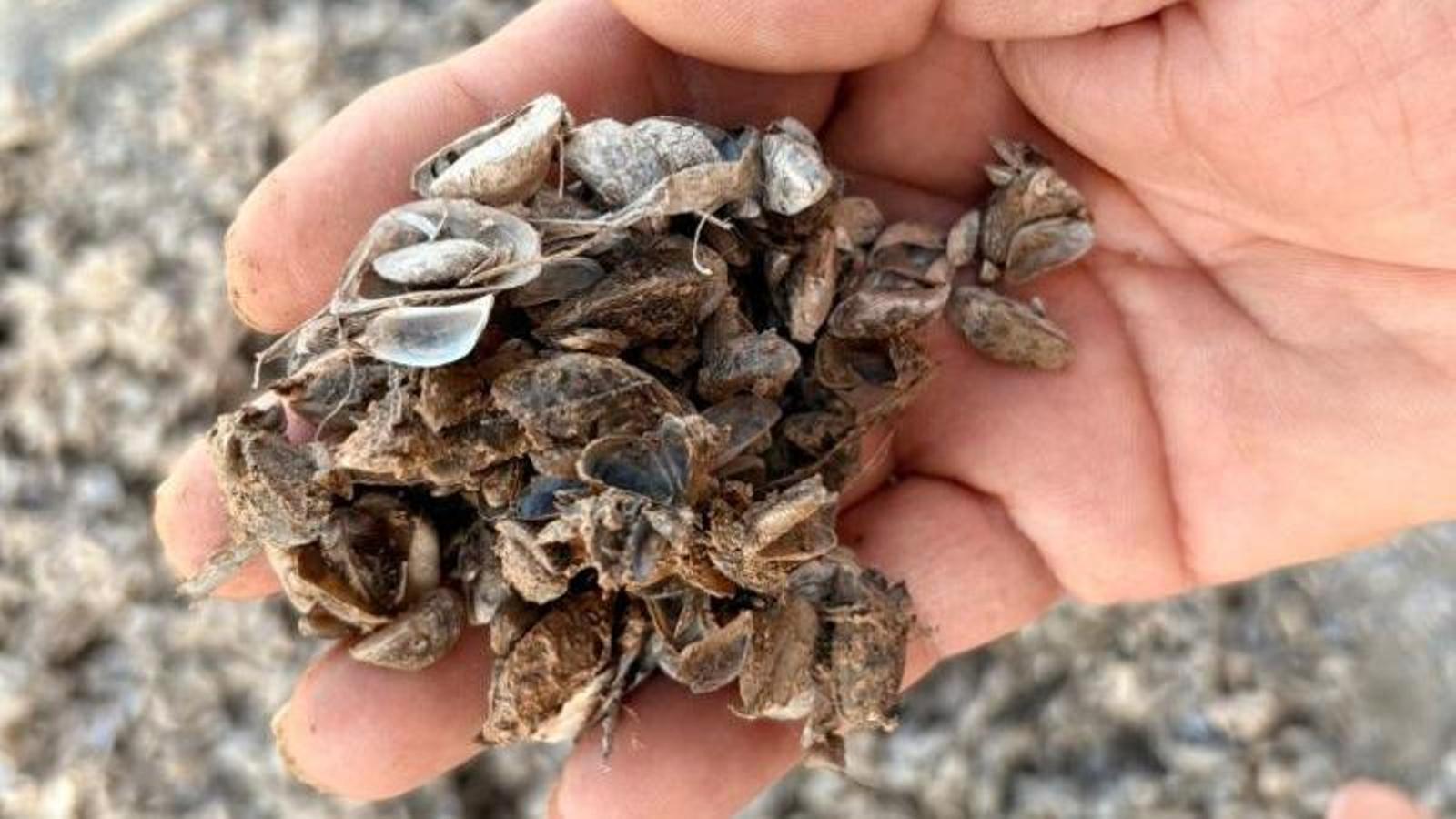
BarcelonaIt does not exceed three centimeters in length and seems harmless, but it is one of the hundred most harmful invasive species on the planet. It is the zebra mussel, which arrived in Catalonia 25 years ago and is fully established in the Catalan Ebro basin – in the Riba-roja and Flix reservoirs up to the river's headwaters – and in the Llobregat basin, in the La Baells reservoir. Experts admit that eradicating it from these colonized areas is now impossible, which is why they focus on preventing it from spreading to other basins, a growing risk due to its high colonization capacity. "A point is reached where we can only aim for containment," warns Joan Pino, director of the Centre for Ecological Research and Forestry Applications (CREAF), who explains that one of the main negative impacts of this species is that it clogs the pipes of water systems in river systems. In fact, this week Aitona was left for 24 hours without a supply of drinking water due to this invasive species, which had collapsed the water treatment plant.
The main impact of this animal, however, is economic. Zebra mussel colonies affect irrigation systems, turbines, diversion channels, and drinking water supply systems, as has happened in Aitona. This affects sectors such as energy, tourism, or agriculture. Pino assures that the maintenance of water infrastructures has a millionaire impact on the public sector. "That it affects water pipes, when we have the water we have, is a problem that costs millions of euros," he states. According to the Catalan Water Agency (ACA), the economic costs can be enormous, due to direct losses in agriculture, fishing, or navigation, or due to the costs of the management necessary to reduce the impacts they cause.
Free rein for proliferation
According to the Information System on Exotic Species of Catalonia (EXOCAT), promoted by CREAF and the Directorate General for Biodiversity and Animal Protection of the Generalitat, biological invasions are "one of the most important components of current global change" and a "serious threat to the conservation of biodiversity and the functioning of ecosystems". They can cause ecological impacts such as the displacement of native species and changes in the structure and functioning of ecosystems. In the case of the zebra mussel, explains Pino, when it arrived in Catalonia in 2001 it found very little native competition in Catalan rivers, which facilitated its expansion.
25 years ago, pollution in the country's rivers greatly reduced the number of native species. "Historically, the situation was so ruined and our rivers were so polluted that native species had disappeared. From the 90s onwards, the ACA did a lot of work to clean up the rivers," explains the expert. The improvement of ecosystems allowed fauna to recover, but the species of a lifetime did not recolonize the rivers, but rather the invasive ones. Like the zebra mussel. "What we have done is generate the conditions for a proliferation of exotic species," laments Pino, who details that there has been a replacement of animal and plant communities in the country as a whole.
The expert argues that the best time for the eradication of this species is when it has just arrived in an ecosystem. To deal with it, rapid action mechanisms and surveillance are needed, as well as having lists of potential invaders that can be used to eliminate them immediately when they enter. "The longer we delay, the more expensive and difficult it will be," warns Pino, who emphasizes that there are increasingly more invasive species because it is more common to travel abroad and more goods are imported.
