The education sector in Barcelona has not paid school meal grants for months.
The companies providing the service complain that they are the ones financing the meals, and the Consortium promises to pay the money at the end of the month.

-
CAT -
CAST
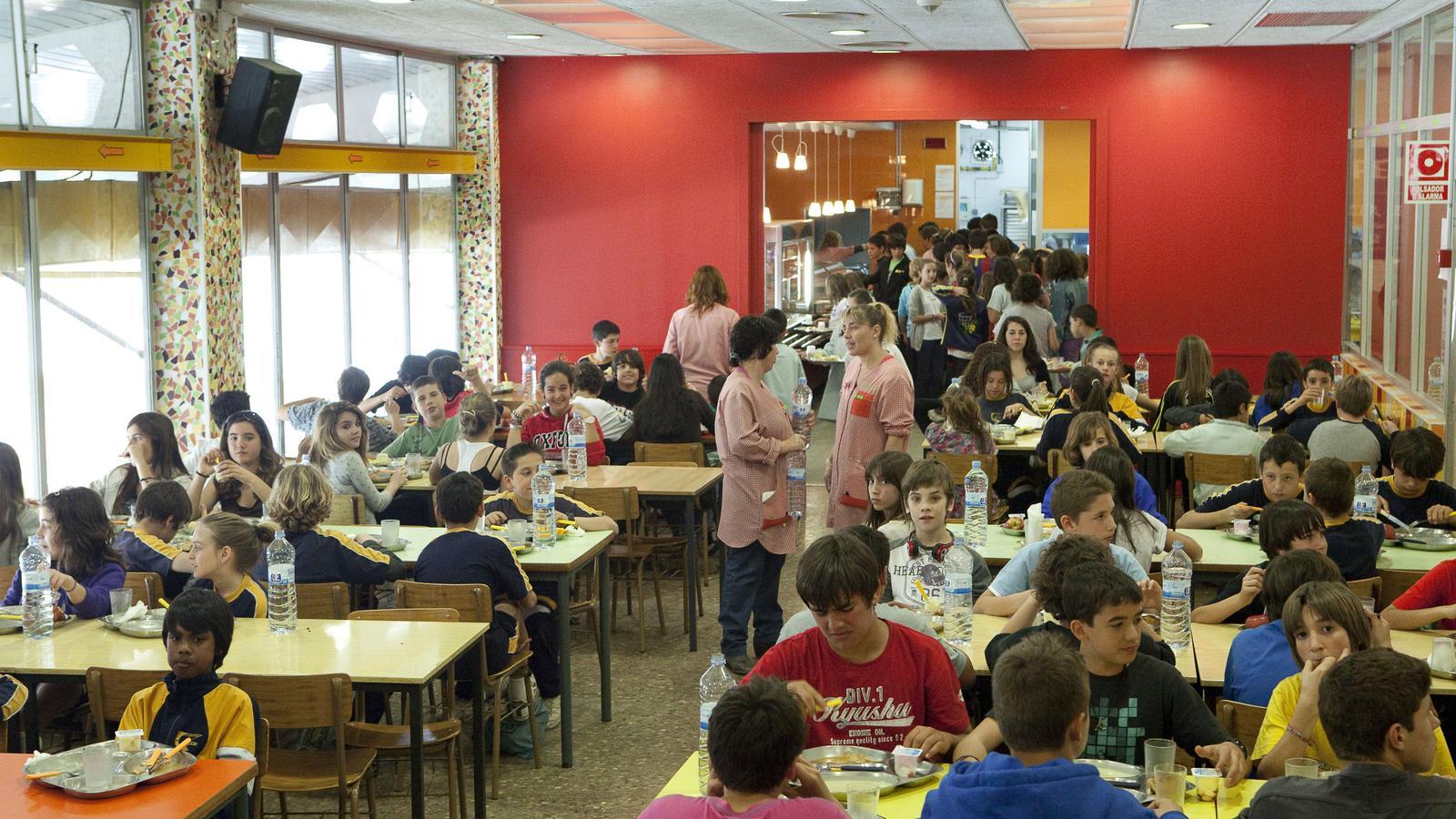
Barcelona"Imagine you have the dentist come to your house, and when they leave you tell them you'll pay in six months. Well, that's what we're experiencing," explains Pep Montes, manager of the Catalan Association of Leisure, Education, and Culture Companies (Acellec), which represents Catalan micro, small, and medium-sized enterprises. They report that, since the start of the school year, the twenty or so companies that provide cafeteria services in Barcelona's schools and institutes have not been paid for any of the meals covered by the school meal grants—the subsidies provided by the Catalan government to help vulnerable students access this service. Although Acellec hasn't been able to provide a precise count of how much money the companies are owed due to this delay—it's necessary to determine how many students receive subsidies at each school, and each company serves several schools and institutes—Montes warns that for some of these companies, the corresponding subsidy payments are still pending. "More and more families are in a difficult financial situation, but if we don't receive funding from the Education Department, in practice it's the companies that are financing school meal grants," denounces the manager of l'Acellec, who insists that many of the companies and organizations providing meal services are foundations and SMEs. According to data from the Education Department, last year meal assistance in the city of Barcelona reached almost 50,000 students (between full and partial aid), with a total amount of more than 55 million euros, although the figures are still provisional. Sources from the Barcelona Education Consortium (CEB) admit that "it is true that there is a delay in the payments of this aid" and argue that "it must be contextualized within the current budgetary framework." They insist that they are "working with an extended budget from 2023, which affects certain administrative processes and may lengthen some procedures." They also warn that, in addition to this situation, "the year-on-year increase in demand for this service" is a major factor. The Department of Education also clarifies that it is a bureaucratic issue of payment delays from the department to the CEB (Consortium of Education). Despite admitting the delay, the Consortium also indicates that "before the Christmas holidays," the amount corresponding to September and October was paid, and that they are working with the expectation of "paying everything else during this month of January." However, it should be noted that, bureaucratically, the Consortium pays this money to the schools, and the schools then pay the catering companies directly. Sometimes, there is an additional step, and the money must be transferred to the AFAs (parent-teacher associations) that manage this service. Therefore, Montes explains that the time between the Consorci's payment and the company's invoice is sometimes long. "If they pay at the end of January, between one thing and another, many companies will find themselves not getting paid for menus they served in September until February, almost half a year later," criticizes the manager of the leisure companies' association.

A 30% advance payment
Although the situation this year is more dire than in previous years, Acellec points out that the problem with receiving payments for school meal assistance has been ongoing for years. "It's chronic; it's been happening for years. In recent years, we'd even seen delays of over a year. Lately, the situation had improved, but this year it's terrible," explains Montes. In fact, the Acellec manager admits that in recent years they had managed to find a way to mitigate the problem: during the first term of the school year—usually in November—the Education Department would provide a 30% advance to the Consortium and the regional councils so they would have the necessary funds to cover expenses. "This didn't happen this year, and although all the regional councils received their payments before the end of the year—many are still processing payments to the companies—the Consortium still hasn't received all the money," laments Montes.
