Sleeping on the street to get the papers: "It seems they don't want us to have them"
This week hundreds of people have slept on the streets of Barcelona to obtain the necessary documents for regularization

-
CAT -
CAST
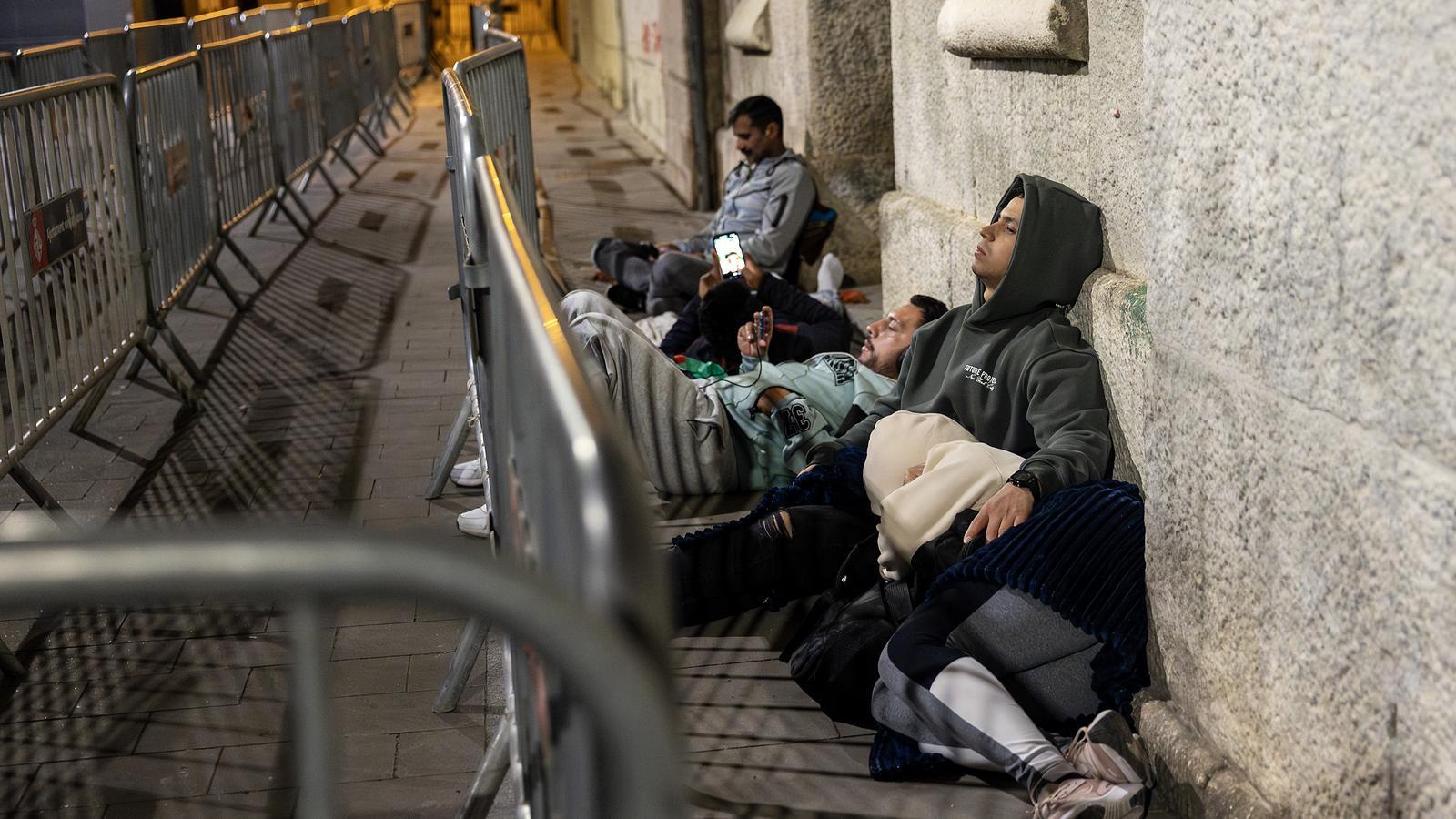
BarcelonaIt is 12 at night and Nancy is watching a movie on Netflix like many Catalans do before going to sleep. She, however, is doing it from her mobile, on a street in Barcelona, sheltered from the cold with a parka she uses as a blanket. Next to her is another girl sleeping on the ground covered with several layers. She has taken off her shoes to sleep and Nancy is watching her shoes, although she doesn't know her name. They met in the queue in front of the accompaniment center for the regularization of migrant people on Miquel Bleach street, which started operating on Monday to respond to high demand. Like them, this week hundreds of people living and working in Catalonia have spent the night at the doors of municipal buildings and social entities to obtain the vulnerability report or the census and complete the process to obtain residency and have a work permit in order.
hundreds of people living and working in Catalonia have spent the night at the doors of municipal buildings and social entitiesAbout 500 metres from where Nancy and the rest of the people queuing are sleeping, there is SAIER, the municipal service for migrants and refugees, where the situation is almost identical. Maribel was the first to arrive and admits she was a little scared because she had been told there would be a lot of people, but the number of people spending the night at the doors of the building has been decreasing over the days since the regularization process began. If last Tuesday there were a hundred people, this Thursday there are about ten. A patrol of the Guardia Urbana, responsible for monitoring the different spots where people are sleeping on the street, explains that more people start arriving from four in the morning, but that the influx has decreased over the days.
has tried to obtain the papers from three different entitiesAs other people arrive and stand behind her in the queue, she calms down. She is 38 years old, from Peru, and works caring for an elderly woman. When she gets her papers, she wants to study nursing, as she hasn't been able to until now. "I want to study and learn, to train myself much more than I already know. And then get a contract and be able to be calm, work and contribute," she assures. Like Maribel, there are about 150,000 people in Catalonia who could benefit from the regularization process, and in Barcelona there are about fifty points, including spaces enabled by the City Council and collaborating social entities, to obtain the vulnerability report and the census certificate.
Food and cardboard against the cold
They are also preparing to spend the night in the open at the Citizen Attention Office (OAC) in Plaça Sant Miquel, next to Barcelona City Hall. There are about ten people, all men, queuing in the city center. Some already have an appointment time, like Noman and Ashik, two friends from Pakistan and Bangladesh respectively, but they have decided to spend the night anyway to ensure they get the vulnerability report. Ashik has eaten a kebab and Noman has a large bag with fries, salted nuts, and a liter of tropical juice to combat hunger while he waits. "Do you want some?" he asks cheekily during the interview. They are sitting on cardboard to protect themselves from the cold and keeping each other company: both have been in Barcelona for two years and work as bricklayers, but they complain that they don't have much work now. "When we have papers, we will be able to work," says Noman.
Others like Abdulai are queuing for a ticket, as he has not had success in other places where he has tried. He is from Ghana and has been in Barcelona for seven months. "They told me a lot of people come, so I decided I would spend the night here to get an appointment," he explains, although he has neither food nor a sleeping bag. He speaks English and French and studies Spanish and Catalan through YouTube. He is a mechanic and trusts that, once he has his papers, he can work in his field. For now, however, he will have to wait all night in the open and, once he gets the appointment, gather all the necessary documents before June 30, the date on which the regularization process will end for all these people. Some, in fact, have already obtained a favorable resolution to their application and already have a provisional permit while awaiting their papers.
