Scientific collaboration between Europe and Africa is strengthened in Trump's time
Researchers from Nigeria, Ghana and Uganda visit Barcelona with the aim of improving the response to diseases like Lassa fever and mpox

-
CAT -
CAST
BarcelonaThe return of Donald Trump to the presidency of the United States weakens research in public health, especially for countries with fewer resources to respond to a health crisis. The cutback of key American funds for disease control and the decline of international research projects threaten the scientific community – particularly the African one – which has repeatedly stated that health requires globally coordinated actions. A clear example is the Ebola outbreak declared in the Democratic Republic of Congo (DRC), which particularly concerns experts and health authorities: with over a thousand confirmed cases and 269 deaths, it represents the seventeenth epidemic in this country.
In Africa, there are countries with a high burden of infectious diseases, and it is the continent where the greatest impact of Trump's scientific crusade is expected. For this reason, researchers are determined to reduce their dependence and strengthen ties with Europe to advance towards equity in research. One example is the Africa-Europe Research Excellence Clusters (CoRE), led by the African Research Universities Alliance (ARUA) and the Guild of European Research-Intensive Universities, launched in 2023. More than 120 institutions from 44 countries participate, including Pompeu Fabra University (UPF), which has hosted four top-level African researchers.
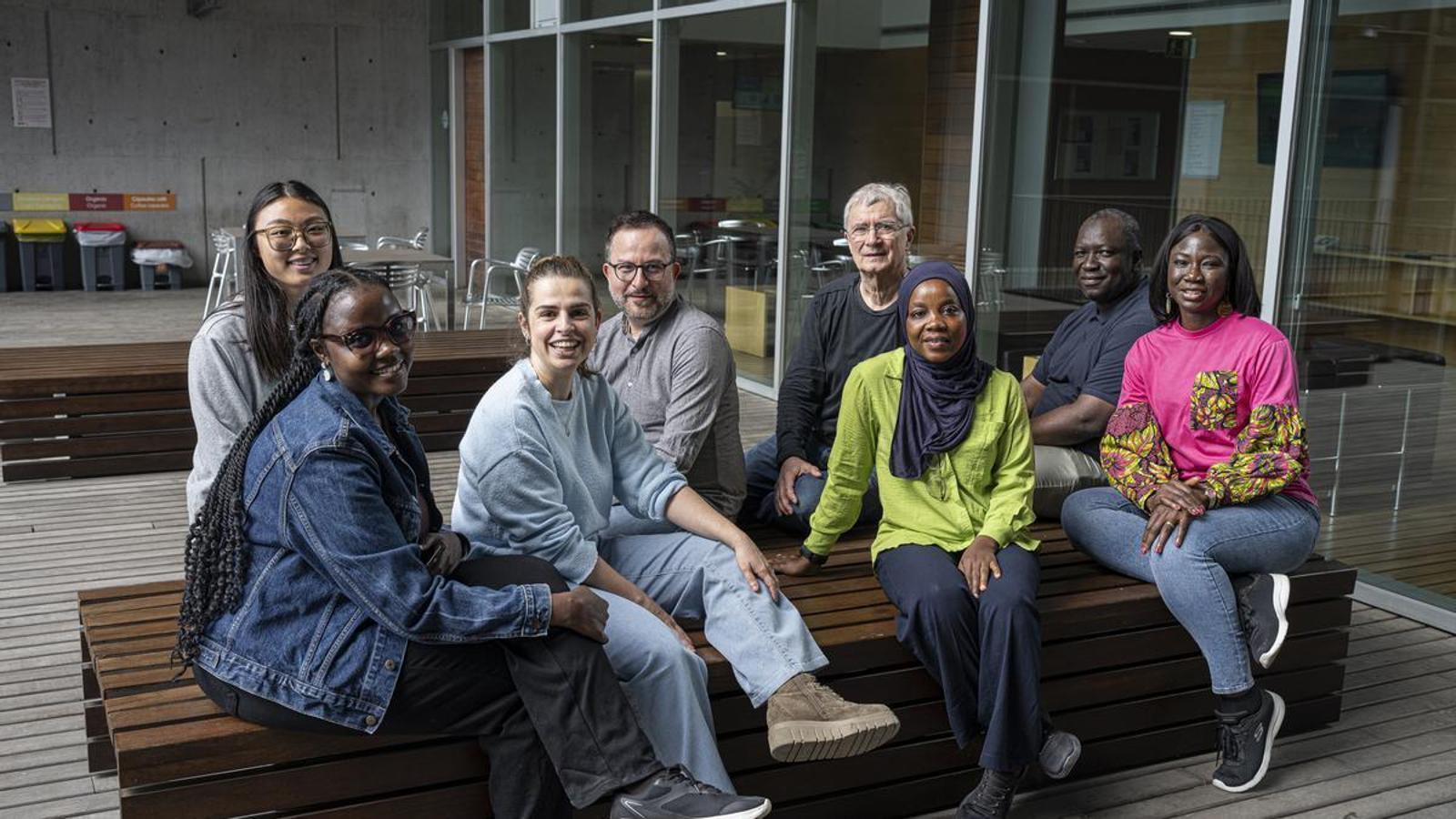
These four scientists from Nigeria, Ghana, and Uganda have visited Barcelona to gain firsthand knowledge of the work of experts in vaccines, diagnostic tools, and epidemiological surveillance to provide a better response to diseases such as Lassa fever and mpox. "Africa has a significant burden of infectious diseases, but the expertise and facilities are in Europe. This must change," states Mustapha Umar Imam, a researcher at the Federal University of Lafia, in Nigeria.
10,000 annual deaths
Umar Imam is studying the development of vaccines to combat Lassa fever, which is endemic in Nigeria – named after the city where it originated – and has spread across West Africa. It is estimated to cause 10,000 deaths annually in the entire region and has no specific treatment. "Every year many people and healthcare professionals die from this disease, so we are trying to see if we can develop a vaccine that reduces deaths. Hundreds of thousands of cases are reported each year," laments Umar Imam.
The molecular virologist Mariam Kehinde Sulaiman, from the University of Ilorin, in Nigeria, is an expert in rapid diagnostics and genomic surveillance of Lassa fever. Unlike her colleague, her work focuses on developing tests that can be performed at the same place where the infection occurred. "Currently, diagnosis is centralized in laboratories in urban areas, which delays clinical decisions. We need kits that can be used at the bedside in rural areas," argues the expert.
Lassa fever is related to lack of hygiene because it is mainly transmitted by rats. The animals feed on food left outdoors and leave contaminated droppings and urine through which people become infected. In this case, human-to-human transmission is widespread. Kehinde Sulaiman explains that outbreaks can also spread among healthcare professionals in hygienic environments if care is not taken in patient management. While waiting for an effective vaccine, Umar Imam explains that the good news is that most people who get infected suffer a mild form, but some worsen and end up dying.
Mpox and the lesson from covid
Another of the significant outbreaks in recent years in Africa has been mpox, which in 2024 forced the World Health Organization (WHO) to declare a public health emergency of international concern. Irene Owusu Donkor, an epidemiologist at the University of Ghana and the Noguchi Memorial Institute for Medical Research, specializes in infectious diseases, and her studies detected a focus of mpox in Ghana that had previously gone unnoticed.
Her visit to European research centers is driven by the need to deploy a system for detecting hot spots of outbreaks in West Africa before cases spread and the situation becomes more difficult to control. "The initial symptoms are similar to fever, and then a rash appears that can be mistaken for chickenpox. Sometimes the diagnosis is missed due to this similarity," she says.
In addition to quickly detecting outbreaks to cut contagion chains, a vaccine is also being sought. This is the goal of Marina Jupiter Kabahita, a bioinformatician and pathogen genomics specialist, who leads the genomic surveillance of mpox and multiple pathogens from the Central Public Health Laboratory of Uganda. Her project seeks to use all the genomic data they have collected to design a specific vaccine. They have over 500 genetic sequences from different cases they have detected in the country.
Replicating Europe's technical capacity in Africa is vital in the eyes of these researchers. Umar Imam laments that Nigeria's political leaders have not learned the lesson from covid-19 because "the massive funding expected for research" after the crisis has not been seen. Owusu Donkor raises the question of whether the responsibility lies with scientists, who should "know how to translate their work into public policies and be interested in politics" in order to make decisions.
