Open conflict in La Garrotxa over the construction of a bypass over a protected aquifer
Environmentalists and farmers take to justice the project, approved by the Generalitat, to decongest the passage of trucks in Olot and les Preses

-
CAT -
CAST
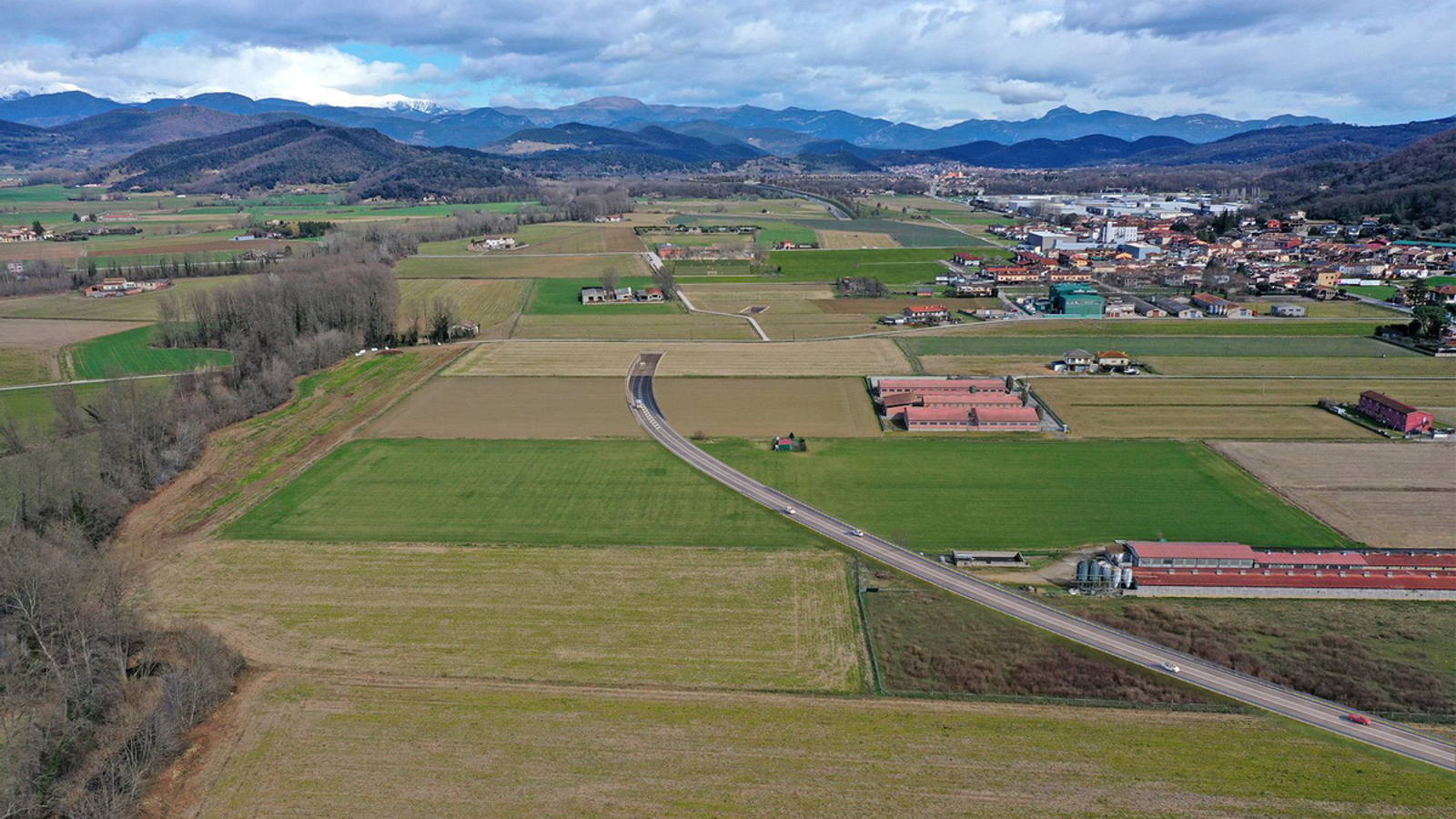
GironaEvery day, more than 2,000 high-tonnage trucks pass through Olot and follow the route along the Les Preses regional road. Most are trucks from the meat industry, which make the round trip between Osona and the mega-slaughterhouse of the Garrotxa capital, and they transport live pigs, offal, or fresh goods. The constant passage of trucks through this entire urban stretch, with houses right next to the road, generates a lot of unrest among neighbors and causes recurring traffic problems. For this reason, town councils, companies, and neighborhood platforms have long been demanding the construction of a bypass that circles the city and avoids the passage of heavy vehicles. Finally, after years of negotiations, in March 2026 the Generalitat approved the construction project for the new bypass, with a budget of 470 million euros, and the main work is already out for tender. But the new road has environmentalists and farmers against it: they argue that it would seriously affect areas of very fertile fields and, above all, the fluvio-volcanic aquifer of the Garrotxa, which supplies water to the entire region.
The intention of the Generalitat is for the construction work on the bypass to begin in the spring of 2027. It is about 11 kilometers long, with 40% of the route underground, which must connect the A-26 motorway, north of Olot, with the confluence of the C-63 (which goes towards Vic) and the C-37 (towards Girona), at the industrial estate south of Les Preses. And faced with the Generalitat's refusal to reconsider the project, the Garrotxa association Salvem les Valls has filed an administrative contentious appeal with the High Court of Justice of Catalonia (TSJC), which has already been admitted for processing. The Unió de Pagesos union has also done so. Both are requesting precautionary measures to stop the construction plan until a ruling is issued. The Vall d'en Bas Town Council, for its part, has also taken the case to court, but without requesting precautionary measures.
The critical point of the dispute is the 900-meter Verntallat tunnel, over the region's aquifer, in the crop area between Les Preses and the foothills of Puigsacalm. To be able to excavate and build the concrete walls of the underground road in this section, the Generalitat plans to install 72 pumping wells to absorb and extract groundwater, and, in this way, manage to lower the water table of the aquifer so that work can be done in the dry.

This decision frightens environmentalists. "If the works begin, the damage could be irreversible. We are not aware of what destroying the aquifer might entail. We have no other source of drinking water in the entire region, none at all," argues Moisès Mont, president of Salvem les Valls. The entity also maintains that no alternative studies have been conducted and recalls that the Catalan Water Agency (ACA) itself granted this aquifer maximum environmental protection by declaring it a Natural Underground Reserve.
Joan Paredes, a lawyer who has worked for a long time in public administration, is handling the environmentalists' case and argues for the urgency of applying precautionary measures. "The only thing we ask the judge is to suspend the execution until all evidence can be presented, because if the judge rules in our favor in the end, but the work has already started, the ruling will be unenforceable," he explains. He continues: "At the time the project is processed, no account is taken first of the protection measures that, by European regulation and mandatory Spanish regulation, must be established for the maintenance of this type of aquifer. There is no report among those on file from the acting administration bodies that guarantees that, once the temporary emptying of the aquifer is finished, the wells will not be harmed."
The Government maintains the schedule
In response to the legal challenges, the Department of Territory states that the construction design does indeed have favorable reports and full guarantees from the ACA and assures that the temporary drainage during construction will not jeopardize the aquifer or the drinking water supply for the region. Likewise, the Salvador Illa executive describes the infrastructure as urgent and a historical necessity to resolve the serious road safety, mobility, and pollution problems suffered by the urban centers of Olot and Les Preses. Thus, the Generalitat remains firm in its position and is working in both the legal and administrative spheres to maintain the schedule of actions, while continuing to advance on complementary projects related to compensatory measures for the affected property owners whose land will need to be expropriated.
On the other hand, supporters of the bypass are applying pressure so that the schedule is not delayed. A group of residents from Les Preses, organized under the entity Les Preses 2020-2030, are announcing mobilizations, public exhibitions open to the citizenry, and the hiring of legal services to appear in the contentious proceedings with the goal of supporting the Generalitat. "The filing of the lawsuits signifies a disloyalty to the negotiations that have been carried out during this process. Changes and compensations of all kinds have been accepted and incorporated, but these entities want to further prolong the suffocation and the dangers we have to endure due to the traffic of 20,000 vehicles, 3,000 trucks, 15,000 live pigs, and the remains of dead animals through our town crossings. It has been seventeen years of suffering," states Pau Tarradelles, spokesperson for the platform.
