Learning the third most spoken, but invisible, language in Catalonia
The Amazic School wants to recover the knowledge of the mother tongue of the majority of Moroccans who have emigrated to the country
-
CAT -
CAST
Cornellá de LlobregatWhen we think about the third most spoken language in Catalonia after Catalan and Spanish, our minds often go to English, Chinese, or Arabic. If we hear about Amazigh, on the other hand, we are likely to frown. Amazigh, originating from North Africa –especially present in Morocco and Algeria–, is estimated to be one of the most spoken languages within Catalan territory, as it is calculated to be the mother tongue of the majority of the immigrant population from Morocco.
a mother tongue teaching project for young people in situations of social exclusionThis is the case of Yasmin Ayaou, from Palamós, daughter of a Rifian father and a Catalan mother, who, despite having been familiar with the Amazigh language when she was younger, ended up losing it. “When I was seven years old, my father left home, I stayed to live with my mother here in Catalonia and I distanced myself from the language”, explains Ayaou. It wasn’t until later that she began to take an interest in her origins again: “I wanted to recover this part of my identity: Catalan, but also Amazigh”.
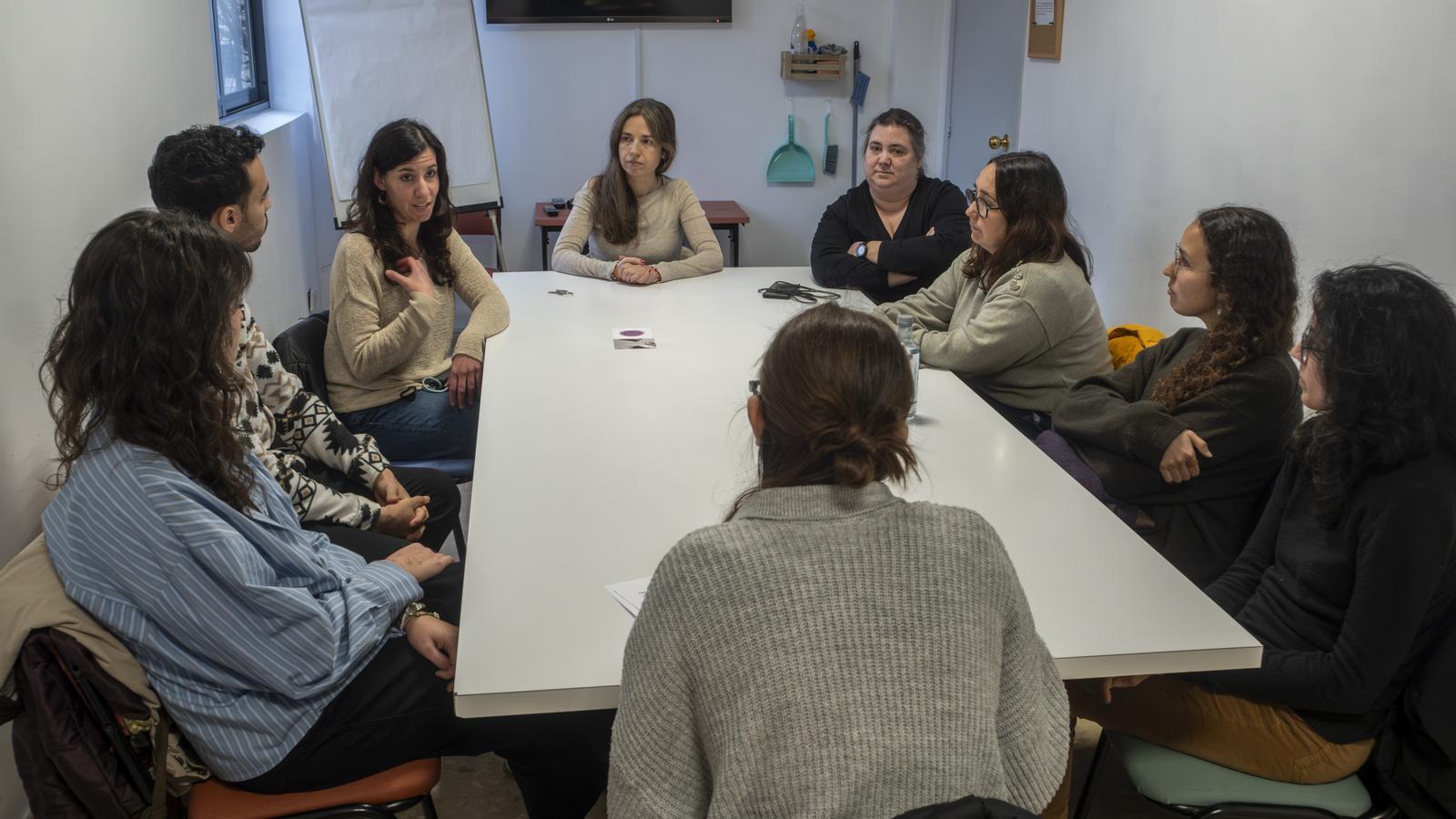
To respond to desires like Ayaou’s, Tanit initiated the Escola d’Amazic project from Sala Padró / Orfeó Catalònia in Cornellà de Llobregat. “There hadn’t been Amazigh classes for adults for over ten years, apart from those of Prollema –a mother tongue teaching project for young people in situations of social exclusion–, and we saw that there was a demand”, explains Verónica Esteban, promoter of the project.
In Ayaou’s case, she details that she found out through social networks and is very satisfied: “They have offered me a space where I could find myself”. A situation that Yosra Benjelloun, from Calafell, who was born in Morocco and came to Catalonia when she was four years old, has experienced similarly. “Although my mother was born in the Rif, she grew up in Tangier and, therefore, I have always spoken Moroccan Darija”, points out Benjelloun, who wanted to reclaim Amazigh as an identity trait.
"I saw many parallels with Catalan"
Despite the fact that the institutional recognition of Amazigh has advanced significantly –it is an official language in Morocco since 2011 and in Algeria since 2016–, the academic debate about its cataloging still generates discussion. However, from Tanit the priority is not labels, but cultural survival. “More than a technical school, we focus on orality; we are a school of the people and for the people and we seek to build bridges in Catalonia”, details Montull.
In this regard, the association considers it important that the people who teach the language be Amazigh speakers residing in Catalonia to foster cultural exchange at the same time. “It is an opportunity to be able to teach my language near Catalan”, expresses Ayoub Amou, one of the trainers. Amou arrived in Catalonia two years ago and, as he specifies, for him the school was a way to participate in interculturality.

In fact, the bond created is one of the issues that other students also value. Marta Rosell, from Manlleu, explains that she came to the school out of curiosity to "learn about a population with such a presence in the territory and at the same time unknown." This was also the case for Mireia Puntí from Barcelona, who became interested after working as a tour guide in Morocco: "I saw many parallels with Catalan and I loved that young people who had learned my language taught me theirs." In the four sessions of the course, Amou details that there are language sessions – he explains the Tamazic variant and another trainer, Mimount Boussaksou, explains Tarifit – but also context about what Amazic is and about the culture.
Recently, the Escola d’Amazic has been selected by the Associació Benestar i Desenvolupament to receive funding from the Global Districts project, an initiative financed by the European Union to develop projects for global citizenship education. The award, as board member Maria Sánchez specifies, will allow us to support young people who want to be trainers in the next editions in 2026.
Montull assures that it is a necessary step to get the message to other people:
