Catalonia will have almost 700 more places for first-year medicine students within five years
The Government will allocate 100 million euros to build new infrastructure for students in Reus, Lleida, and Barcelona
-
CAT -
CAST
BarcelonaUp to 692 new first-year medicine places in Catalan universities for the 2031-2032 academic year. This is the commitment announced this Friday by the President of the Generalitat, Salvador Illa, during the Conference on Medicine at the Palau de Pedralbes, and it aims to improve access to these studies, which currently have an insufficient offer of 1,333 places, as for every vacancy there are almost four students who apply for it. This is a historic demand from the health and university sectors, which have been calling for years to increase the number of doctors trained in Catalonia to meet the needs of the system, where there is a structural shortage of professionals. The increase in places will also serve to lower the cut-off grade for medicine studies, which will favor more students being able to enroll.
The pandemic shook the Catalan health system and made evident the need to strengthen it, with better and new infrastructures and with more personnel who could respond to a growing and increasingly aging population. To this must be added the challenge of retirements, as many doctors will hang up their stethoscopes in the coming years, and unions, professional associations, and scientific societies have long warned that generational renewal is not guaranteed. The Minister of Research and Universities, Núria Montserrat, explains that improving access to medicine studies and expanding the offer is one of the elements on her political agenda since she took office, and now they are beginning to get to work with the presentation of this Comprehensive Plan for Medicine Studies.

those from other autonomous communities who come here to trainAs access to UVic-UCC is through the PAU, the forgivable loans are intended for all students, including those from other autonomous communities who come here to train and, once their studies are finished, return to their homes to practice as doctors. The department estimates that it will allocate around 4 million euros to reduce the tuition fees for medical students at this university. Regarding the reason why this increase in places starts with private centers and not public ones, Montserrat explained that the first proposals to expand the offer that reached the department were from Ramon Llull University and Abat-Oliva University. Nevertheless, she asserted that they are already working with the seven public universities to begin expanding the offer from 2028.
Gradual increase in places in public universities
Therefore, to access the new places in the medicine degree at public universities, we will have to wait a little longer, and the increase in supply will be much more gradual than in private ones. For the 2027-2028 academic year, 50 new medicine places will be created in Terrassa, a project that is currently in the elaboration phase and will be coordinated by the University of Barcelona (UB). In the rest of the universities, we will have to wait until the 2028-2029 academic year, when there will be an increase of a hundred places in the system as a whole. This increase, in fact, will be maintained each year until the 2031-2032 academic year, by which time nearly 500 new places will have been created in public universities in that year.
This means that, when the horizon set by the Generalitat for 2031-2032 is finally reached, 1,600 first-year students will be able to enroll in Catalan public universities. This, added to the places also available in private centers, means that the country will slightly exceed 2,000 first-year medicine students within five years. According to the counselor, this plan pursues the objective of the university having a role as a "social elevator" and guaranteeing access to university medicine studies regardless of the student's "zip code." "We want you to have the same opportunities to pursue your higher education and develop your scientific career in top-notch facilities in Catalonia," defends Montserrat.
New infrastructure
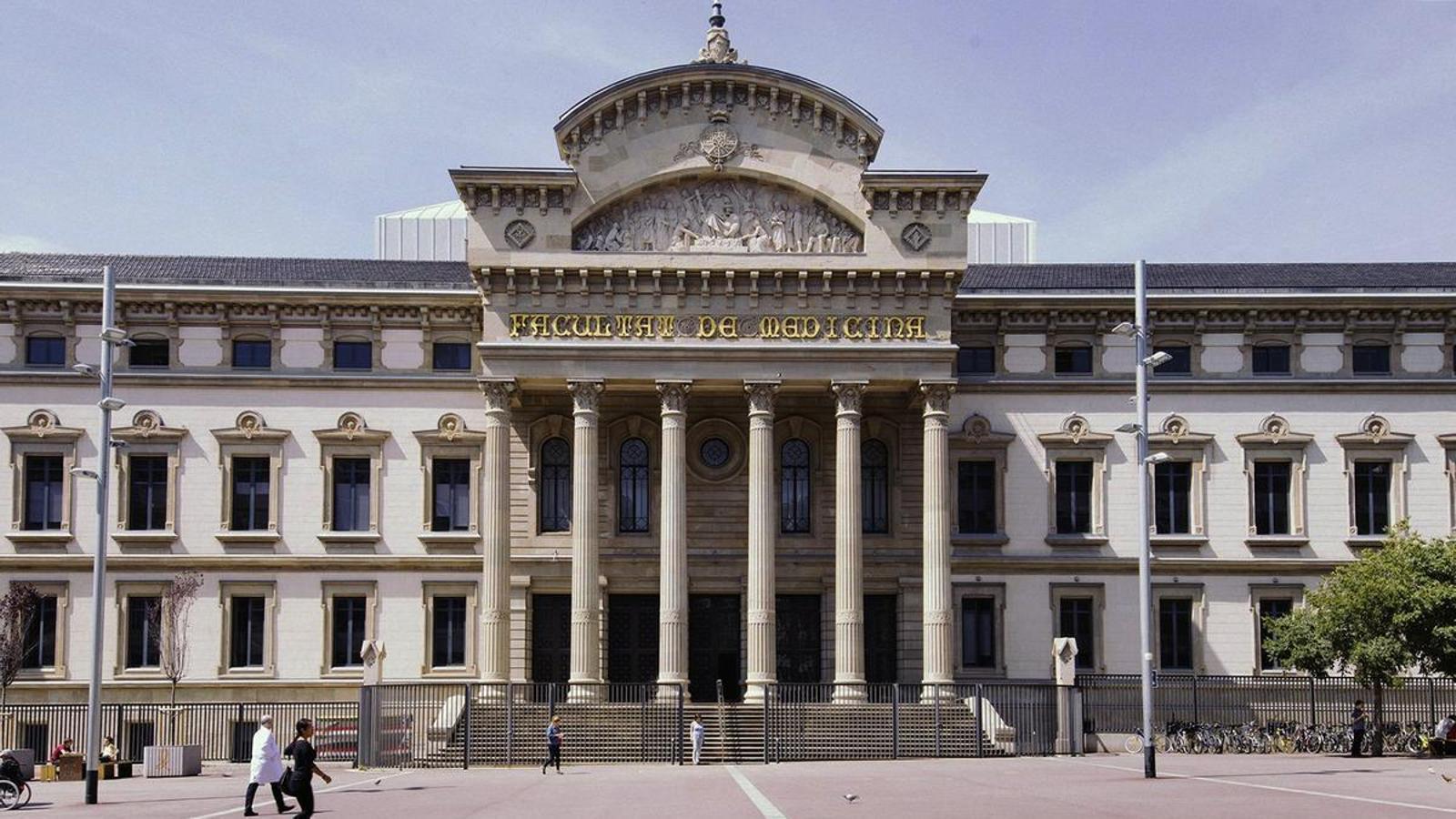
To respond to this increase in places, the plan also foresees an investment of around 100 million euros to adapt or create new infrastructures that can accommodate future medicine students. Specifically, it will promote the transfer of the Faculty of Medicine and Health Sciences of the Universitat Rovira i Virgili, which is currently located in the historic center of Reus, to the Bellissens Campus in the same city. This change will have a cost of 109 million euros, of which 60 will be borne by the department. The Campus of Health Sciences of the Universitat de Lleida will also be created with a budget of 15.6 million euros, of which the department will pay more than 10.
To conclude, Montserrat explained that they will also support the MIES project of the UB, which includes the creation of two new buildings for a value of 59 million euros, 30 of which will be borne by her department. However, the minister has not specified the timeline for these new infrastructures, which aim to meet the demand for medicine studies in these territories. The plan also has long-term objectives, once these places become a reality, and foresees that in 10 years Catalonia will go from the current 8,000 medicine students to around 12,000, of which 9,000 will be trained in public universities. Thus, it hopes to meet the current and future needs of Catalan society and provide personnel for the health system.
