Between expectation and prudence: what we know about the tailor-made vaccine against melanoma
Moderna and Merck (MSD) announce "positive results" in a trial with more than a thousand patients, but experts ask for details on survival and relapse

-
CAT -
CAST
BarcelonaThe announcement by Moderna and Merck (MSD) of a therapeutic vaccine to prevent metastasis of melanoma, the most aggressive skin cancer, came as a surprise on Wednesday and sent shares of these pharmaceutical giants soaring. In a joint statement, the companies claimed to have obtained "positive results" in the phase 3 trial – the stage at which efficacy and safety are reviewed in patients before applying for marketing authorization. In the statement, they claimed to have achieved relapse-free survival and distant metastasis-free survival – to other organs or lymph nodes – in patients who had already undergone complete tumor removal. However, they did not provide any specific data on the vaccine. Nor is there, at the moment, an associated scientific publication.
"It is extraordinarily hopeful news, but we have to wait to see the complete data. And, above all, it remains to be seen what the overall survival will be. The same study will continue precisely to evaluate it," explains Eva Muñoz-Couselo, head of the Melanoma and Other Cutaneous Tumors Group at the Vall d'Hebron Institute of Oncology (VHIO). Susana Puig, director of the August Pi i Sunyer Biomedical Research Institute (IDIBAPS) and head of the melanoma group at the same institution, also positively assesses the news. "Achieving the inclusion of more than 1,000 treated patients in multiple countries and centralizing the production of these vaccines is, from a logistical point of view, very interesting," she acknowledges.
The fact that it is a phase 3 trial means that the research goes beyond an experiment with mice and is already in a fairly advanced process. However, Puig calls for caution and points out that, at this time, there are limitations to considering it a success. "We don't know if this vaccine benefits overall survival, what its costs will be, and if it will be implemented in Europe. It is one thing to present it to the Food and Drug Administration (FDA) and another to the European Medicines Agency (EMA)," she suggests.
However, if it achieves approval in the United States, it could be a very important medical milestone: it would demonstrate that it is possible to manufacture a preventive therapy adapted to the mutations of each patient's tumor. In fact, it would become a precedent for oncological therapy based on messenger RNA technology, until now globally known for its role in containing the covid-19 pandemic.
According to its developers, intismetran autogene is a personalized therapeutic vaccine that is designed from each patient's individual tumor and uses messenger RNA to stimulate the immune system. The objective: for T lymphocytes to be able to recognize the tumor and attack a possible metastasis before it develops. "What is especially important now is that this biological sophistication has not remained just an attractive laboratory idea: for the first time it has produced a positive result in a phase 3 trial," argues Muñoz-Couselo.
How would the vaccine work?
To simplify greatly, this therapy adapts to the unique cancer mutations of each patient. First, a tumor sample must be obtained during surgery (or a biopsy) and then sequenced to identify specific alterations. The next phase is essential: by comparing tumor tissue with healthy tissue, using bioinformatics techniques, it is predicted which neoantigens – fragments of proteins generated by cancer, different from those in healthy cells – could be recognizable by the immune system. Once twenty to thirty are selected, messenger RNA sequences are designed to instruct the body and produce antigens that temporarily flag the cancer. Thus, the defenses learn to recognize the tumor as something harmful.
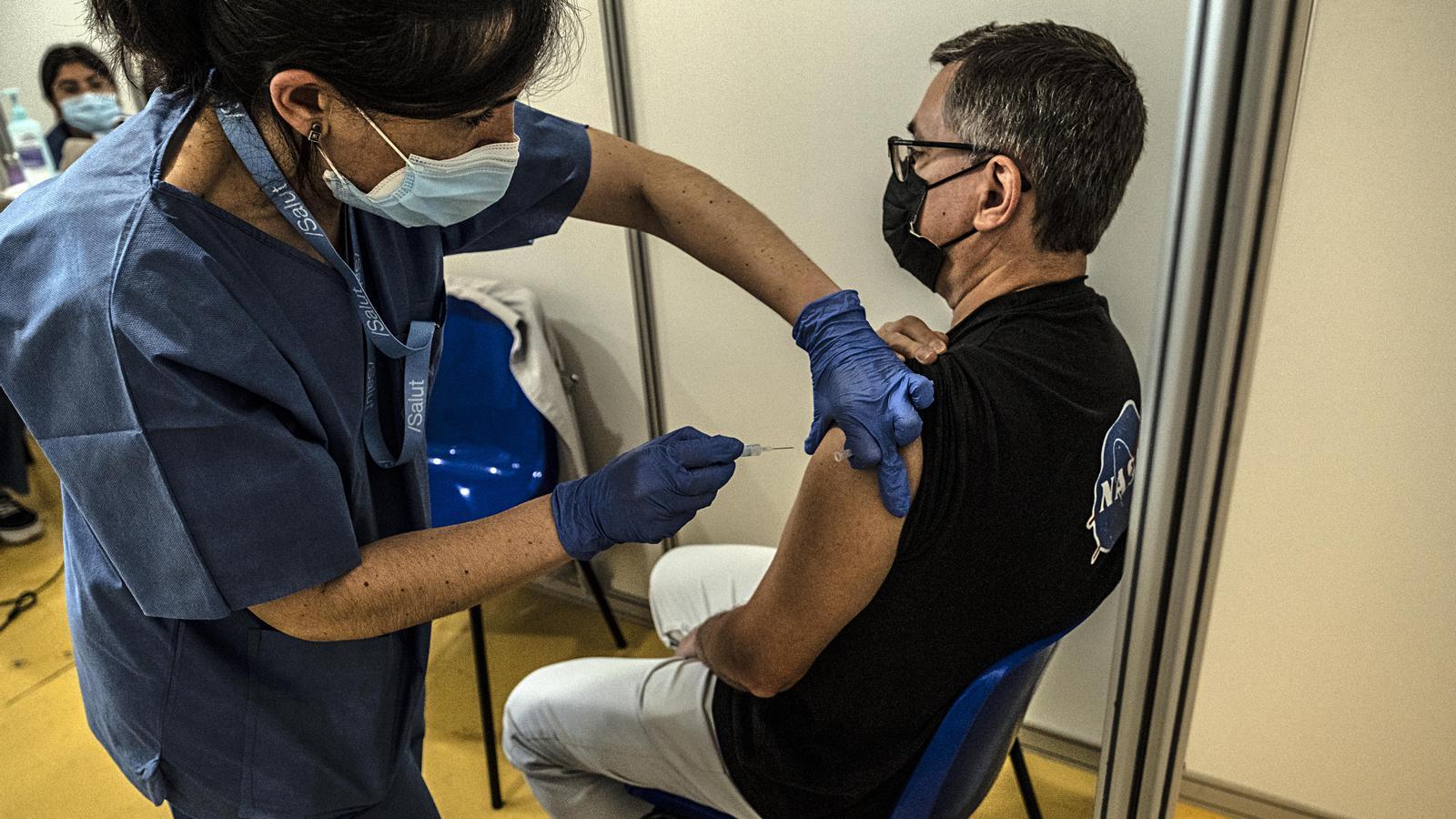
The manufacturing of this messenger RNA vaccine is done in the laboratory. A synthetic messenger RNA molecule is created which is encapsulated in lipid nanoparticles to protect it. It is then injected into the patient. If the immune system responds, T lymphocytes will be activated to attack the tumor only if it reappears.
According to the two companies, the vaccine should be administered with an immunotherapy called Keytruda (pembrolizumab), which can deactivate the tumor's protective mechanisms and enhance the action of lymphocytes (what is known as an immune checkpoint inhibitor). Until now, cancer vaccines have tried to direct the immune system against one or more antigens shared by many tumors and, therefore, administered the same vaccine to different patients. "Here the approach is completely different: each vaccine is unique and is not used in isolation, but in combination with immunotherapy. While the vaccine attempts to generate and amplify a specific immune response against the tumor, pembrolizumab eliminates one of the brakes that the tumor uses to inhibit this response," summarizes Muñoz-Couselo.
Too soon to measure improvement
In December 2022, Moderna and Merck (MSD) announced that, in clinical trials, the combination of the vaccine with Keytruda had reduced the risk of relapse or death by 44%. In 2024, the companies presented updated data at the American Society of Clinical Oncology (ASCO) that would show a 49% reduction in the risk of relapse or death and a 62% reduction in the risk of metastasis or death compared to treatment with Keytruda alone. And this June, after five years of follow-up, data provided by the pharmaceutical companies indicated a 49% reduction in the risk of relapse or death and a 59% reduction in the risk of metastasis or death. "This is very relevant because the vaccine has not been compared against a placebo or against the absence of treatment, but against pembrolizumab," states Muñoz-Couselo.
Catalonia has participated in this study and one of the centers has been precisely Vall d’Hebron, which has actively included patients, although there were also other centers at the state level in Madrid, Malaga, and Valencia. The preventive treatment of metastasis is directed solely at patients at very high risk of ganglionar dissemination that can still be surgically removed and always in combination with immunotherapy. "It would not serve to treat patients who already have metastasis and who have already progressed to a first, second, or third line of treatment. It would be for people whom we have already operated on and who are disease-free," points out Puig.
How have they looked at the effectiveness of the vaccine? By looking at how many treated patients relapse and how long it takes them to do so. "And it seems that, when you add the vaccine, they relapse less or take longer to develop metastasis," summarizes Puig. In fact, one of the criticisms made by the expert is that an increase in survival is not demonstrated. And to claim that it will change the standard of care, it is still too early.
"We need to know the real magnitude of the benefit, the detailed safety, overall survival, and finally, that regulatory agencies evaluate all this data. Therefore, it may be a turning point for the field, but we should not present it as a new standard of care yet," warns Muñoz-Couselo. Puig agrees, who considers that the most interesting thing is that therapeutic alternatives would be opened up. "With melanoma, 50% of patients benefit from immunotherapy, but with other tumors the percentage decreases. Perhaps with the vaccine, more benefit," he concludes.
