Trials an experimental therapy for patients with untreatable cancer
The VHIO will conduct a clinical trial with about fifteen patients to evaluate the safety of a new CAR-T
-
CAT -
CAST
BarcelonaScience is determined to know more about cancer because, the better its functioning is understood, the better the treatments that are developed to combat it. This is known as personalized medicine. Years ago, we were only able to diagnose a breast tumor, but with the advances of recent decades, professionals can accurately know what type of breast cancer the patient suffers from and what therapy best suits them to tackle it. This is the objective pursued by the Catherine clinical trial, from the Vall d'Hebron Institute of Oncology (VHIO), which will test an experimental therapy for patients with a type of tumor that has no treatment.
In oncology consultations, to explain it simply, professionals often use the first and last name formula: they know what cancer the patient has, i.e., the first name, and they perform more tests to determine their last names, what subtype of cancer it is, to offer the best possible treatment. In Catalonia last year, more than 46,000 new cancer cases were diagnosed, of which it is known that about 2,000 share a certain last name: they present high levels of a protein called HER2, which is responsible for the tumor's growth, especially present in breast, esophagus, and stomach cancers.
For some time now, this protein has been a target for a multitude of personalized treatments that have saved many lives, but, even so, approximately one-third of patients exhaust all available therapies without success. Now, a team of VHIO professionals will test an innovative therapy for all these people with no therapeutic alternatives. It is an immunotherapy with CAR-T cells, a therapy in which the patient is their own donor. Cells from the immune system, natural defenses of the body called T lymphocytes, are extracted from the patient, genetically reprogrammed in the laboratory to attack tumor cells, and reinoculated into the bloodstream.
Combination of techniques
CAR-T treatments have already proven successful in blood cancers, such as leukemias and myelomas, and autoimmune diseases, such as lupus, but they still have room for improvement with solid tumors, such as those being studied in this trial. Researchers will test a practically unprecedented CAR-T, which has only been tested in the United States, that combines two different techniques and has obtained very promising results in the laboratory.
In a previous study published in the journal Nature Communications two years ago, the team demonstrated that the treatment is capable, on the one hand, of making the body's defenses recognize cancer cells and, on the other, of activating the immune cells that surround the tumor and often protect and promote its growth. In this way, a double response from the immune system is achieved, capable of successfully combating these tumors without treatment, and now researchers want to test it in patients.
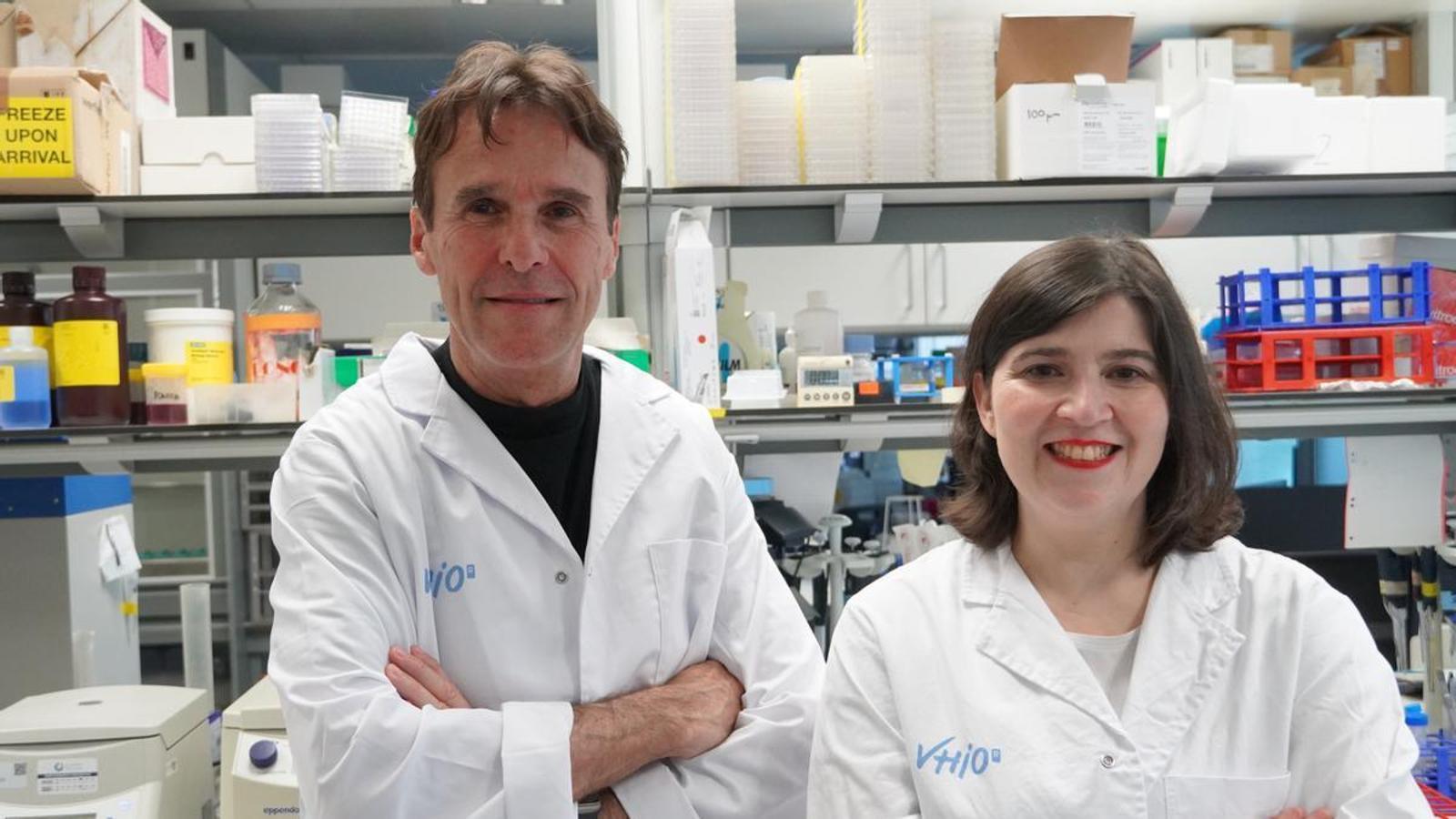
"We are excited. The results obtained in preclinical models were very positive; we achieved a complete, durable, and safe response," explains Joaquín Arribas, lead researcher, head of the Growth Factor Group at VHIO and director of the Hospital del Mar Research Institute, to ARA, adding that they now want to verify the safety and efficacy in humans. To do this, they need at least 15 patients with a tumor with high levels of this protein that has already exhausted all available treatment options. Arribas says they have already asked the Spanish Agency of Medicines and Medical Devices (AEMPS), which authorizes the trial, to increase the number of participants.
Since the administration of the therapy must be carried out under very specific conditions, Arribas explains that the CAR-T cells will be produced at the Blood and Tissue Bank, which has the necessary infrastructure to do so under the best conditions. The researcher also highlights that the entire treatment has been conceived and led from Catalonia "without the intervention of pharmaceutical companies or commercial interests," with funding from the Carlos III Health Institute, the Spanish Association Against Cancer, and the Breast Cancer Research Foundation.
