Zapatero tells the judge that the jewels are a gift from the King of Saudi Arabia from 2007
The former Spanish president asks that cooperation be requested from the Saudi authorities so that they certify his version
-
CAT -
CAST
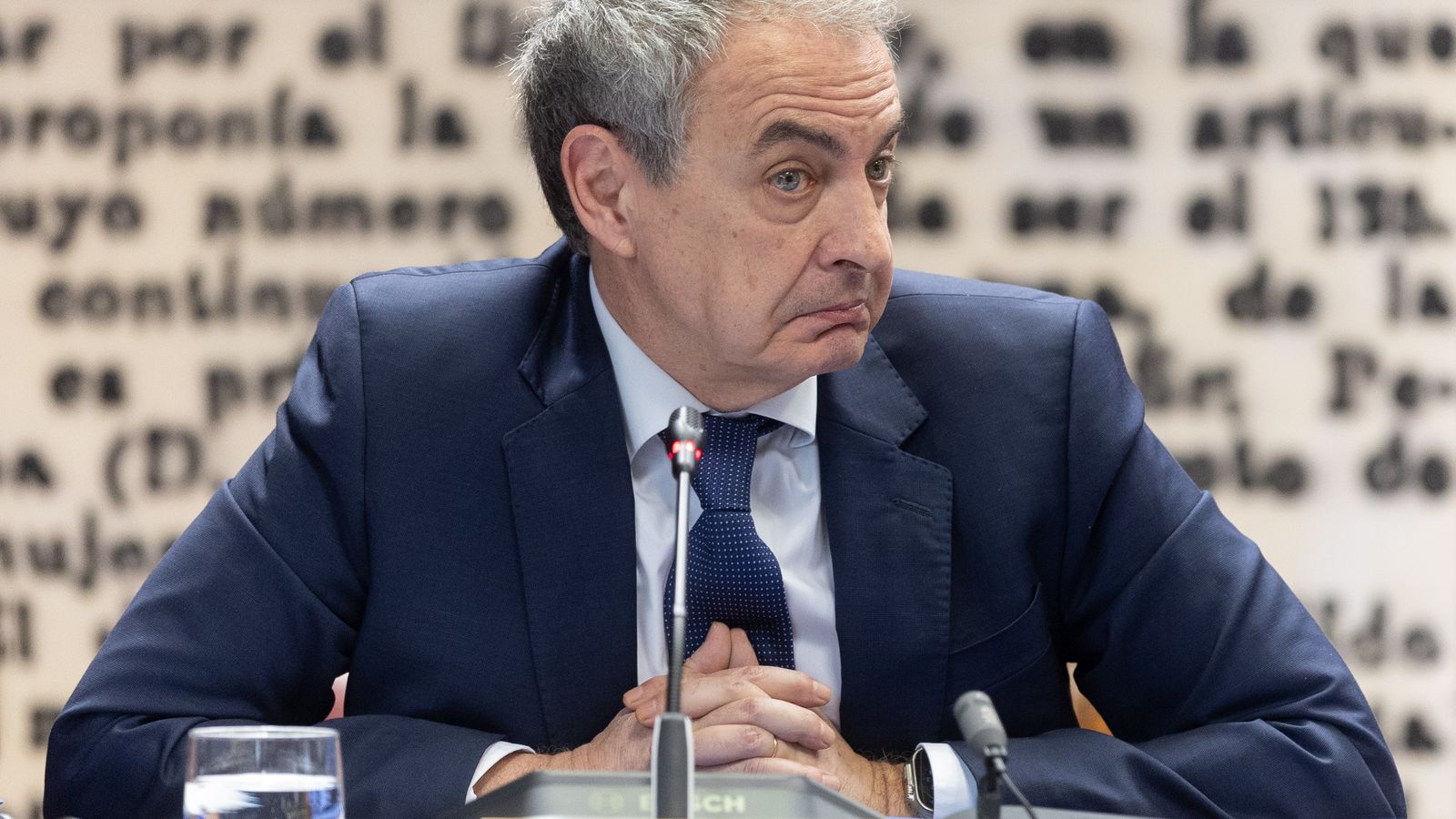
Madrid / BarcelonaAfter having promised to provide explanations about the origin of the jewelry from the moment they were found in his office on May 19th, former Spanish Prime Minister José Luis Rodríguez Zapatero gave an official explanation this Wednesday through a document submitted to the National Court. Four months later, in the document, which ARA has had access to, he states that the pieces are a gift that the King of Saudi Arabia Abdullah bin Abdulaziz al-Saud –who died eleven years ago– gave him in June 2007, during his first term at the head of the Spanish government. It is a gift that the monarch delivered to the family home located at the Moncloa Palace on the occasion of a trip made to Madrid, and he justifies the delivery as a "strictly personal attention, accepted out of deference and as a sign of gratitude and respect" to the Saudi king. Asked about Zapatero's version, the Spanish Prime Minister, Pedro Sánchez, from New York, has reaffirmed his confidence in the presumption of innocence of the former Prime Minister.
Of all the jewelry seized from his office, Zapatero specifically refers to three sets of necklaces, earrings, and bracelets that make up "90%" of the total value of the jewelry. He makes an inventory of these 12 pieces: in the document, he speaks of a ruby set, consisting of four pieces, all of them made with 18-karat white gold; an emerald set, consisting of four pieces made of 18-karat white gold as well with origin in Zambia, and a sapphire set, also of four pieces and 18-karat white gold.

To give credibility to this version, the lawyer for the former Spanish president reveals that the day before Zapatero testified as being under investigation before Judge Calama, on June 16, he sent a letter addressed to the head of protocol of the Saudi Arabian royal court, through the country's embassy in Madrid, to obtain confirmation of the facts. The missive, to which ARA has had access, says: "As you will possibly remember, on the occasion of the official trip of His Saudi Highness, King Abdullah Bin Abdulaziz Al-Saud, on June 18 and 19, 2007, he delivered his tokens of consideration [...]. At the Moncloa Palace we received a strictly personal gift consisting of a collection of three jewelry sets of similar structure [...]. With the sole intention of honoring the truth, I ask that you confirm the veracity of the facts", requested Zapatero, in Spanish, English, French and Arabic.

However, since he did not receive a response, he insisted on August 12th. In this other letter, which this newspaper has also had access to, he conveys to Saudi Arabia that he will request from the competent court "a formal request for international judicial cooperation through letters rogatory". A request that this Thursday Zapatero has already asked Judge Calama to confirm that almost 20 years ago the Saudi king gave these jewels to the then Spanish president. "It is a perfectly delimited verification diligence that, if considered necessary, would allow for the definitive clarification of the only factual question that gave rise to the separate piece regarding the provenance of the jewels," the document states.
In any case, the document submitted by Zapatero's defense adds, furthermore, that these high-value jewels "were kept and remained stored during all this time, together with those of family origin and other gifts from friends, without any use or destination, and without awareness of their material value". In fact, regarding the rest of the pieces –67– that were found in his safe, Zapatero maintains that they belong to the family circle and have no "relevance", because many do not reach 1,000 euros or simply have no value.
With this Wednesday's explanations, Zapatero intends to "neutralize the indications that may currently arise from the investigation" and excuses himself for not having done so before "due to the time elapsed since the date of the gift". "The [need for] confirmation has meant that an explanation could not be provided in a shorter period of time," the document resolves.
Questions the value of 1.3 million euros
Until now, Zapatero had limited himself to saying that some of the jewels were family inheritances and that the others corresponded to "a courtesy gift from many years ago", but without specifying their origin. The former Spanish president presented this document after judge José Luis Calama ordered a new gemological appraisal on Monday, this time by the Yanes jewelry store, and gave him three days to provide additional information about the pieces, which until now the jeweler Ansorena has valued at 1.3 million euros.
Regarding the valuation of the jewels, Zapatero's document questions the figure given by Ansorena. The former socialist leader states that he "does not accept nor make his own" this valuation, since it provides an amount "undoubtedly much higher than the real value of the pieces".
His argument is that the calculation of the value of the pieces was done according to the price they would cost today –including taxes and what is usually attributed when an insurance policy is taken out–, and not according to the value they could have had in 2007, when they were gifted to him. "The estimate offered [...] does not determine nor allow to establish what the value of the pieces was 19 years ago", says Zapatero in his document. In this way, the former Spanish president's lawyer also defends himself against the accusation against him regarding the discovery of the jewels: the judge, upon learning of the valuation, decided to open a separate case for smuggling and tax fraud.
Dutch investor under investigation in prison
The other piece of news that has emerged this Wednesday regarding the case is the prison sentence that Judge Calama has decreed for Simon Verhoeven, the Dutch investor also under investigation who gave three loans to Plus Ultra before the airline received the rescue from the Spanish government. The search and arrest warrant had been in force for seven months and on August 21st, Verhoeven was arrested at Frankfurt am Main airport. Finally, he will arrive in Spain this Thursday by plane, investigated for criminal organization, money laundering, influence peddling, and misappropriation.
According to the court order to which this newspaper has had access, the magistrate has summoned him for Friday at nine in the morning to testify, and to ensure he attends, he has decided to send him to Soto del Real prison as soon as he lands at Barajas. It is a decision taken in a “strictly precautionary and provisional” manner to “avoid any risk of flight in the time lapse” between his arrival in Spain and his appearance before the judge. That same day, he will have to decide whether to keep him in provisional prison.
In one of its reports, the UDEF detected “possible irregularities” in the transactions of the companies that Verhoeven used to provide loans to Plus Ultra. The question is whether the rescue money could have been used to launder the loans.
