Feijóo is wrong: the Spanish government has not made "a good deal" with the minimum wage increase
Both incomes and pensions below 21,000 euros are not taxed
-
CAT -
CAST
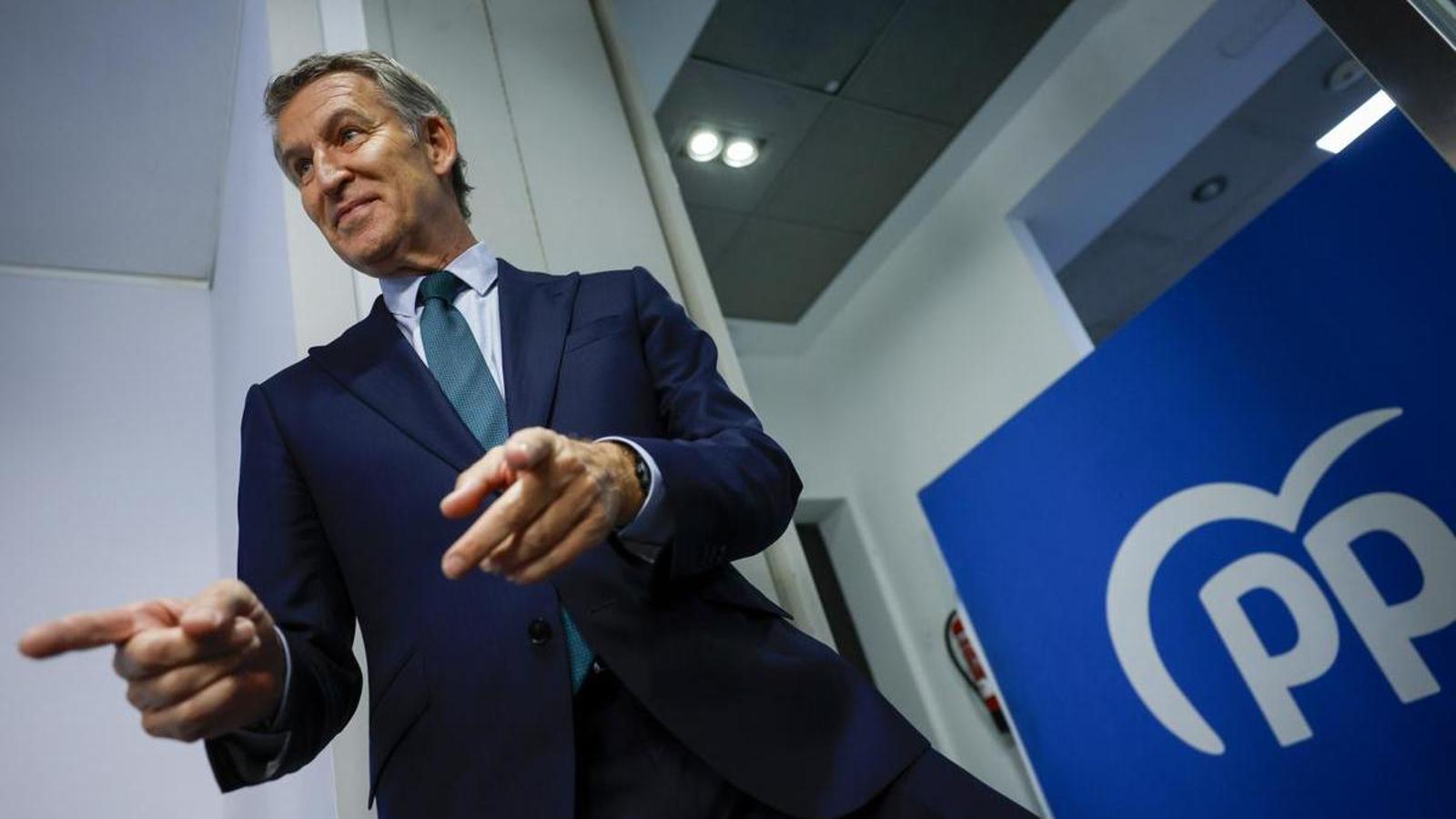
The president of the Popular Party, Alberto Núñez Feijóo, has entered the debate on the minimum interprofessional wage (SMI) and the taxation of labor income with statements that do not fully align with reality. In an interview this Friday on Cadena SER, the popular leader claimed that the Spanish government has made "a good deal" with the minimum wage increases because, according to him, the State collects more money through social security contributions and personal income tax (IRPF).
"The government forced companies to raise wages, the contributions. When this worker receives a higher salary, they often exceed the income tax bracket they were paying and contribute more," he asserted. The host of Hoy por hoy, Aimar Bretos, reminded him that the minimum wage continues not to be taxed for personal income tax. Feijóo replied that the government wanted it to be included, while the PP voted in favor of it being excluded.
In practice, however, recipients of the minimum wage do not end up paying the tax, although legally it is not an exemption. As of January 1, 2026, the personal income tax regulations incorporate a deduction for labor income that neutralizes the taxation of people who earn up to 17,094 gross euros per year, the reference amount of the minimum wage for 2026. The deduction is 590.89 euros and is progressively reduced for higher incomes, up to 20,048.45 euros, provided that the established requirements are met.

This is how Joan-Francesc Pont Clemente, professor of financial and tax law at the University of Barcelona, explains it in statements to the ARA. He distinguishes between the fact that the minimum wage is a labor income subject to personal income tax (IRPF) and that, once the corresponding deductions are applied, a fee to pay results. "A person who only earns enough to satisfy their needs should not be taxed," he points out.
According to the professor, if Feijóo's proposal consists of guaranteeing that those who only earn the minimum wage (SMI) do not pay personal income tax, "it already happens" with the current system. On the other hand, if he intends for the minimum wage to be exempt regardless of the other income a person receives, it would be a much broader measure, which would open a new space for non-taxation. Pont Clemente considers that the Popular Party leader has not specified the proposal enough and that his statements may respond to "a propagandistic message".
The second vice president and Minister of Labor, Yolanda Díaz, has also responded to Feijóo by assuring that the minimum wage is not taxed by personal income tax and has warned workers, pensioners, women, and young people about the PP's economic proposals: "Take note".
