95 years since Spain prohibited war
Article 6 of the Constitution of the Second Republic consecrated pacifism which was broken five years later
-
CAT -
CAST
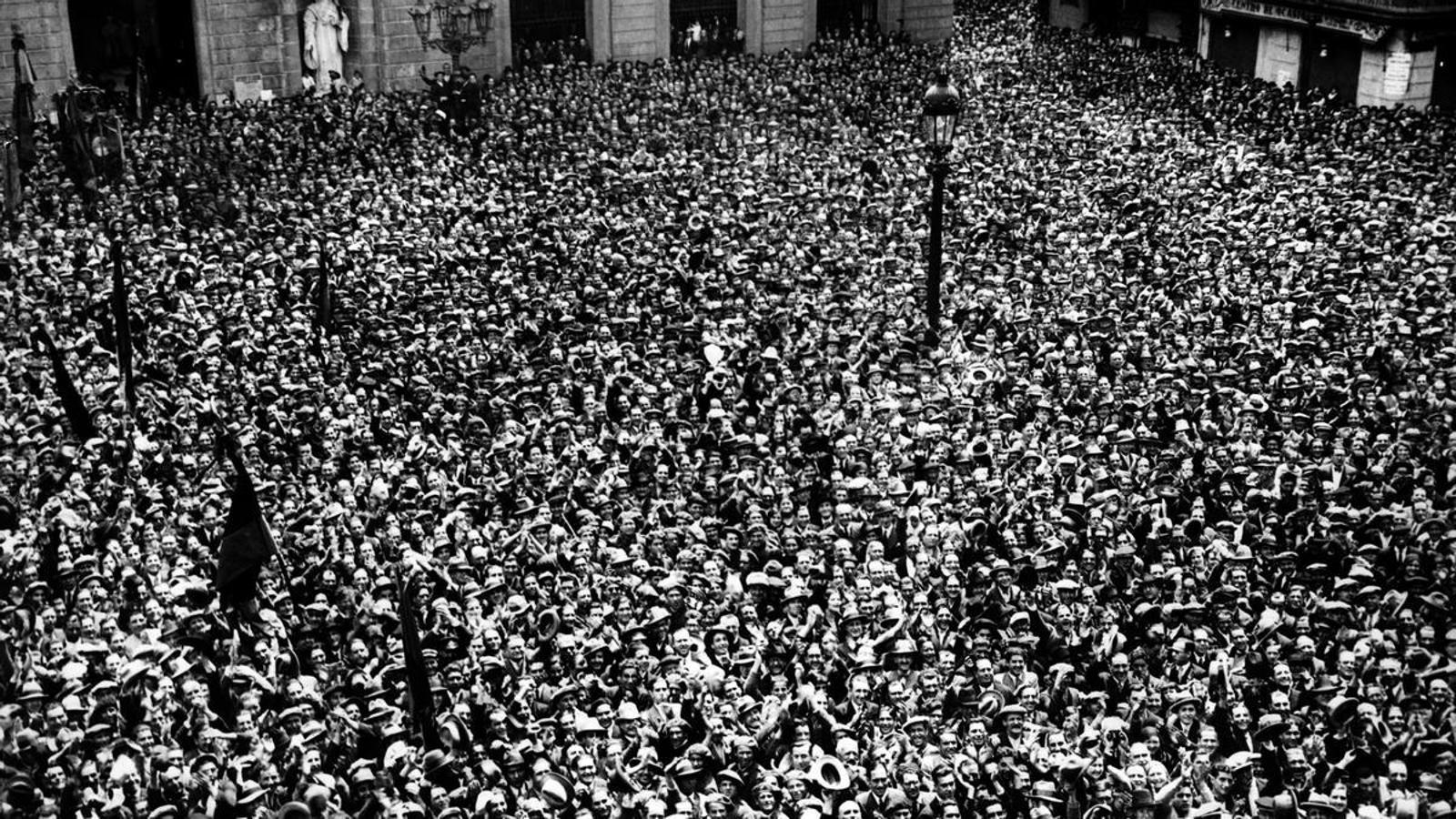
BarcelonaOn April 14, 1931, 95 years ago, the sky of Barcelona and the entire State was tinged with unprecedented hope. For many, the proclamation of the Second Republic was not just a change of regime, it was a modernizing shake-up that aimed to place Spain at the forefront of Europe. Between 1931 and 1933, that reformist impulse brought to light rights that seem natural to us today, but were groundbreaking then: women's suffrage, the divorce law, Azaña's profound military reform, and a religious reform that sought the secularism of the State. Milestones that were framed in the Constitution approved on December 9, 1931. Within that text, a declaration of intent that still resonates today with clear validity stood out above all. Article 6 literally stated: "Spain renounces war as an instrument of national policy".
"This article declares that Spain abides by the universal norms of international law," argued deputy Clara Campoamor, on September 1, 1931. And indeed, Article 6 was, in essence, a revolutionary piece in the context of a Europe living through an interwar period. The Paris Pact renouncing war was included for the first time in a constitution, along with full adherence to the principles of the League of Nations. Spain went further than the Weimar or Mexican Constitutions of 1917, and placed pacifism as the backbone of the State.In the constitutional debate, the voices defending this spirit were clear. On August 27, 1931, when presenting the bill, Luis Jiménez de Asúa, president of the Constitution Commission, emphasized that "Article 6 [...] has international scope; in Article 6, Spain's pacifism is declared." But it was Campoamor – also a protagonist in women's suffrage – who defended it with more passion, stating that "the president of the Republic cannot sign a declaration of war except in cases of just war and after having exhausted all pacifist procedures, in order to prevent, according to international pacts, reaching one of those so-called scavenger wars." The deputy was convinced that this wording would place the Spanish Magna Carta "at the forefront of all foreign ones, because it abhors war as a weapon of national policy".The enthusiasm, however, was not shared by everyone. From the right and conservative sectors, the article was seen as a weakness or hypocrisy. On September 27, 1931, Molina Nieto, a priest and deputy, saw a "terrible contradiction" between the renunciation of war and the promulgation of a constitutional text that he considered an internal aggression against Catholics: "Just stating it is already a challenge to the Catholic conscience of the country, it is a defiance, it is throwing the country into war." For him, secularism was a "detonator" that could end up leading the country to war. At the same time, Lamamié de Clairac, a Carlist deputy, accused the left: "They want to destroy the State, they want to destroy this regime, they want to disarm the Civil Guard and arm the people," seeing in the article a strategy to leave the State unprotected in the face of social revolution.1936: when the word was replaced by lead
The yearning for peace in Article 6 lasted only five years. By 1936, the climate had become so tense that it brought the country to the brink of war. On June 12, a month before the coup d'état, José Calvo Sotelo, leader of Renovación Española and a key figure for Francoism, declared from the rostrum: "I consider it would be foolish for a military man in charge of his destiny not to be willing to revolt in favor of Spain" and revealed with a premonition: "it is better to die with glory than to live in disgrace." On July 18, Francisco Franco and the rebel military shattered the Constitution, starting precisely with its Article 6. The war, which the Republic had rejected as a political instrument, ended up shaping the reality that would prevail for the next four decades.
