The temptation of the we
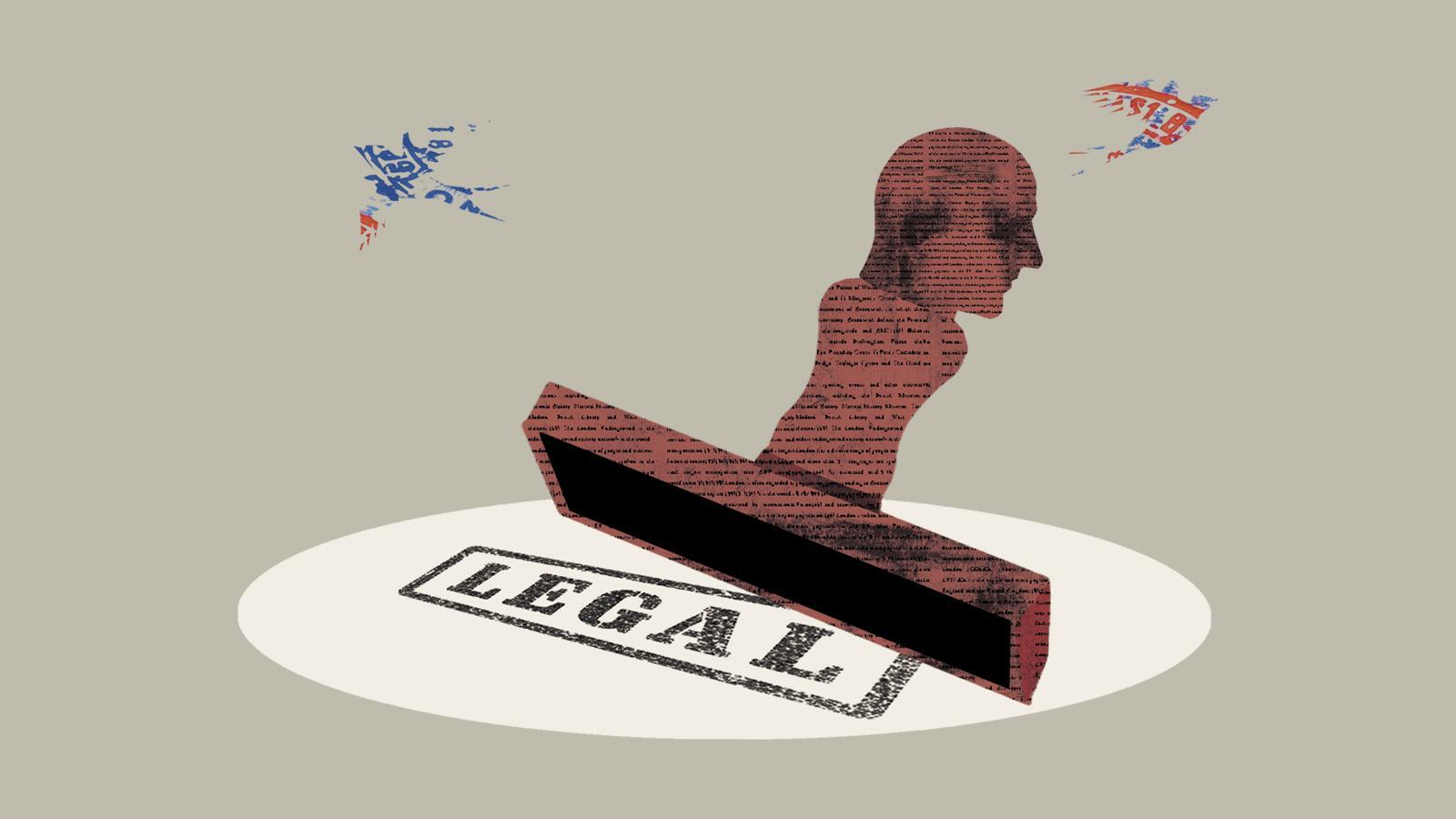

The ideas that end up transforming a society rarely present themselves as ruptures. They don't arrive with a bang or with an explicit will to break. They arrive disguised as normality, with the deceptive calm of common sense. "National priority" is one of those ideas. It seems harmless – taking care of "our own people" first – but it contains a profound mutation: turning rights into a matter of order, of blood, not of equality.
It is not a recent invention. It took political shape in France in the seventies with Jean-Marie Le Pen's National Front, which placed it at the center of its program. Later, Marine Le Pen softened the language and the forms but not the content. The substitution of "preference" for "priority" did not alter the essence: rights are not for everyone to the same extent, but can be ordered according to belonging.
This approach comes into tension with an imperfect, but essential foundation of post-war Europe: the universalist vocation of rights. After the catastrophes of the 20th century, the European project attempted to build societies where citizenship was, first and foremost, a shared legal framework. And yet, this idea returns. Not as an open rupture, but as an apparently reasonable correction.
In Germany, Alternative for Germany has once again placed identity at the center of political debate. It is not a mechanical repetition of the past, but it is a recognizable echo: the temptation to define the community in cultural or identity terms rather than legal ones. It is a subtle but decisive border. When it shifts, what changes is not just politics, but the very idea of citizenship.
The Spanish moment
Spain is no stranger to this underlying movement. "National priority" has entered public debate through agreements between Vox and the Popular Party. It has done so, moreover, with ambiguous rhetoric: "roots," "preference," "priority." Words soft enough to avoid immediate rejection, but loaded enough to transform the framework.
The problem is not so much the concretization of these measures as the acceptance of their conceptual framework. Because language is not neutral. It does not just describe reality: it constructs it. And when it is assumed that some must go first by virtue of being "from here," a basic principle of liberal democracy is called into question.
The concept of roots is vague enough to seem reasonable and flexible enough to be used politically. This ambiguity is precisely its strength. It allows for the introduction of differences without openly formulating them. It allows for the shifting of the debate without declaring it. And, above all, it allows for avoiding the key question: who decides who is one of ours. Who is sufficiently rooted and what are the criteria?
When rights depend on these types of filters, they cease to be universal and become conditional. And this is a qualitative change.
The silent shift
The issue is important because "national priority" has the capacity to displace the debate without making noise. First the term is normalized. Then it is repeated. Finally, it becomes a common framework. And when this happens, equality is no longer a clear line, but becomes negotiable.
The political dynamic is managing to get certain ideas, initially marginal, to end up integrating into the central discourse. Not because they have been fully accepted, but because they are no longer unthinkable.
The result is a gradual, almost imperceptible transformation. There is no specific moment when the system changes, but there is a point when it is no longer the same.
The risk of saying "us"
Former U.S. Secretary of State of Polish origin Madeleine Albright warned that "it is worth remembering the two most dangerous words in the human vocabulary: "}us and them”. Not because these words are avoidable (every community needs an us), but because, when they close, they leave out more than they include.
Europe finds itself, once again, looking in the mirror. Faced with economic uncertainty, migratory pressure, or institutional distrust, the most immediate response is to shrink the circle. To make it safer, more recognizable, more "ours". But every time this circle closes, the idea of citizenship is also redefined.
And this is the core issue. Not who receives what, but who counts. Not how resources are distributed, but who is considered a full member of the political community.
Because, after all, democracies are transformed not only by big decisions, but by small shifts in meaning. And few are as decisive and as dangerous as this "us".
