The Pope: person versus office
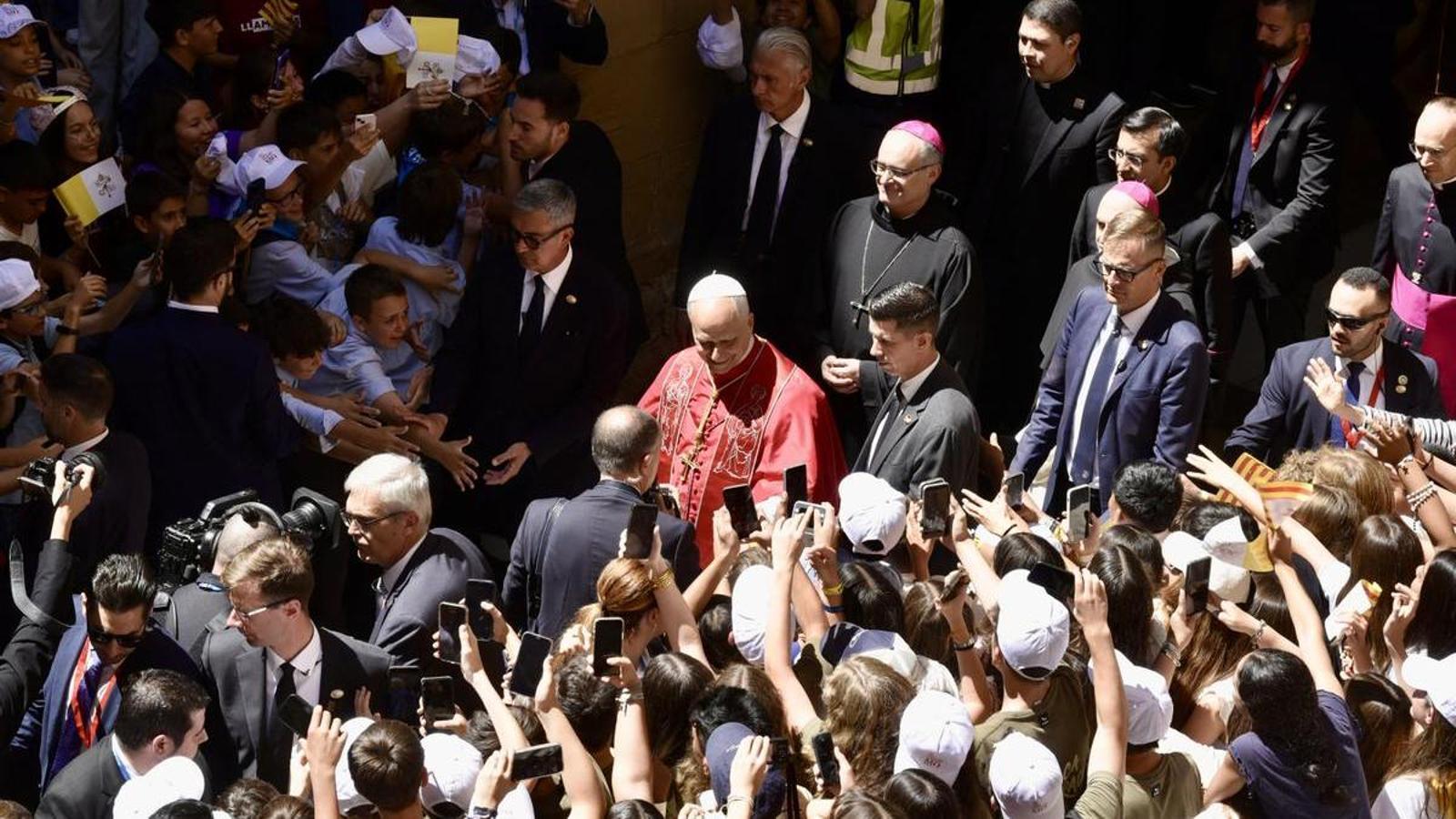

An old politician once said to the one who called him president: "I am not the president. I am the person temporarily holding the presidency".Something similar happens with monarchies. Charles III has succeeded Elizabeth II. Inheriting a crown does not mean automatically inheriting the emotional bond that the previous person built over decades. The symbol remains, but it must be re-housed in the newcomer.And in the same way, because no one is saved from this, when a pope dies, it's not just one person who changes. The emotional relationship of millions of people with this position also changes.For years, the pontificate is embodied in a face, a voice, gestures, a way of greeting. At first, the new pope seems almost an intruder. Not because of him, but because he is not yet part of the collective imagination. The office is already his. The affection, not yet.This is why the visit of Leo XIV to Spain is of interest beyond religion. It can also be read from the economy of intangibles: reputation, trust, authority, legitimacy, public presence. Intangibles sustain companies and institutions.The Vatican knows it. It is one of the oldest and most sophisticated organizations in the world. It does not improvise its gestures. A papal visit combines pastoral, diplomacy, communication, and narrative. Every setting, image, photograph, and crowd around it contributes to building the narrative. The new narrative.Spain is an ideal place for a pope who is beginning to build his position. He does not come just to evangelize. He also comes to be seen. To receive warmth. To produce images of continuity. To stop being a distant figure from Rome and to gradually become a recognizable presence.Our country offers something very valuable: cultural Catholicism, street, Mediterranean emotion, and universal heritage. Madrid, Montserrat, the Sagrada Familia, or the Canary Islands are settings with an enormous symbolic charge. The Sagrada Familia, moreover, has this dual condition so useful for Rome: a temple and a global icon.Spain lives an interesting paradox. Religious practice has decreased, but the Catholic symbol is preserved. There are fewer Sunday masses, but processions, shrines, and patron saint festivals continue. This mixture allows the Pope to appear surrounded by affection without seeming trapped in the past.It would be poor to see it as a cold marketing maneuver. But it would also be naive to think that these visits are just pious displacements. In institutions of this scale, public presence builds authority. And authority needs emotion.A pope does not become "the Pope" on the day of his election. On that day he receives the office. Then another task begins: to occupy it before the eyes of the world. Spain, this week, has lent him its squares, its temples, and its crowds to begin doing so.
