The elections and housing

“Does a man know when his time of relevance has ended? Does he understand it? He knows it because he feels it, but he does not understand it. The agony of the light is an experience as universal as it is incomprehensible,” wrote Antonio Scurati.
Two presidents of the Generalitat, Companys and Tarradellas, returned with great social support, one in March 1936, with the victory of the Popular Front, and the other in October 1977 with the Transition. Two moments of political change in Spain.
President Puigdemont has been in exile for nine years and is returning due to the implementation of an amnesty that the Constitutional Court, with the support of the CJEU, has declared "justified and of common sense" against the ruling of the Supreme Court.
Is it possible that President Puigdemont considered it convenient for his return to coincide, as happened with Companys and Tarradellas, with a relevant political event capable of changing the course of Spanish politics? We do not know. If so, it could be one of the reasons that influenced Junts' vote on the housing decrees, which have precipitated general elections and, everything seems to indicate, the arrival of the right and the extreme right to the Spanish government. Junts does not desire this final result, but rather sees it as a consequence of the socialists' incompetence on a key issue that affects Spain and Catalonia. Junts' vote, therefore, would have left this fact in evidence, more in Spain than in Catalonia. There is always a will in Junts to demonstrate that the State does not work and that the central government is incompetent. That is why it presented to President Sánchez the proposal for a new decree with measures that they were indeed willing to vote for. "We already did it with the amnesty law –Junts would come to say to the PSOE– and we were right. Now it is our decree that will work."
Be that as it may, President Sánchez has called elections for November 29th. Was there a better occasion than now, for his interests? He needed to find an electorally mobilizing reason, and housing can be it. But the question remains the same: do we have the solution? Can we explain it with credibility to the citizens?
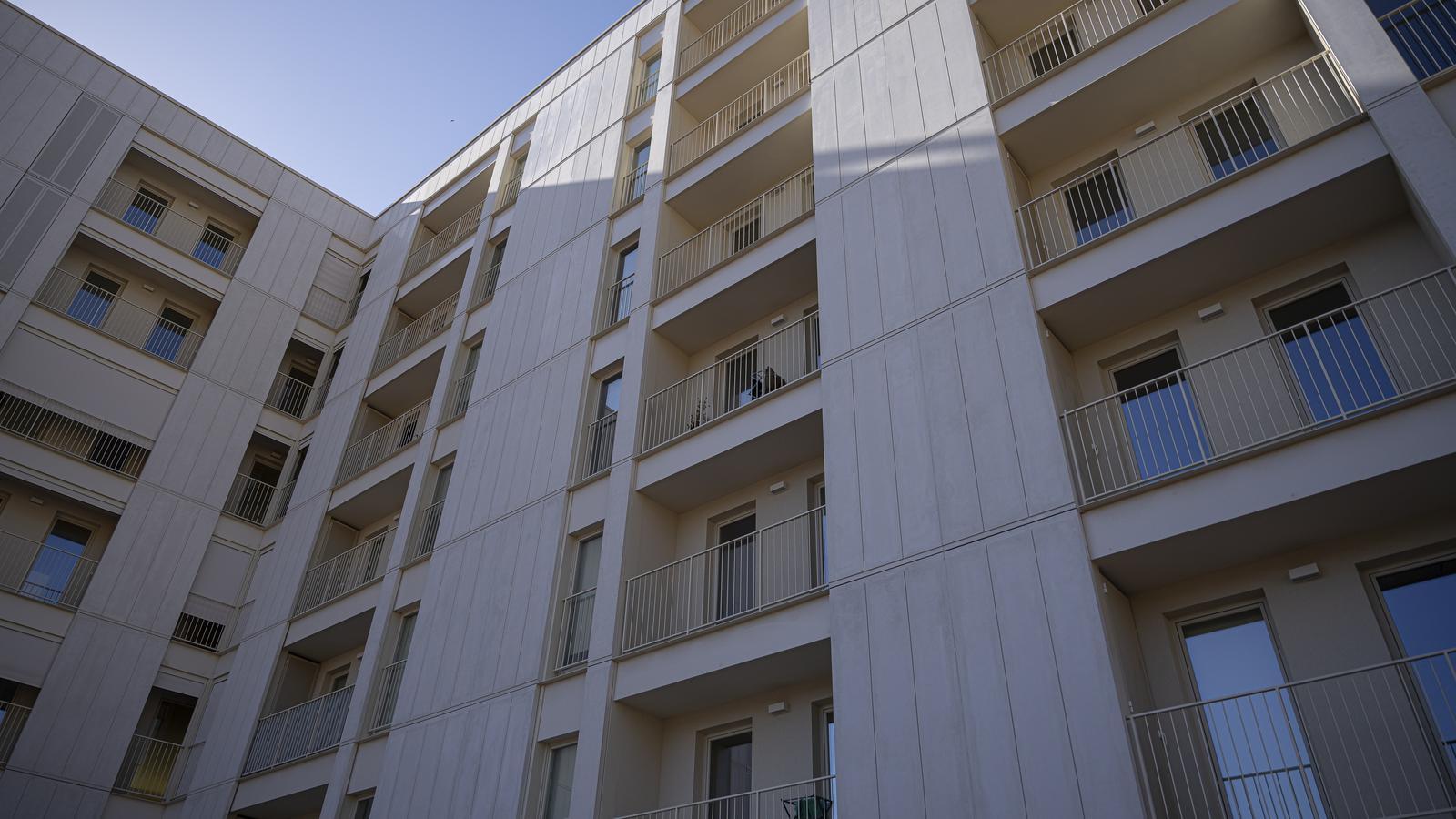
If Spain is short 800,000 homes, which could cost about €120 billion excluding the impact of land, where do they come from, who finances them, who builds them, and how are they brought to market? The model to respond to this challenge must be primarily public-private housing, for social rent, financed by public capital and private investment at 50%. It involves combining long-term loans from the State (€12 billion per year, with debt over five years for the public part, and a maximum debt of €60 billion) and private capital investments with a guaranteed return at a 5% interest rate with asset revaluation due to economic growth. From 2020 to 2022, family savings grew by €225 billion. For housing, €12 billion per year in private investment is needed over 5 years; that is, annually, 16% of the savings accumulated annually during the mentioned years would be required.
The total private investment figure over five years, which would be €60,000M, can be achieved.
In this model, the rent for housing would be around €8,000/year, 30% of the income of a lower-middle-class family after income tax (IRPF), which is €25,000/year. With this principle, the private investor does not own houses, they hold shares in a public-private partnership that rents out housing. The shares can be bought and sold on the capital market. Whoever makes the land available to the builder, and this is crucial, must be the city councils, who have it, and they can accept a 30-year payment with a state guarantee, because increasing the municipality's population generates wealth and increases tax revenue.
The numbers add up, but a public-private manager is needed in each autonomous community to carry forward the model with the State's guarantee. There are plausible models in Austria and Holland with rentals. In Spain, it was done in the 50s, 60s, and 70s, but not with rentals, rather with family ownership. As years passed, people sold their homes and this capacity was lost, even though it fulfilled the purpose of producing houses for low-income families when they were needed.
In five years, the homes we need can be brought to market. The model is plausible. We have the companies, the administrative capacity, and the necessary material means, capital, land, construction capacity, and management.
However, the solution must avoid the debate between left and right, which in this case is not useful because the challenge is primarily technical. What is needed is a practical solution achievable within the timeframe and in the appropriate manner.
It is surprising, in this sense, that in the debate on the 2nd in Congress, no one spoke about what specific solution we need to build 800,000 homes in five years. The debate was limited to social and political principles, of justice and injustice, to vulture funds... That was not the most important thing. It was deciding how to do what needs to be done.
