

The Government has just approved a very generic "Catalan Railway Strategy", which gives rise to a comment on the challenges we face, which for reasons of space I will restrict to passenger transport.
Fortunately, the network we inherited from our grandparents is extensive, so the fact that in the last century we haven't been able to add more than high-speed rail lines and a few kilometers of metro isn't a serious problem. The density of a network should be measured in km/km², not km/inhabitant, since connecting two cities 100 kilometers apart requires the same length of track whether they have 100,000 inhabitants each or 500,000. Using this metric, the Catalan network is as extensive as those of France, Denmark, or Italy, and almost as extensive as those of the United Kingdom or Austria. Let's also keep in mind that railways are only useful in very densely populated areas: for internal circulation and for connecting them to one another.
Based on this, we must address two problems: congestion in the most populated areas and connectivity with Europe. Let's consider them one after the other.
The Catalan population is concentrated in a very small area around Barcelona and along the coast, and this trend is increasing. Since the beginning of the century, 52% of population growth has been concentrated in the metropolitan area, which represents 8% of the territory. In the surrounding region (the districts of Girona, Penedès, and Tarragona), which occupies 31% of the territory, 36% of the growth has been concentrated, while the remaining 61% has seen only 12% of population growth, and this is highly concentrated in a dozen towns: Lleida, Vic, Olot, Igualada, and Manresa.
That 8% of the territory already has a density (if we subtract the portion with a slope greater than 20%) more typical of Asian than European cities. It urgently needs to be expanded, and this can only be done by rail. But it can't just be a commuter service like those in Madrid, Paris, London, or any other large European city; that is, a train that stops every few kilometers and travels at an effective speed of around 50 km/h. This service is only effective within a radius of about 30 kilometers: Martorell, Granollers, or Premià de Mar. Since—unlike all other major European cities—Barcelona is surrounded by both sea and mountains, it's necessary to connect a much larger area, and the solution is a "regional" service: a train that runs on the same tracks but skips every three or four stations to connect a 100-kilometer radius at a minimum effective speed of 100 km/h. When we have this service, we will have realized the dream of a true Catalonia for four out of every five Catalans. The main difficulty is that we need stations with more tracks so that regional trains can overtake commuter trains. The document doesn't seem clear enough to me regarding this structure, which has never been clear in Catalonia.
The second challenge is to remain competitive in the European connectivity arena in the era of decarbonization, when synthetic kerosene will drive up airfare and we will lose the advantage of having one of Europe's largest airports. The European Union works in our favor, prioritizing high-speed rail (300 km/h peak and 250 km/h effective speed) over high-speed rail (230 km/h and 170 km/h effective speed), because the former allows us to cover the Iberian Peninsula's coastline (Vigo, Lisbon, Málaga) and the edge of the "European banana republic" (Brussels, Frankfurt, Munich...) in four hours. Working against us are Madrid (which would prefer the Peninsula's connection to pass through Madrid rather than Catalonia, as seen in the case of the Mediterranean Corridor) and France (which prefers fewer connections between Spain and Europe).

In this situation, what we need is for the high-speed rail line through Catalonia to be efficient so that we can build—as with the Mediterranean Corridor—an alliance with Valencia and Murcia. For example, with a new bypass through the Vallès region. Instead, the document suggests this bypass but only for the surrounding areas, more stations on the high-speed line—which would become a regional problem—and a cross-country conventional line that will benefit us little—because it will cross a sparsely populated area to connect cities that already have rail service—and nothing for our neighbors.
I understand that more stations on the high-speed rail line and a cross-country rail corridor are popular announcements, but I don't quite understand how they fit into the country's priorities, and we can't lose sight of the fact that, without clear ideas on our part, we could fall behind. It wouldn't be the first time, as is clear when considering the Madrid-Barcelona-Valencia triangle before and after the high-speed rail. Before, Valencia was 3.5 hours from Madrid and Barcelona, which were 6 hours apart; today, Madrid is 2 hours from Valencia and 3 from Barcelona, but there are still 3.5 hours between Barcelona and Valencia.
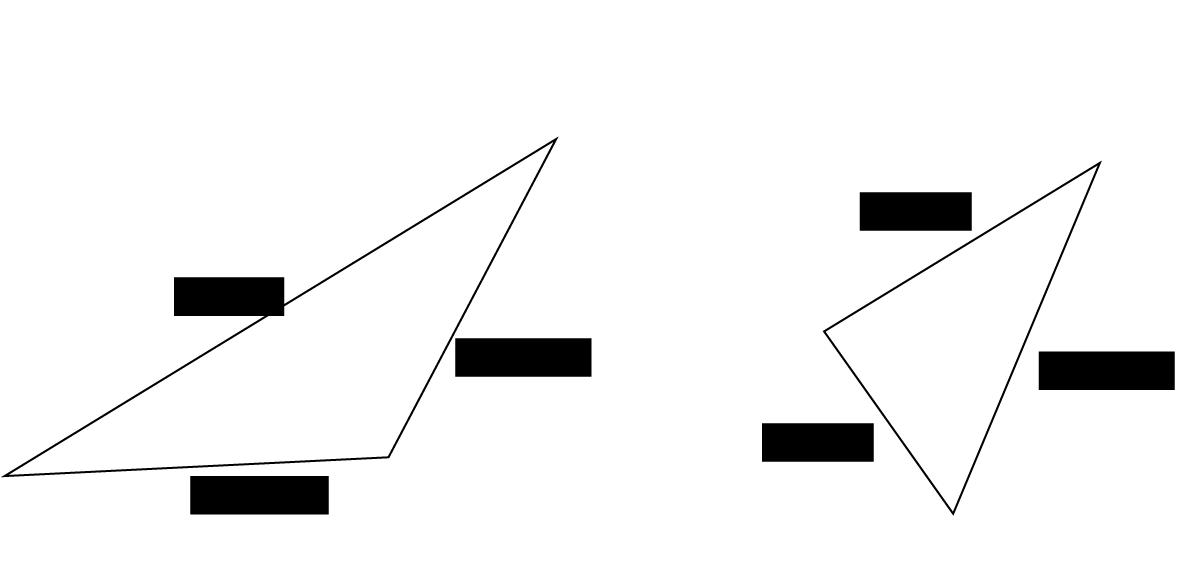
Trajecte en tren d’alta velocitat / velocitat alta
Trajecte en cotxe
Barcelona
Barcelona
3 hores
6 hores
Madrid
3½ hores
3½ hores
2 hores
València
3½ hores
Madrid
València

Trajecte en cotxe
Barcelona
6 hores
3½ hores
València
3½ hores
Madrid
Trajecte en tren d’alta velocitat / velocitat alta
Barcelona
3 hores
Madrid
3½ hores
2 hores
València
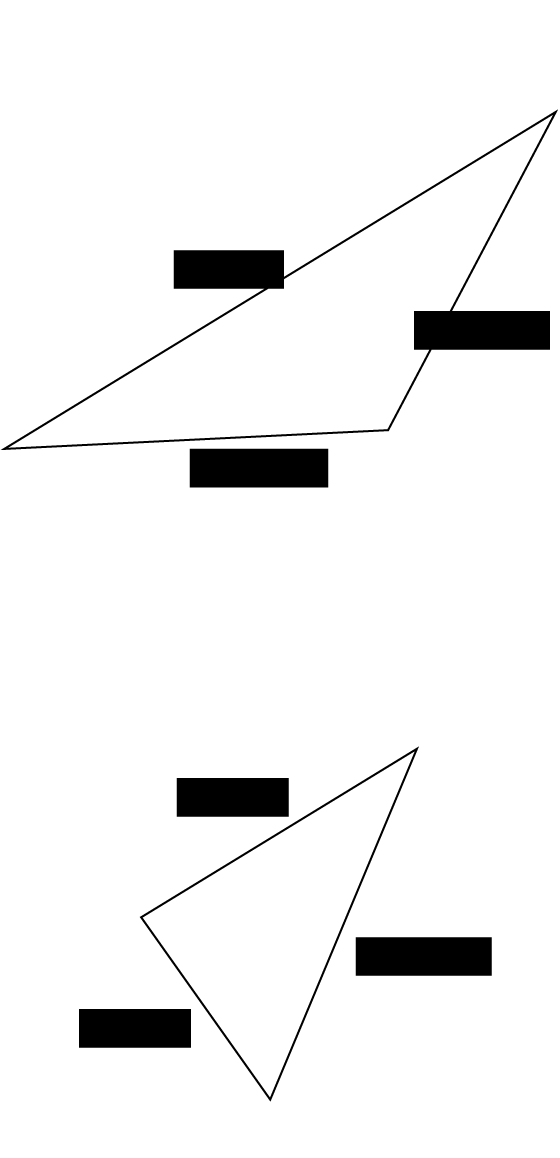
Trajecte en cotxe
Barcelona
6 hores
3½ hores
València
3½ hores
Madrid
Trajecte en tren d’alta velocitat / velocitat alta
Barcelona
3 hores
Madrid
3½ hores
2 hores
València
