Iran: an open ending
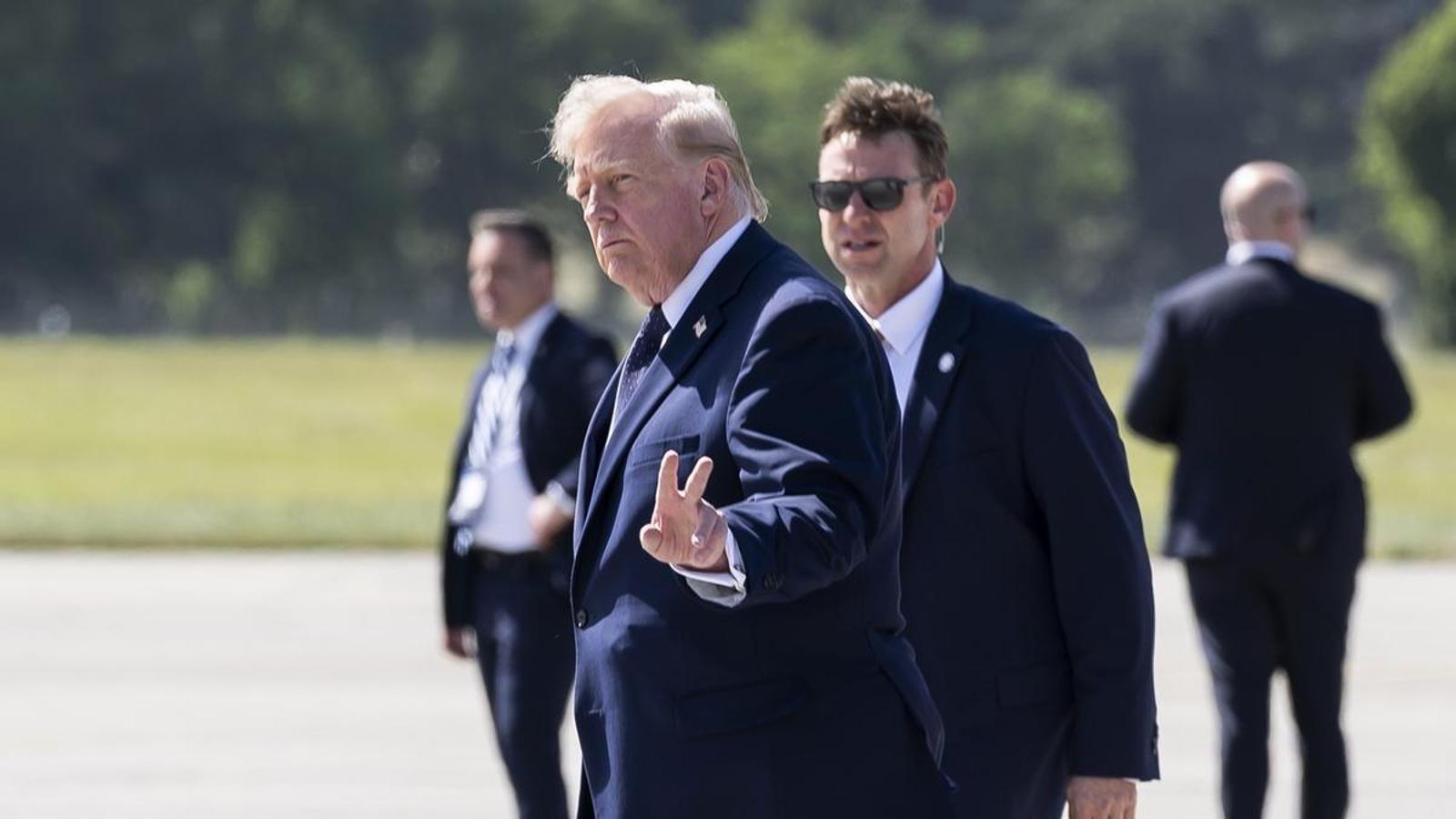

Donald Trump celebrated his 80th birthday with the White House gardens transformed into a Roman circus with martial arts fighters and seven fights to honor the emperor. A birthday rounded off, moreover, with a preliminary agreement in Iran, which Israel's bombings of Lebanon made falter until the last minute.
On the canvas, "the ultimate wrestling championship" was announced, an exhibition of testosterone – broadcast as a pay-per-view spectacle – by a president obsessed with wielding increasingly erratic power.
With the same excess, Trump boasted about having solved a problem he himself had created, and assured "The New York Times" that his efforts had saved Israel from nuclear extinction and had made the Middle East safer. Between ignorance and boastfulness, Vice President JD Vance reiterated that the agreement will transform the region for the next 50 years.
While the audience in the White House gardens chanted "USA, USA," Trump embraced a ceasefire that certifies the limits of United States power. The agreed text, to be signed on Friday in Geneva, lays the groundwork for returning the region to exactly where it was before the war, and with fewer guarantees of control over the Iranian nuclear program than those in the agreement negotiated by Barack Obama and the European Union in 2015, which Trump torpedoed during his first term.
The document extends the ceasefire for 60 days and expands it to Lebanon, and allows the reopening of the Strait of Hormuz – a vital objective for the White House – while a progressive lifting of sanctions against Iran is negotiated.
"The United States has achieved the reopening of a strait that was already open before its attack. Nothing more," ironized a European diplomat.
Washington needs to definitively close a war that has long since escaped its hands; that has destabilized the Middle East and the global economy and has led to inflation that affects Americans' pockets at the fastest rate in three years.
The war has also eroded the relationship between Trump and Benjamin Netanyahu, whom the White House leader now blames for pushing him into a military intervention that could cost him the Republican majority in Congress in the upcoming midterm elections. The relationship between the two "is approaching a breaking point," according to the newspaper Haaretz. The President of the United States has experienced it as a betrayal that Netanyahu tried to boycott the negotiations until the last minute, and supporters of the Israeli president believe that Trump has betrayed them. It has been an accelerated erosion. The more the objectives of Washington and Tel Aviv in the region diverged, the more challenging and expansive Israeli attacks on Lebanon and the West Bank have been. More than three years of war are beginning to take their toll on Israeli society as well. Netanyahu, who faces re-election in a few months and is trailing in the polls, now sees President Trump, the most valuable political asset he has had since the Republicans returned to the White House, withdraw his carte blanche. The Israeli attack on Beirut over the weekend ended the patience of a determined president who did not want any warmongering whim to overshadow the commercial self-congratulation that he conveniently coincided with the events of the 250th anniversary of the United States' independence. From the White House, however, they concede that the agreement with Iran does not include the Israeli withdrawal from Lebanon.
For the Iranian regime, on the other hand, the negotiation has become an still uncertain opportunity. For Tehran, survival was already a victory, and they have survived, despite the elimination of some of its main leaders and the physical destruction of the country's infrastructure. The Iranians have fought an asymmetric war, but by blocking the Strait of Hormuz, the regime discovered an infallible weapon that allowed it to take the global economy hostage. Now, moreover, if the progressive lifting of sanctions is concretized, Tehran will be able to export its oil again and will be able to recover tens of millions of dollars blocked for years.
The Iranian people, massacred at the beginning of the year by the regime and subsequently bombed by Israel and the United States, continue to be the great absentee of this diplomatic dance. They do not even appear in the text of the negotiation.
