Housing: what works and what doesn't
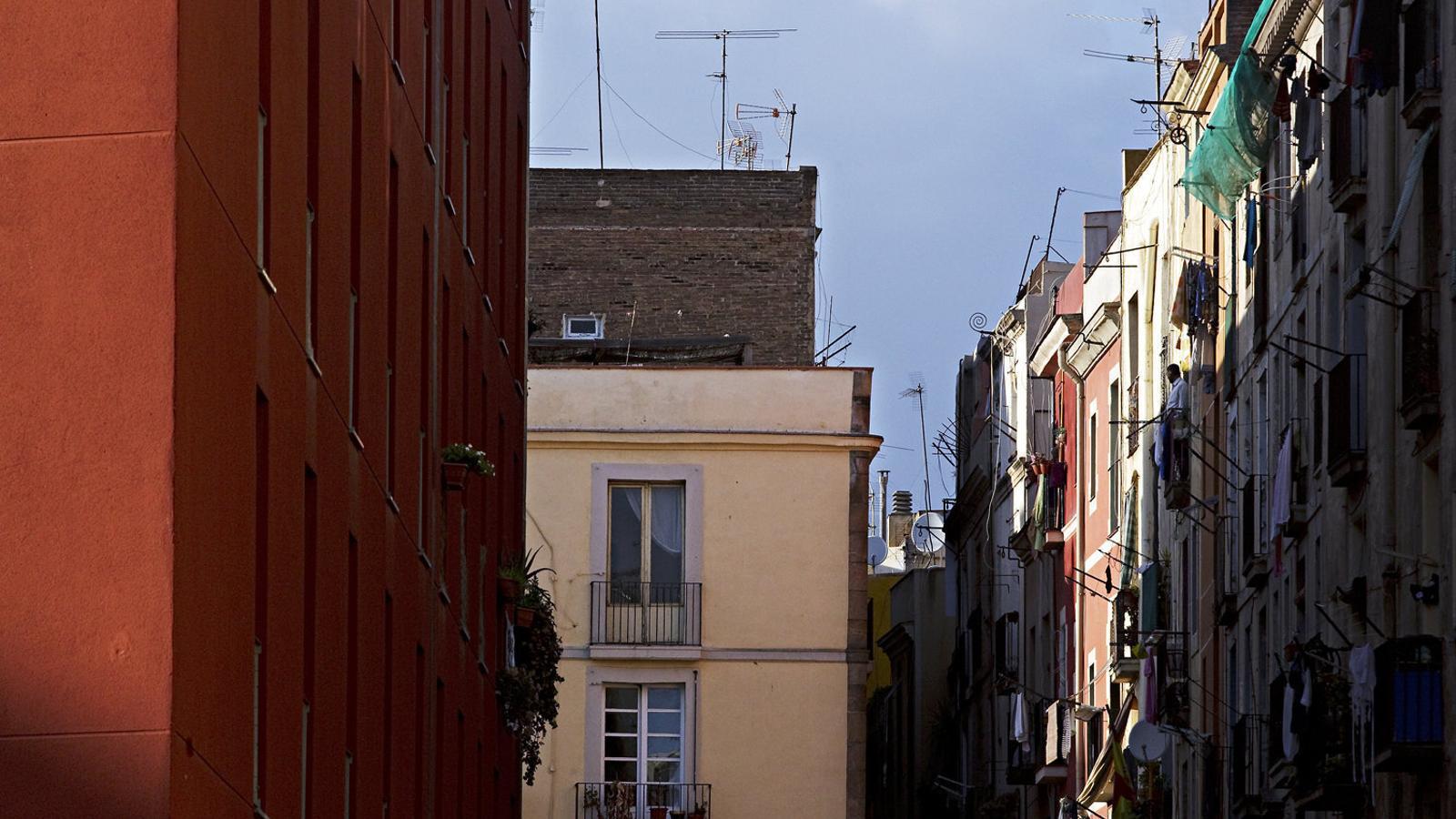

I find it hard to understand that Junts' proposals to tackle the housing crisis involve re-deducting mortgage and rent expenses, because it is uninspired. A good part of the ideas on which Catalan cities have been built was driven by Convergència i Unió, in the eighties, and they were much braver. For example, when Josep Maria Cullell was Minister of Territorial Policy and Public Works with Jordi Pujol, the Institut Català del Sòl was created, and legislation was enacted so that its function would be to “promote the necessary actions, both in organizational and functional aspects, to allow the use of land in accordance with the general interest and to prevent speculation and promote the effectiveness of the right to enjoy decent and adequate housing”. With this instrument, the Generalitat and some city councils that were of the same school bought large sectors of land to turn them into good neighborhoods today: Fontajau in Girona, the Eixample of Martorell, Mas Lluí in Sant Feliu de Llobregat, Parc de l’Alba in Cerdanyola... and so many others. Afterwards, in 1996, still with Jordi Pujol at the helm, the law on registration and deposit of deposits was enacted, intended to boost the urban rental market and provide adequate information on the situation of the rental housing stock. It was then determined that the deposit of deposits would be used for public housing construction without this having to compromise public budgets, solely relying on there being a consistently positive balance between cancellations and refunds. Taxes are the basic instrument for guaranteeing redistribution and, therefore, equity within a democratic society, but lowering taxes for everyone equally may not be egalitarian. Several studies show that providing incentives to further promote homeownership only helps to increase inequalities. The OECD, in a recent report on housing and taxes, concludes that the tax deduction for mortgage interest has proven to be regressive and ineffective, because those who own a home have access to capital and stability that renters do not have.
On the other hand, I do think it is a good idea to promote a more efficient use of the existing real estate stock, and here there would be room to think about fiscal measures to penalize empty homes. One must have lived the construction of a building from the foundations to the placement of the curtains to understand that it is an outrage for cities to allow properties to remain empty. A building mobilizes an enormous amount of resources: many hours of workers and technicians, as well as means such as cranes, structures, glass, appliances, and service networks that have taken years to function for the city. Having a piece of the city empty is not just the owner's problem; it has costs for the rest of society, which has to build a new one elsewhere.In France, for cities with more than 50,000 inhabitants, a tax has been created on empty apartments to encourage owners to rent out their homes. A second home is not considered an empty apartment, a concept that the rule clarifies only applies to unfurnished apartments. The amounts are deliberately high: 17% of the cadastral value in the first year and 34% of the value in the second year. The measure is accompanied by support in mediation for rentals with guarantees and aid for energy improvement, to prevent them from remaining empty due to the impossibility of rehabilitation.
It also seems like a good idea to apply tax rebates on energy-efficient home renovations, to ensure they reach low-income households. And of course, to apply them to the mobilization of empty lots, which cannot be frozen waiting for a reckless buyer who multiplies the cost price.

The professor of administrative law Josep Maria Aguirre explains with a devastating graph that, for years, the State budgets have allocated a lot of money to housing, but precisely to incentivize ownership: deductions for the purchase of habitual residence that have gone directly into the pockets of a few fortunate ones. These aids have gone precisely in the opposite direction of investing to create a public park and to patrimonialize, from the public sector, the income from protected rentals. And frankly, Catalan cities, articulated around terraced houses, with abundant gardens and stone walls, with inimitable old neighborhoods, would benefit so much from a massive rehabilitation!
