Full stop? Or ellipsis?

-
CAT -
CAST
“There are days that are born without knowing they can end up being remembered. Apparently ordinary days, caught between routine and uncertainty, that unfold with the same cadence as always: a kiss before leaving home, a shared concern, a promise cast into the future before going to sleep. And yet, some of these days hide a disturbing question: will this be one of those days that history will point to?”
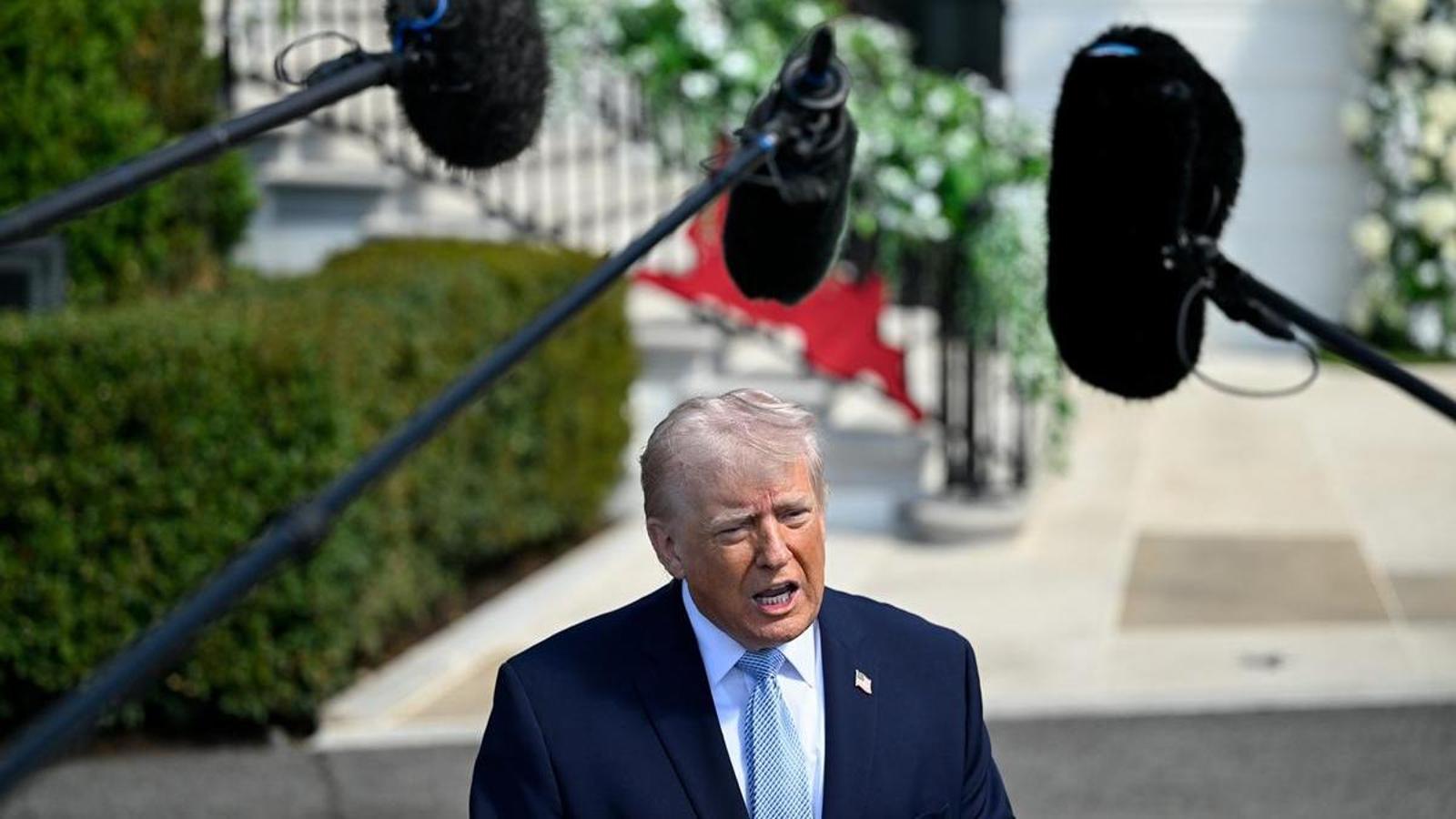
Pepa Bueno made this clear to us, right at the end of her newscast, on the evening of April 7th. Because that day could have been one. Amidst an international context marked by the war in Iran and criticism of Trump, with the Strait of Hormuz blocked and markets in turmoil, the US president had just threatened irreparable devastation upon Persian civilization if his latest demands were not met. The world, once again, facing a familiar precipice. Full stop? Or ellipsis?
Faced with this uncertainty, the question cannot be just what will happen, but also what are we doing while we wait. Because history never stops: it moves forward, always, between great processes and small daily gestures. And it is in this intermediate space, in this tension between what could happen and what has not yet happened, where the meaning of it all is defined. When we live in the present, we are rarely aware of its historical weight. Decisive moments do not usually announce themselves clearly; they appear confused, contradictory, incomplete. Only with the passage of time will they acquire form and meaning. They are the ellipsis...
At the same time, another more uncomfortable reflection imposes itself: how did we get here? How is it possible that, in the 21st century, the very idea of human rights could have deteriorated so much? On what day did we again allow life to be reduced to a mere confrontation of interests?
Perhaps part of the answer lies in how we have learned to look at the world. We discuss categories —genocide, self-defense, security— and, in doing so, we run the risk of forgetting the essential fact: behind each label there are concrete people, with names, surnames, and their own stories, who lose their lives simply because someone takes them.
Information overload has contributed to this distance. Constantly exposed to images and accounts of violence, we have developed a form of moral fatigue that is confused with lucidity. In parallel, the proliferation of lies has not discredited those who lie, but rather has eroded trust in the very possibility of finding the truth.
To this is added political polarization, which leads us to judge events not by what they are, but by who is involved. And, even more disturbingly, the progressive transformation of reality into spectacle: wars that are consumed as content, conflicts that are perceived with the emotional distance of a video game.
Perhaps one of the most revealing symptoms of this deterioration is the hierarchization of suffering. We are moved by what we recognize as close and familiar, while the pain of others, when it is distant or different, becomes invisible or at least tolerable. This asymmetry is not new, but today it manifests itself with particular impudence.
Faced with this panorama, the question about democracy becomes inevitable: how do we protect it from itself? How do we prevent its own representatives from working against it?
There are no simple answers. But perhaps we should start by recognizing that democracy is not just an institutional system – in the form of vote and rule of law – but also a daily practice that depends on the moral and critical quality of citizens. On what we tolerate, on what we normalize, on what we decide. And remembering that great collapses do not usually happen suddenly. They are the result of a slow accumulation of renunciations, of small concessions, of lines that shift imperceptibly until, one day, we discover that we have already crossed them.
And, despite everything, life goes on. No matter how much the threats overwhelm us, the minimal gestures will persist: affection, care, the will not to give up. It will be in these spaces where the possibility of setting things right will remain alive. Because we still don't know what place these days will occupy in history. Whether they will be remembered or will fade like so many others. But we do know one thing: their meaning will depend not only on what happens, but also on what we have done while they were happening. They are the ellipses that Pepa Bueno spoke to us about...
