From sabers to robes
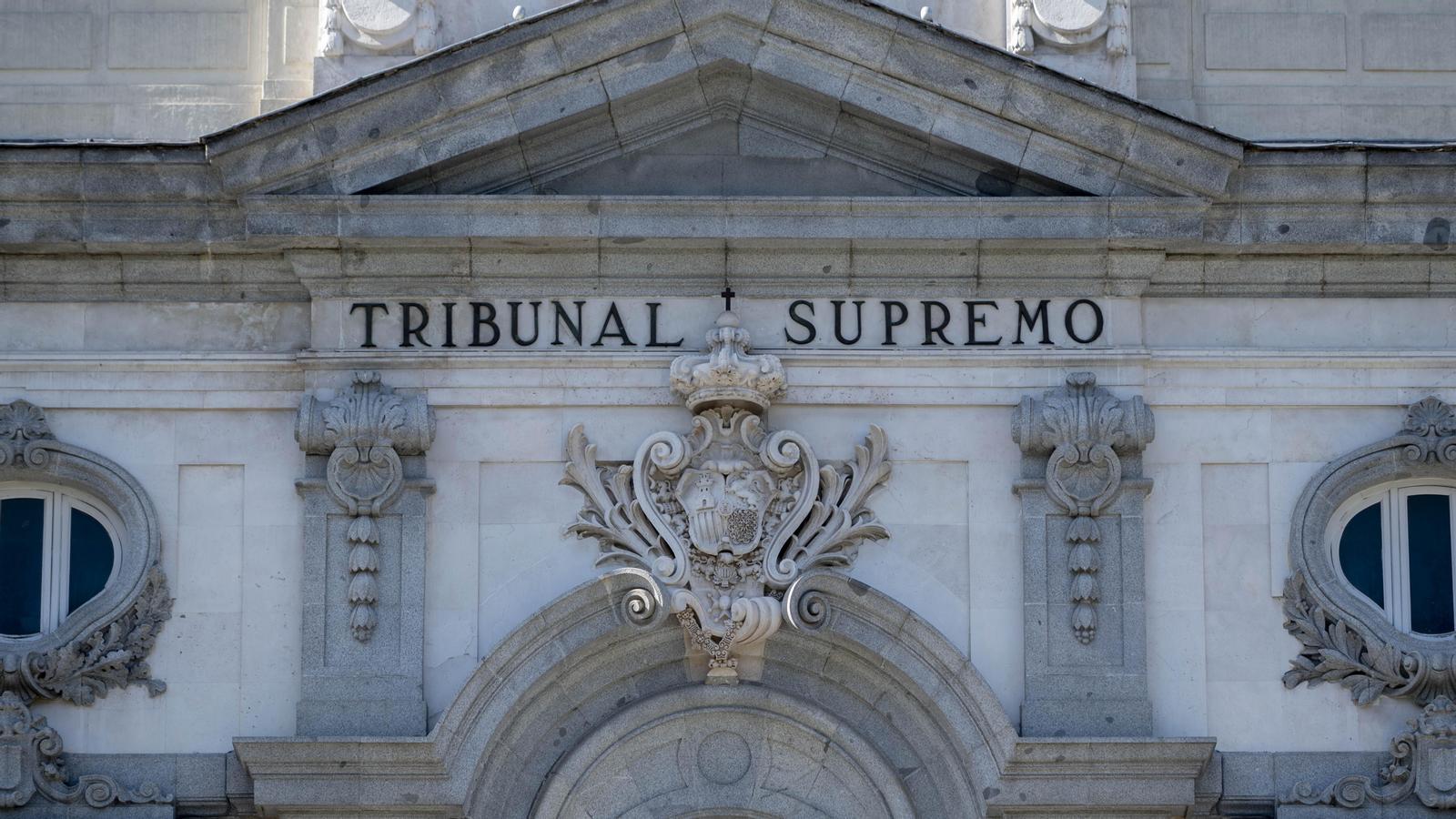

During the years of the democratic transition, we feared the coup temptations of an army with Francoist roots and culture. It was logical and we were not mistaken when the farce of February 23 occurred, with the parade of tanks in Valencia and the assault on the Congress of Deputies by Colonel Tejero. A strange night, in which the myth of a monarch who had saved democracy by sending the military back to their barracks was invented. Surely the reality was not so simple and even less so clear. But then came the socialist Ministry of Defense of Narcís Serra, who, with salary increases, decorations, and bouquets of flowers, managed to deactivate the warlike ardor of some milicos" still very rancid. Instead, the transition was not thoroughly carried out in a judiciary formed by Francoists and their disciples, waiting for biology and generational renewal to bring about a modernizing function that never arrived.In the judicial sphere, there has rather been an inverse transition towards making politics and exercising power roles. It is a world too endogamous, classist, and retrograde for it to be aired out, at least at the high levels of the career. Another thing are the rank-and-file judges, deprived of means to efficiently carry out their important function. In the upper echelons there is a world of favors, of stale lineages, and of an extremely corporate spirit, and, why not say it, with a desire to act politically. We are not only where we were, but with the general reactionary and post-democratic wave, this power has recovered its oldest version. In Spain, judges are those who best understood José María Aznar's enigmatic phrase from a couple of years ago: “El que pueda hacer, que haga”.The judiciary is today the authentic Trojan horse against democratic institutions and culture. The judicial elite no longer settles for exercising its role as the third power of the state, but rather establishes supremacy and control over others. And not only that: it becomes the necessary ally of the extreme right by creating the conditions for it to come to power. It judicializes political life by intervening in an interested and arbitrary manner, brings up incredible cases, issues sentences without any basis or proof, and dismisses and delays what could affect its political acolytes. Perjury no longer seems an exceptional behavior but rather the norm. The affiliated media will then do the corresponding justifying work. I remember that a few years ago, at a conference in Buenos Aires, the former vice-president of Bolivia and theorist of the Latin American left, Álvaro García Linera, warned that coups d'état today are carried out by the judiciary and not by the army: Latin American military personnel no longer do training stays in American academies, but rather it is the judges who undertake immersions, with the same function, in some North American universities.
The trial in the Supreme Court against the Attorney General represented a frontal attack, a genuine assault on one of the State institutions from within the judiciary itself. This is an unprecedented event that highlighted the partisan function of the judiciary in Spain, as a political instrument against the governmental majority. A very singular legal reasoning, made after the announcement of the conviction. But everything is valid, in the strategic harassment of Pedro Sánchez. His leadership against the warlike arrogance of Trump and the Israeli genocide is already taking its toll. The U.S. Department of National Security has collaborated in the investigation of Zapatero, and it cannot be a coincidence that the leaders of the Spanish right and far-right have visited the U.S. embassy in recent days. The attack on the president's family is unheard of because Judge Peinado establishes the principle of presumption of guilt. It doesn't matter if nothing comes of it later: the important thing is to overact and generate, by accumulation, a certain state of mind.What is now known as lawfare–the self-serving political use of law and justice–– is not new, but in recent decades it has taken on unusual importance in Spain and worldwide. The populist right has co-opted the judiciary everywhere. Cases are opened for political reasons, processed politically, and with an agenda suited to inflicting political damage. When necessary, diligence is extreme and it is coincidentally timed with electoral processes or with dates that cover up other cases that need to be hidden. Absolute impunity. The so-called Zapatero case now seems to be checkmate for the progressive government: the icon of the left dragged through the mud seems difficult to overcome. In general, it seems to me and to many people an ethical and moral indecency that former presidents create consultancies, even if what costs are differentiated from influence peddling is called lobbyingWhat need do they have for it? The truth, however, is that all previous presidents have done so, but the judiciary believes that, with much fanfare, it is only necessary to go after Zapatero. Why?The formal discourse of “respect” towards judicial initiatives and decisions has ceased to be sustainable.