Coexistence
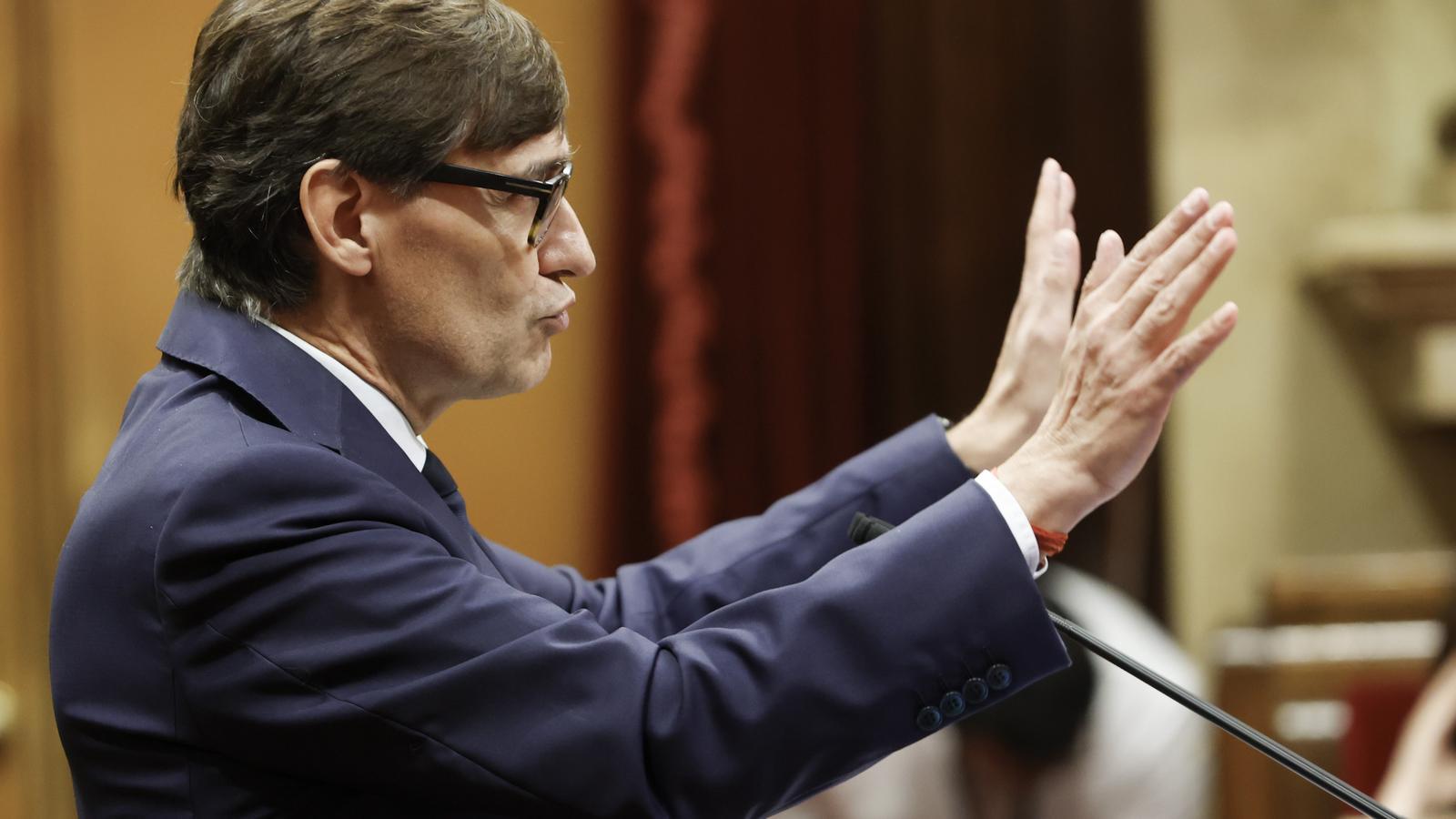

When I hear President Illa celebrating the application of the amnesty law (the one he did not want to exist, the one he rejected even as a hypothesis) because, according to him, it is a “triumph of coexistence,” he is in truth referring to the triumph of the unity of Spain. There is a type of coexistence (we know it perfectly well in this country) that for centuries has consisted of ignoring Catalan demands: if the recognition of the national rights of the Catalans is shelved, rejected, or even humiliated or punished as a pretension, the coexistence is perfect. If not, it is not. A healthy coexistence usually arises from a pact, which is what the '78 system seemed to be: a meeting point where everyone lost and won at the same time, because it was precisely the pact that founded the idea. After 50 years, it is crystal clear that the pacts are broken and that “coexistence,” both that before 2017 and that of now, is based on saving by all means a unique and unbreakable model. It is no longer a pact, but coercion and a military parade, the peace of the graveyards, the “25 years of peace”. The imposition of a regime that does not allow for an exit, modification, or nuance is confirmed. The clear proof is that, despite the fact that the amnesty is being applied (finally), we Catalans do not even have the text of the Statute that we voted on recognized.
The independence movement was blamed for breaking, precisely, coexistence. It was even accused of “awakening the Spanish beast,” of creating categories of Catalans, and of dividing society. The question is whether what really divides society is voting for its future (and democratically respecting the result of that vote), or if what really divides it is condemning it to live under an unvoted order. If what breaks coexistence is not, precisely, activating judges and police to pursue voters instead of offering a proposal for mutual recognition. A true pact, an update of the problem and its solution, once the existence of the conflict has been admitted (on official paper). One must have very few scruples to claim that the victim “has awakened the beast,” after the zero solidarity shown by the supposed Spanish progressivism. Or to accuse the independence movement of all evils, when Catalanism has not been given a single negotiated way out. Just a swallow-it-all constant that first took the form of contempt for Catalan proposals and, finally, took the form of prison, exile, persecution, and revenge. Something that Salvador Illa can surely see perfectly well.
Peace is always more desirable than conflict, of course, but peace must be based on a minimally agreed-upon system of coexistence. Many of us consider ourselves people of order, but we know that there is a certain kind of order that tramples too much on basic individual and collective rights (if the goal is only order, the German or Spanish laws of the 40s were also very orderly). It is no longer just that "the Government of everyone" disregards the claims of half the country's population—the pro-independence side—it is that for decades and decades this half has had to live in a system that does not recognize it. If they talk so much about a plurinational Spain, where everyone can fit, they must decide what to do with the citizens of this state who are not Spanish. Not with those who do not feel like it, no: with those of us who are not. If they want us inside, let's talk about it; if not, let them at least let us vote on separation. What is not acceptable is to appeal to the "plurality of Catalan society" in exchange for imposing a single way of existing. Without the possibility of evolution, both regarding the right to self-determination and the simple vote for a new Statute. No, that neither. Respect for Catalan social plurality simply consists of adapting to what exists: if not, it is not plural enough. In fact, it is precisely the current order that determines some first-class and some second-class Catalans. The former, those who do not want to change it, do not have to worry about anything. The latter will always be suspected of being rebels, seditious, or subversive. When in truth there is nothing healthier and more orderly, I would say, than resolving conflicts by voting. We are fed up with having to renounce our basic rights simply because that companion with whom we have to coexist, poor thing, cannot bear to rethink their privileges. That violates them. Do not wake the beast, please. Screw yourselves for three hundred more years. Do it, please, for the sake of coexistence.
