29-N: with anti-fascism it is not enough
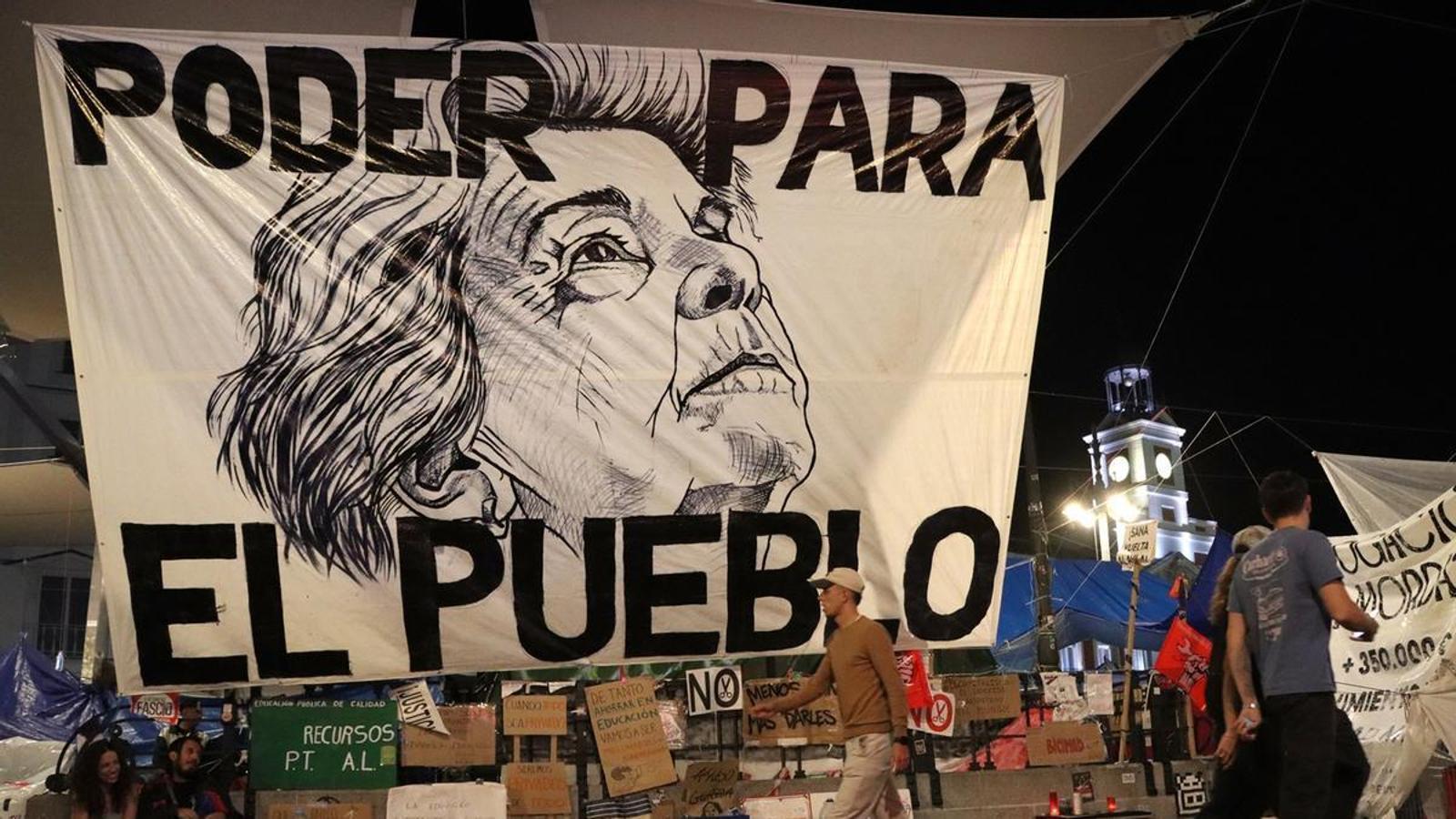

One of the pearls of wisdom from Baruch Spinoza's Ethics is the idea that "An emotion can neither be hindered nor removed unless by a contrary and stronger emotion than the emotion to be hindered". I believe this is the phrase I will repeat most to orient myself in this confusing electoral campaign that awaits us. Because it will soon be a couple of decades that the system's only response to the breakdown of the social contract is to frame the political debate as a struggle between the rationality of experts and centrist parties and the madness of extremists. And, naturally, the extremes have not stopped rising. Following Spinoza, the only way to save democracy (or, rather, to restore it) is to stop identifying it with dismissive rationality and to recover its scandalous and radical core.
There is no politics without emotions because politics is not the same as management. Managing is channeling the means to an end that has already been decided, but doing politics is deciding collectively what that end should be, which is always an uncertain bet for a different future that resolves the contradictions of the present. But, if there are contradictions in the present, and there will be again in the future, it is because human societies are an open field with interests and values impossible to reconcile in a utopia. Politics excites us and involves us because the social order is never completely closed, and in opening it in one direction or another, our lives are at stake.
The contradiction of the system that has driven us into current crises is characteristic of the type of capitalism we have ended up calling neoliberal. We thought that a certain combination of globalization, free market, and individualism would make us increasingly richer and more prosperous, but it turns out that what initially seemed to work is now making us increasingly poorer and disempowered. And, when the promise of perpetual growth has ceased to be credible, the new right has burst in with the proposal to try to save the few pieces of furniture we have left by excluding immigrants from the distribution of the crumbs. Needless to say, we can point out that this fantasy is a trap because it is useless to punish the weakest among us instead of organizing ourselves together into a majority that pushes to change the economic model that has failed us. But what must be repeated over and over again is that the decline of the classical rights in the face of the neoreactionary ones that so many mandarins lament is not the substitution of a rational model for an illogical one, but rather of faith in the market for faith in national purity.
Against the dilemma between retreading failed neoliberal centrism and surrendering to neo-fascism, there is the alternative of fighting for democracy. The problem is that, instead of giving the citizen the option to disengage from public affairs and delegate matters to the authority of markets, race, nation, or the supreme leader, democracy offers no consolation. Democracy is usually presented as the most stable system, but the paradox is that democracy is stable only when it opens its doors to a permanent excess, to the impossible desire to satisfy that the system lives up to the promise of radical equality among citizens that separates democracy from the rest of systems. Democracy that leans on professional politicians, bureaucrats, and experts becomes a new form of slavery.
Another paradox is that, precisely because it is the most demanding form of political organization, it is also the one that can summon the strongest emotions. Being informed citizens, monitoring power, participating in decisions, and establishing bonds of solidarity with those who are different from us is very tiring. But, as anyone who participated in the Procés and the 1st of October will know, that political power did not come from imagining what we would do with money we would earn by eliminating the fiscal deficit, but from the fact that we were all willing to leave passivity behind and take risks to change things. Reactionary ideologies mobilize very strong feelings of belonging, but, at the same time, they ask us to manufacture an internal enemy that, deep down, we all know perfectly well could be our ally. Radically democratic revolutions like the one we experienced in the Procés can go further because they reject this pettiness and open themselves to everyone.
The big problem with the elections we have ahead of us is that the dialectic between fascism and anti-fascism does not have enough depth. On one hand, Pedro Sánchez has interpreted the moment as if he had read Spinoza: he knows perfectly well that the old recipe does not work and that, to win, it is necessary to excite the political commitment of the citizens and make them feel that they are fighting for something more (whether he has more or less credibility after so many years at Moncloa is another matter). On the other hand, after a campaign of the "if you don't go, they come back" type like the ones the PSOE always does, if you reach power you no longer feel the obligation to do anything else and you can reinstall yourself in the old recipes.
On the other hand, in the struggles of housing unions to regain democratic control over markets, there is an agenda that is not exhausted by preventing the right from coming to power, but rather mobilizes everyone against the unfulfilled promises of all governments, regardless of their political stripe. Naturally, I have no idea whether this political breeding ground we are seeing in the streets will succeed where its predecessors failed. What I am clear about is that, to save democracy, electoral alternation between current parties is not enough, and even less so is calling on people to restore order and trust in the experts of the old system. The reactionary temptation is emotionally very strong; a radically democratic alternative would be even more so.
