Ensaimadas in the Raval, even more on journalism and literature

-
CAT -
CAST
Subscriber Mercè Piqueras sent me a complaint that raises a topic as important as the relationship between journalism and literature, a recurring theme in this section, which confirms that it is and will continue to be a subject of ongoing reflection and re-evaluation. Biologist Mercè Piqueras knows the world of the press very well; she is, after all, a remarkable communicator who has excelled in science communication and contributes to various media outlets. among them the NOWand distinguished with the IEC award. With a modesty that does her credit, she doesn't tell me her CV in the email.
Mercè Piqueras tells me: "Dear Reader's Advocate, I am not from Mallorca, but I have been offended as if I were by the words of Sebastià Alzamora inThis articleIn the opinion piece from the newspaper on January 5th, the author wrote about Corina Machado: "...she seems so avaricious and shameless that she could pass for someone from Mallorca." I don't know if it was a joke or a reference to some saying, but I don't care. Even as a joke, I find that comment inappropriate. I'd like to know what the newspaper's Readers' Advocate thinks. If a media outlet's freedom of expression consists of allowing comments of this kind, I might reconsider my subscription.
As prescribed by the Reader's Advocate protocol, I first requested the opinion of the person directly alluded to, Sebastià Alzamora, who responds as follows:
"I regret that this phrase in one of my articles caused the displeasure expressed by reader Mercè Piqueras, and above all, I apologize. My articles in ARA are not informative, but opinion pieces, and within the opinion genre, they attempt to maintain a foothold—sometimes slippery—between journalism and literature. They are valuable, and I dare say necessary, resources."
This excerpt from the article – Alzamora continues – focused on the enthusiasm with which Nobel laureate María Corina Machado invites American investors to speculate on the natural resources of her country, Venezuela. Since Mallorca, and the Balearic Islands, are a place where this type of speculation also occurs in a disorderly fashion, and since it is the Balearic Islands' own ruling elites who work – and even legislate – to make this happen, the ironic comparison seemed pertinent to me. It still seems so. Our reader may well decide that I am a bad columnist and a bad writer, she may refrain from reading my articles, but it would be a shame if she were to miss out on reading an entire newspaper of the high quality of ARA because of that. And there is no irony there.”
Sebastià Alzamora situates the problem on two coordinate axes that the virtual reality of a media simulator—I think we're almost at this stage—could intersect: opinion journalism and the literature that this genre allows, the "slippery crossing, sometimes." Albert Chillón, who was a professor at the UAB, in his book, which I would say is spectacular, on the subject, goes further and even includes an epigraph in the title:Literature and journalism: A tradition of promiscuous relationships". Chillón, with Sebastià Bernal, forty years ago already analyzed the topic in Creative informative journalism, which I keep among the bibles of the trade.
Journalism became a literary genre when—if I may quote myself—Mariano José de Larra committed suicide and John Wayne killed Liberty Valance. From prose in film, and from Romanticism to the New Journalism of America that led to the successful "nonfiction" brand, the vast field of rhetoric and tropes opened up, grappling with the strict protocols of an informative journalism that would excommunicate Alzamora for the comparison, odious according to popular wisdom.
However, Sebastià Alzamora is literary journalism and, moreover, being from Mallorca, we could infer that when he says what he says – and argues ut supra— he does so with the moral authority of a self-critical tone, unlike if the phrase in question came from a hostile outsider. Alzamora debuted with the Ciutat de Palma prize and has addressed his environment and geocultural context throughout his work, explicitly in the novel Miracle in Llucmajor, his hometown. On a general level, Alzamora is an author recognized by some of the most important awards in Catalan literature, with his striking vocabulary and syntax and extolling of Mallorcanisms, at the service of essential imagination.
Alzamora's daily column in ARA is a literary gem, as are those of Xavier Bosch, Najat El Hachmi, Ferran Sáez Mateu, Silvia Soler, Jordi Cabré, Albert Llimós, Carlota Gurt, Empar Moliner, Jordi Nopca, Toni Güell, and others. The interplay between journalism and literature is mutually enriching, evident both in works of fiction where reality permeates the narrative and in articles where fictional elements surprise and enrich the reading experience.
Journalism 3.0 is trending towards robotics, and AI is becoming a regular contributor. Statistics and figures have even permeated the sports genre, which, alongside the wholesome entertainment of the game, is increasingly succumbing to the tedium of accounting: today, reading an article about football can be as tedious as listening to a can of information about the latest supposed scientific breakthrough published in a prestigious indexed research journal... but which, thanks to professionals, can be deciphered.
Alongside journalism coolLiterary journalism is a counterweight and should be one of the specific contributions that sustain print publications, the mother of all writing. In the transfer of media that convey the message—the influence of where it is written on how it is written, following the prophet McLuhan—the novel tempers journalism to its liking, and can be so concise that a novel passes for a chronicle, as happened with the Diary of the Plague Year (1722), by Daniel Defoe, one of the paradigms of literary journalism. Conversely, the novelist or poet will situate their prose or verse within the realm of news and their reading habits, and it will not seem strange to them to register Corina Machado within the Mallorcan avarice, probably heir to that "avari poverty of Catalonia" ("of Catalonia, the avaricious poverty", in Sagarra's canonical translation) that Dante dedicated to us Divine Comedy, one of the masterpieces of world literature.
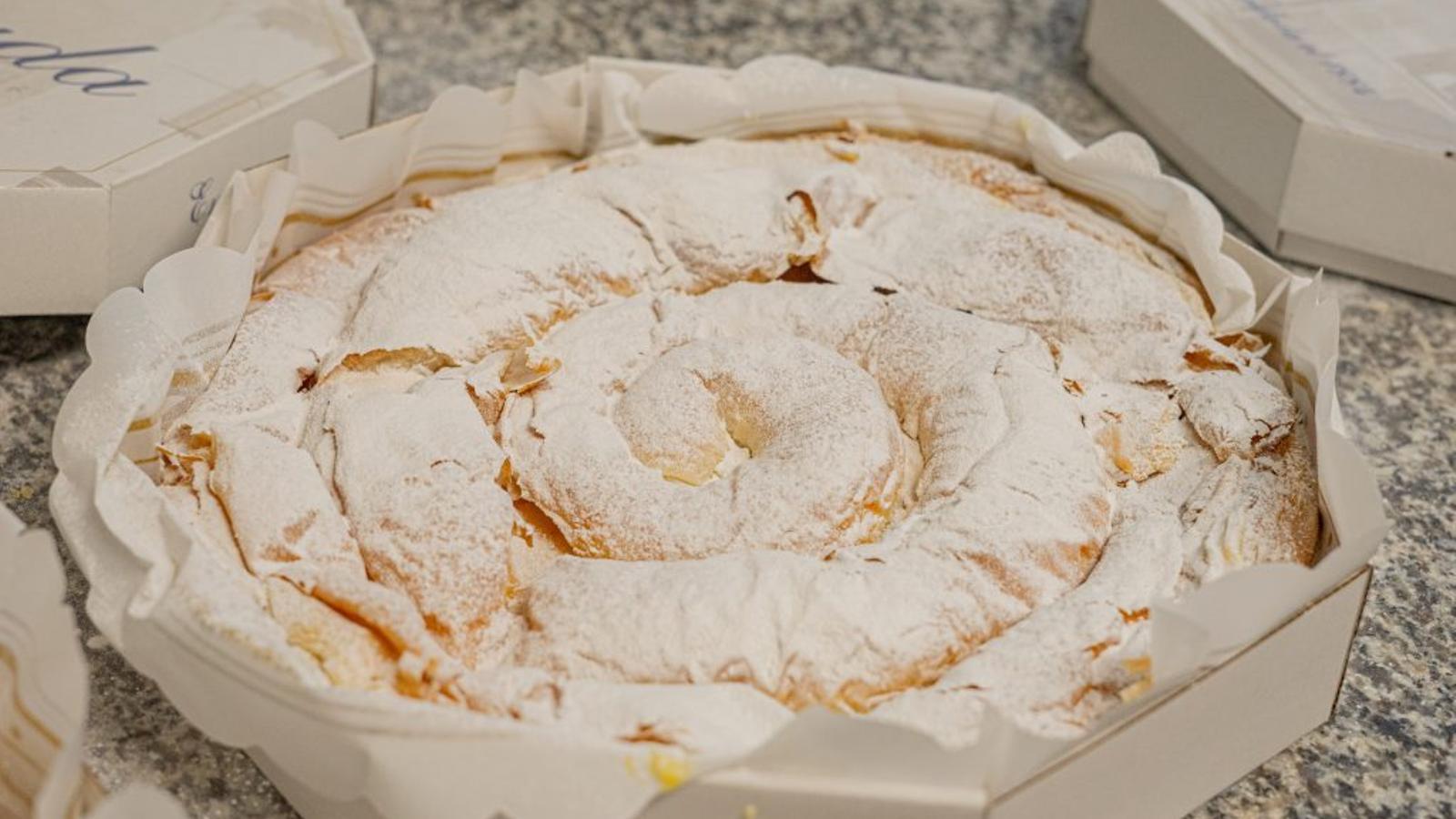
In conclusion, I can think of no better way to defend the general reader, and our specific reader, Mercè Piqueras, than, since she asked for my opinion, to advocate for keeping literature in our house of words, even though we sometimes logically and legitimately disagree with its style. And I would like to invite her and Sebastià Alzamora to breakfast, along with the magnificent Mallorcan ensaimadas, at La Grangeta del Raval, our friendly bar across from the office.
The Reader's Advocate pays attention to doubts, suggestions, criticisms, and complaints about the newspaper's content in its digital and print editions, and ensures that the handling of information is in accordance with the codes of ethics.
By contact the Reader's Advocate You can send an email to eldefensor@ara.cat or record a message of no more than one minute to the WhatsApp number 653784787. In all cases, identification with name, surname and ID number is required.
