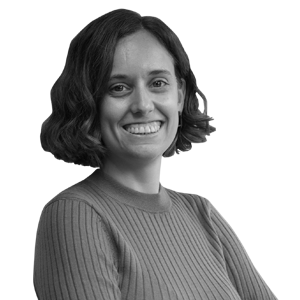
Anna Moliner: "Why are we so afraid to talk about being Catalan and to laugh at ourselves?"
Actress
-
CAT -
CAST
BarcelonaAnna Moliner (Badalona, 1984) has been a familiar face on screen and in Catalan theater for years. As she herself explains, she has been working hard for some time, and in recent weeks we have been able to see two of her most dramatic facets: the more dramatic one, with the premiere of the film Balandrau, vent salvatgeAnd the funniest one, with the series Amades DepartmentMoliner, who is carving out a niche for herself in 3Cat's offerings, is unstoppable and is already immersed in rehearsals for a theater project. Amades Department You play Dolça, one of the workers in the Folklore and Traditions department of the Generalitat. How did you get the project?Before I even read the script, I got a call from Júlia Cot, co-creator of the series with Jordi López Casanovas. She and I had studied audiovisual communication together at Pompeu Fabra University more than twenty years ago. We'd always gotten along really well, right from the first year. Some people just have a natural talent, and in Júlia's case, she was already writing humor brilliantly. I ended up there [in the program] because of that whole "go to university" thing, even though I was pretty sure I wanted to be an actress. During my internships, I always acted in whatever they assigned me. Júlia and I always got along great, but we lost touch after we graduated. I like to make lists of dreams and projects, and once on one of them I wrote: "do a project with Júlia." And then I got her call, and she sent me the script. I thought it was the most original idea I'd ever read. What did you like about the project?When you've spent years working hard at something, being offered a lead role is always especially exciting. I love comedy, and I always defend it as something difficult to do, but I believe it gives meaning to our lives. I can't imagine our lives without a sense of humor. It's a series made with very limited resources, but something magical happened; we had a lot of faith in it. I'm thrilled to see that, even though it's a small series, it's getting a really good response from people. We're dreaming of making another season. The series deals with Catalan folklore and culture. Are fictional works that focus on local themes the ones that best connect with viewers?I've always thought we lacked series that reflected our own culture. We look too much to foreign productions—I'm the first to admit I'm constantly watching American and British series—but we need to believe that we can make series about ourselves. Why are we so afraid to talk about being Catalan and laughing at ourselves? To finally have an identity, to believe in ourselves, and to write about ourselves? For me, that was also a very important aspect of this project: to be able to create a collective imaginary that we could all identify with and not be afraid to talk about and laugh about. How much did you know about Catalan folklore before making the series?I was doing terribly, I would have failed! [laughs] I'm glad that Catalan folklore is being talked about more now and is experiencing a resurgence with exhibitions and books. I think that what is local can be universal if it's well done and if the stories are based on what we know. I had to take an intensive course because Dolça couldn't be more of an expert. Dolça is an enthusiastic person. Do you see yourself reflected in that enthusiasm?Júlia and Jordi would tell you that I was driven from the very beginning. If you do this job, it's because you have passion and motivation, because otherwise, how do you do it, being so dedicated and artistic? But I was definitely influenced a bit by Dolça's spirit. We called her "driven" because, for her, the Folklore and Traditions department is like the FBI. She thinks what she does is the most important thing in the world, but I think that, even as an actress, it's what I like to be. If you do something, you go all in. She's somewhat reminiscent of the protagonist of Parks and recreation, the comedy by Amy Poehler.I hadn't seen this series before; I watched it when Júlia told me about it, and it's a major influence on Dolça. I've fallen in love with this actress. I adore actresses like this who are so talented and have no qualms about being silly, putting themselves in ridiculous situations, and playing like children. Dolça is excited about traditions. What excites you?So many things! It's moving to understand life through this artistic vocation; it's very much a part of me. Seeing that the work you do connects with people. I went to filming every day highly motivated, even though we were exhausted because we had very little time to record and were very stressed. We were on a very tight budget; it was what we had, and we accepted it. We overcame this difficulty with motivation. You wrote on social media a while ago that kindness moves you. Why?Yes, I'm moved by good people, by tenderness, by solidarity. Our work isn't selfish; it's work that has to be done generously and with others in mind. I always say that I like working with talented people, but above all, with good people. But we've always had this myth that great geniuses have the power to be terrible people and that they can mistreat you. Do we need to break with this idea?For me, yes. It happens more and more often that, even if I greatly admire an actor, if I meet them personally and they're an idiot, I'm no longer interested. I prefer working with good people. I think that, generally, being in an environment where you can be yourself, without judgment or envy, is a completely different story. When that's not the case, my ideal is shattered. Are you a big liar?I've never been much of one, but if Meryl Streep showed up here right now, I'd have a fit. Especially with Hollywood actors, it's inevitable to idolize them a little, but you eventually learn that we're all human and everyone has their flaws. You've done musical theatre. Do you think Catalonia is currently experiencing a particularly good period for this genre?It might seem like I've done a lot of musical theater, but I haven't done that much. The thing is, since I sing, I've often sung in shows. I have a love-hate relationship with musicals: I'm passionate about them; I think that in terms of live performance, they're one of the most impressive things you can see in theater, but sometimes I don't really identify with how musicals are done here. Generally speaking, I think there's a lot of emphasis on good singing and dancing, and sometimes the acting is neglected; and, for me, it's the complete opposite. For me, a musical is a play, and I'm interested in seeing actors. Then there's a score that has to be followed, obviously, but above all, it has to be interpreted. I think we have some incredible musicals right now, and if things are moving in this direction, fantastic. And musicals in Catalan. We have a wonderful tradition of companies, like Dagoll Dagom, for example, that have created a shared world that we all feel a part of. We shouldn't stop doing that, but it's also true that producing a musical is very expensive. It's a vicious cycle. I hope we can continue to feel that musicals are part of our culture. After studying audiovisual communication, have you ever considered doing what Júlia Cot did and writing or directing?I have a degree and I've never done anything, even though my job is related. I have to tell you, the years go by and you reach an age where you say, "Now I really feel ready." I don't know what for: directing, writing... but definitely more personal projects and not just waiting for the phone to ring. Hopefully, it's on the list. On your bucket list of things you'd like to do! Is that list very long?It's renewed every year. It's a bit of a ritual. There are some wishes that keep coming back year after year, and you think, "Oh, this one's still here, how annoying!" Have you ever been able to fulfill them all?Not all of them, never, it's impossible. A year is only so long. But you have caught me at a time when the next thing I'd like to do is start my own project, or at least start thinking about it and developing it. You were talking earlier about how much you like comedy, but I think your favorite book is Anna Karenina And your favorite series is Two meters undergroundThere's not much comedy here...Wow, I seem super intense! [laughs] Let's see, Two meters underground It has some comedic moments, but Anna Karenina it's a melodramaThat's true. I'd have to add some comedy. After Parks and recreation I saw the The office American, who had only seen the British one, the one with Ricky Gervais. Steve Carell is my favorite type of actor because he can do a sublime comedy and then you see him in other roles and you love him. Your sister is Núria Moliner, who is dedicated to communication and the dissemination of architectureYou're both well-known and often compared. Are you starting to get tired of it?No, we find it hilarious. We admire each other a lot. Even though there's a bit of an age gap [Anna is seven and a half years older than Núria], we've always helped each other a lot and given each other advice. Núria studied architecture, and we were all surprised when she started appearing in the media. Sometimes I tell her she's a bit of an actress too because we both communicate well. I'm so proud that she's forged a path that no one had laid out for her: she's an architect, she decides not to build, and on top of that, she hosts TV shows and starts a production company. Wow, it's admirable! What you both share is your relationship with music.We've always been grateful to our parents. We loved to sing, my parents loved music, and they enrolled us in music lessons. We have a very basic musical background, but we both played the piano at one point. Núria plays much better than I do. She's made three albums, I've made one, but music has always been a tool I've used as an actress. It's another language we have to express ourselves. Is there a song that unites you?I'll tell you two. When we were little we liked a series called Forced Parents And the opening song. During the credits, the characters appeared as if in a garden, and every time we saw a patch of grass, we'd jump down and sing the song. And then one of the songs from the musical. Hairspray, Good morning BaltimoreThe protagonist sings it with such enthusiasm. We're back to the "enthusiasm" part! Sometimes, we used to sing it together at home.
