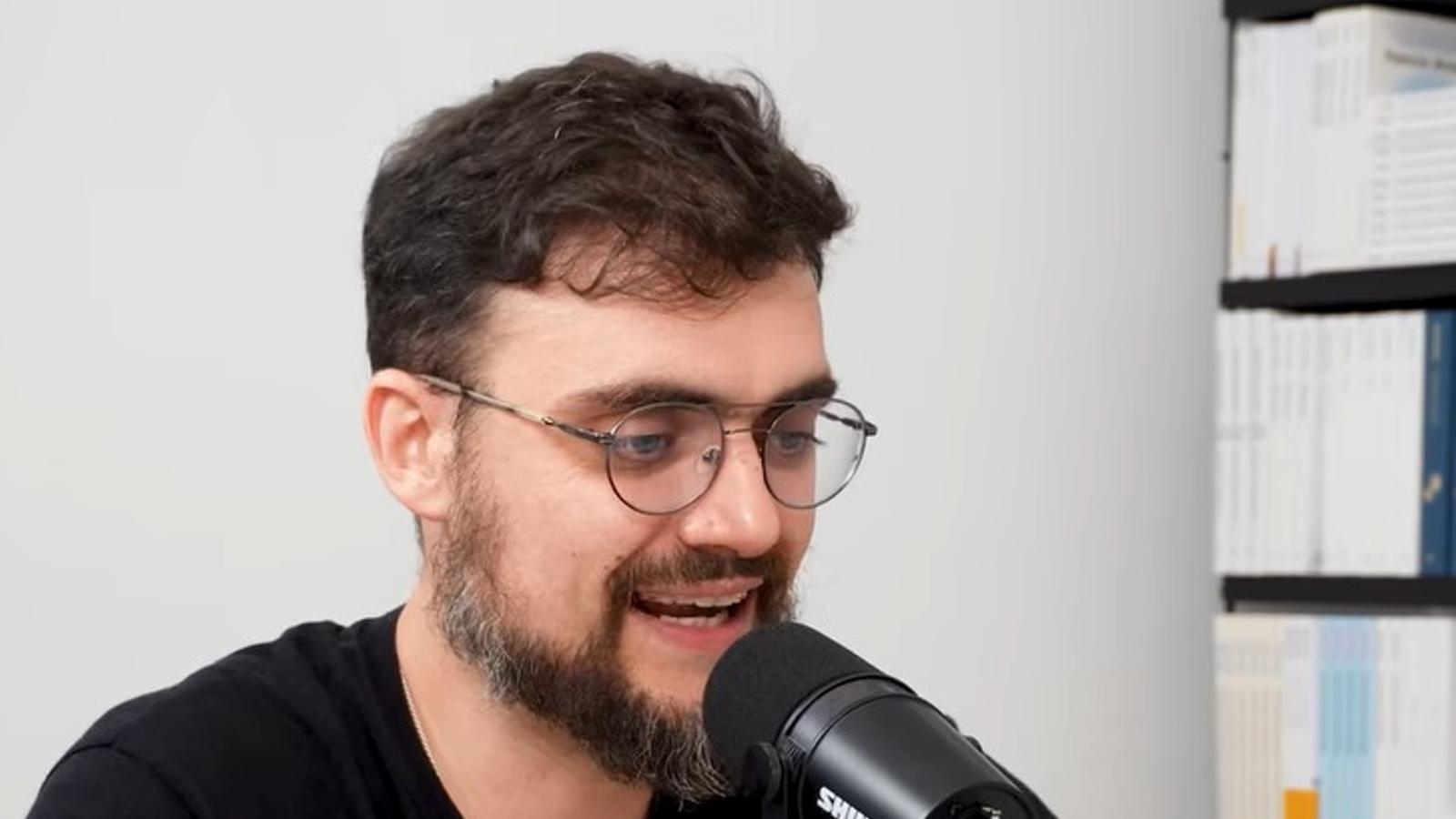

Ernesto Castro is a young philosopher who achieved some success as an youtuber discussing contemporary cultural issues. Recently, he went viral for explaining his conversion to Catholicism, and various newspapers have interviewed him. El País did so via questionnaire, at his express request, and the result is a piece where the problem of not having the subject in front of you becomes evident: Castro took the opportunity to troll the newspaper with every few answers. "You journalists will know why these fifteen minutes of shit and mud that the internet has reserved for all of us alive in this century are now being thrown at me," he snapped. Or: "If the press says so, it must be true, right? Thank goodness for rigorous newspapers! What would our lives be like without fact checking?" And when asked how his parents had taken it, he replied: "Excuse me, but is this interview for El País or for ¡Hola!?" The journalist also asked how his 170,000 subscribers had received this conversion, and he said sarcastically: "I don't know, I don't know them all. We'll have to ask them one by one. A new challenge for investigative journalism this millennium." Days earlier, in El Mundo, he dismissed it in a similar way. "It's clear that in the art of interviewing, competition isn't very fierce," he let slip to the journalist.
Interviewing someone by questionnaire should be a last resort, well-justified. Otherwise, any sense of conversation is broken, you have no guarantee that he really answered it, spontaneity is lost, and the other person has all the time in the world to construct their discourse by editing and reviewing at their convenience, knowing that no one will challenge them. Since we've sometimes talked about interviewers who take a thousand liberties and invent half the answers, today it's time to point out the opposite case, which involves renouncing the basic element of any conversation: follow-up questions.
