Farewell to Soledad Gallego-Díaz, soul of 'El País'
The journalist was one of the architects of the great scoop of the Transition
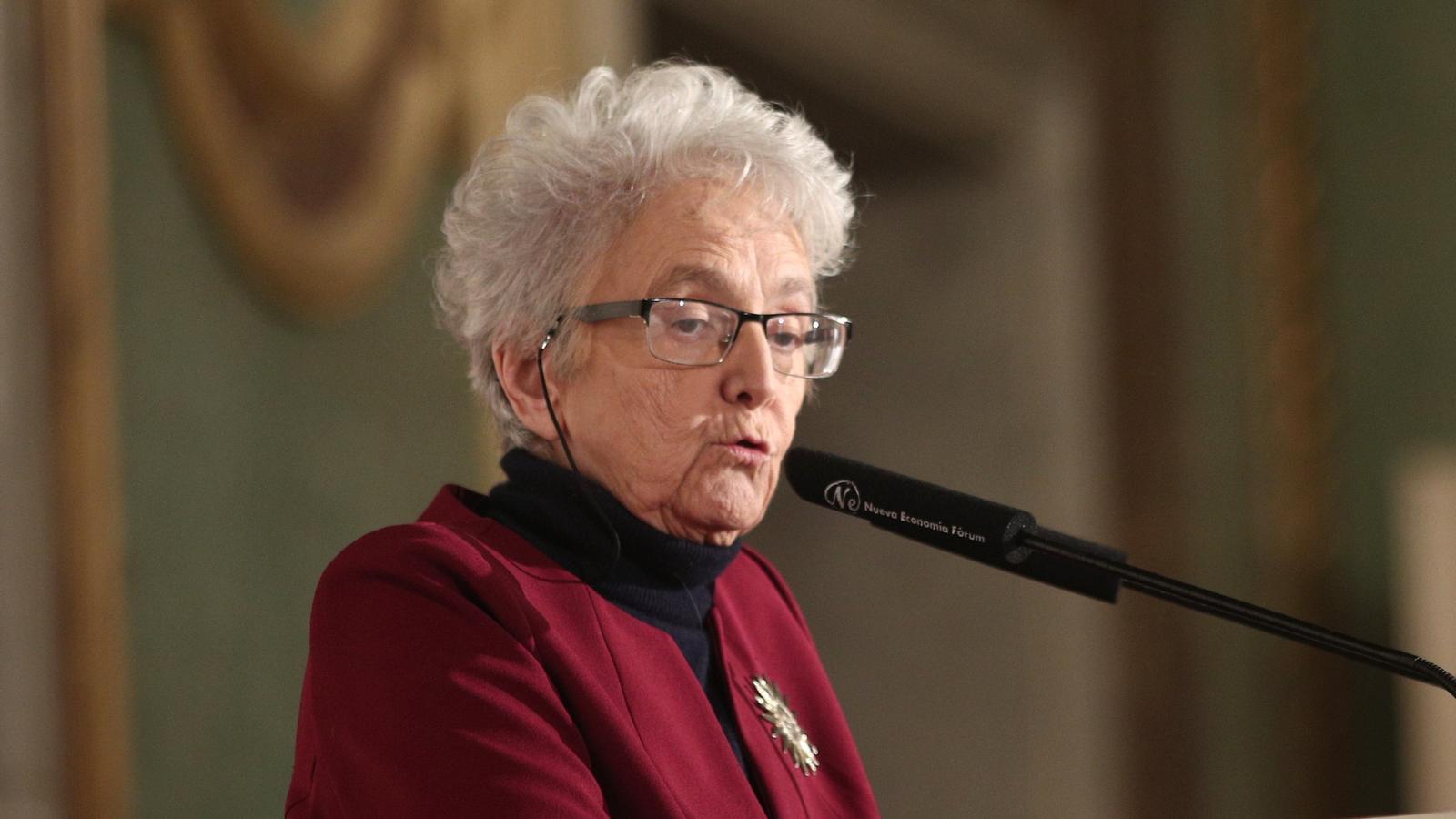

BarcelonaSoledad Gallego-Díaz was director of El País for only two years and one week (from June 8, 2018, to June 15, 2020) of the half-century that the newspaper is celebrating these days, but she is possibly the journalist who best embodies the professional and ideological values that allowed the newspaper to establish itself as the best-selling daily in Spain. In fact, she reached the top position when she was already partially retired – after having rejected it in the late eighties – with the mission of returning the newspaper to its foundational progressive ideology, after the period of open hostility with Pedro Sánchez and the PSOE during the tenure of her predecessor, Antonio Caño. The journalist died this Tuesday, at the age of 75, victim of cancer.
Her career is inextricably linked to the Transition, as she was one of those responsible for the most important exclusive of the time: the publication, in Cuadernos para el diálogo, of the draft of the Constitution that was kept under lock and key. Airing that secret text allowed for public debate on what would become the Spanish magna carta. Gallego-Díaz joined El País at its beginnings and there she worked as a reporter and political chronicler, but also as deputy director to Juan Luis Cebrián, Joaquín Estefanía and Jesús Ceberio, in addition to being a correspondent in Brussels, London, Paris, New York and Buenos Aires, a professor at the journalism school promoted by the newspaper, a delegate in Seville, an editorialist and the readers' advocate.
Her mastery of journalism involved defending the value of truth in these times of relativism and looking with skepticism at some of the vapid digital trends. “In my youth, I would have been very angry if I had been told that journalists wanted to have a brand, because I would have thought they were mistaking me for a detergent. Back then, what we wanted to have was a signature,” she said. And she was clear that one of the current problems is that of noise: “The objective of journalism is to turn a multitude of news into information”.
"She was the best journalist in Spain, by far," Enric González, a former journalist for El País, valued for ARA. "She embodied the ethical conscience of a newspaper that has gone through difficult times in that regard. She was the person you could go to: sensible, intelligent, bitchy when she wanted to be... Because the lady was tough, but I loved her very much".
Despite being the shortest-serving director, she was not in terms of impact: during her tenure, the newspaper incorporated the paywall, faced the challenge of covering the pandemic, and drove a revamp of the newsroom, leveraging the authority she held among the journalists of El País. Her acceptance was evident in the results of the mandatory but non-binding consultation held with her staff when a director is appointed: she obtained 97% of favorable votes and only six against, with two blank votes. The contrast with Caño was stark, who four years earlier had only achieved 42.9% of favorable votes.
Her team spirit was evident on the day she collected the Ortega y Gasset award presented by the newspaper itself, one of the many accolades she received over a five-decade career. "I used to tell them that I have always been a journalist of information, or perhaps I should say, a newsroom journalist," she would declare then. "And I want to pay a special tribute here to newsrooms. It is the newsrooms that make media outlets great. Being part of a newsroom means working for a collective and sharing a commitment, it implies a complicity and the same way of conceiving this profession, the same culture and the same respect for the procedures, the essential rules of this craft."
