Contemporary art with bread and tomato
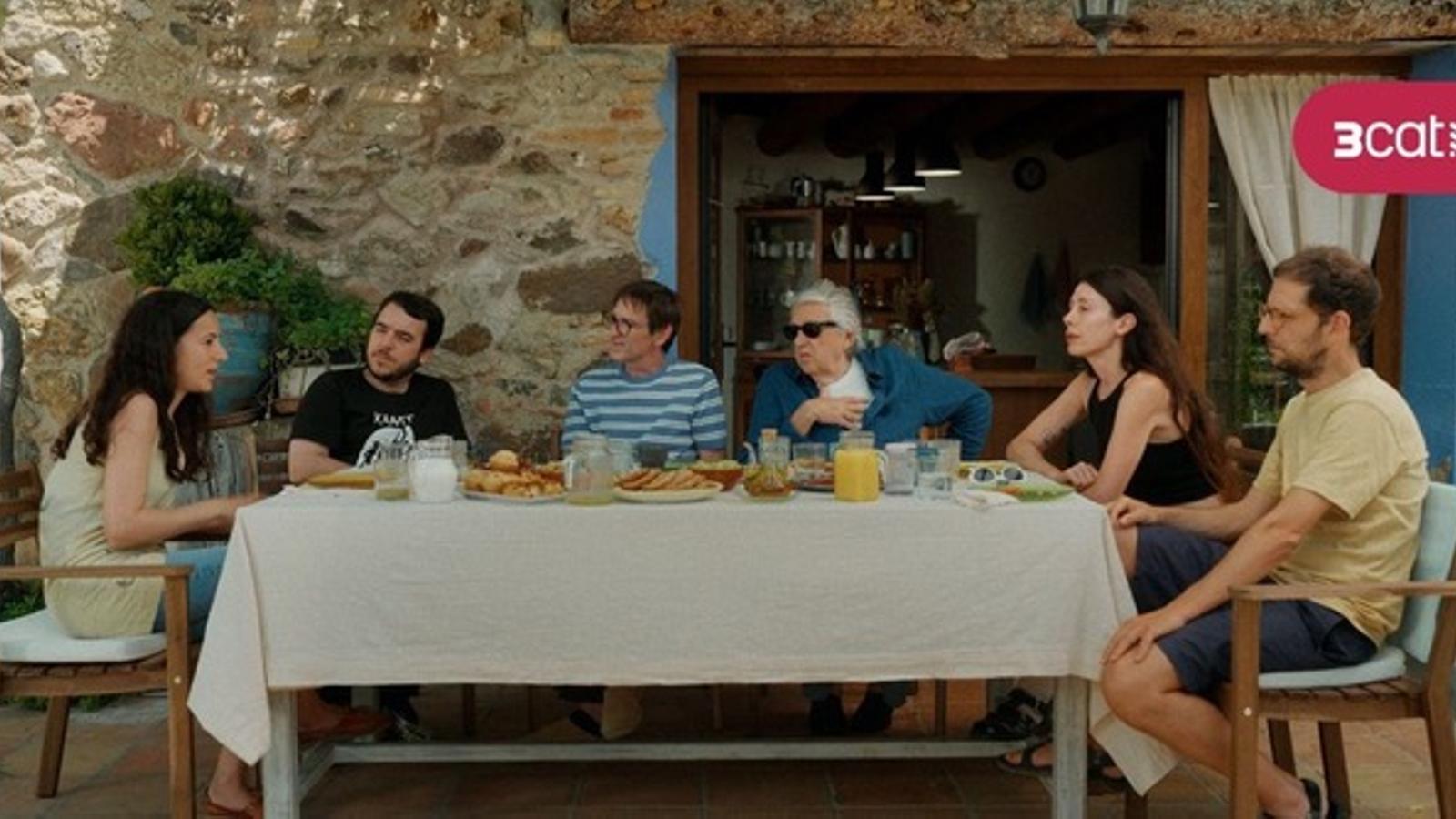

Channel 33 has premiered Sala 30, a cultural program commemorating the Macba's 30th anniversary. To celebrate, the series approaches the anniversary through reflection rather than festivity or protest. These are eight forty-minute episodes that delve into different working axes of creative processes: form and substance, struggle, concept, enigma, gaze, space, body, and research. Each program invites four or five relevant artists who have passed through the museum to engage in a dialogue about these themes in a rural and bucolic setting that contrasts with the geometric and urban whiteness of the Museu d'Art Contemporani de Barcelona building: a farmhouse and a set table with the elegant informality of a heartwarming fuet advertisement. The visual execution, from direction to editing and post-production, is beautiful and surprisingly quaint. It could be a podcast if it weren't for the need to see the guests' work to understand their proposals and their point of view in the conversation. Sala 30 connects with the aesthetic spirit of that old splendor of Channel 33, when it still seemed like a cohesive channel with a well-defined editorial line. The presenter is the singer and actor Albert Pla in his most accommodating and predisposed version. Surely, it is also his most strenuous and unusual facet because it is he who has to stimulate the debate among the guests. Pla has no choice but to flee from his more diffuse and anarchic media persona to energize the conversation, often fighting against his own shyness. The choice of presenter seems to obey a desire not to over-intellectualize the format and to give it a more relaxed and popular touch. "I'm the one with the least studies at this table," he comments with a sense of humor in the first chapter. The program always begins with a dialogue between Pla and one of the artists to introduce the chapter's theme. Afterwards, with the food ready and the table set, the rest of the guests arrive. It's interesting to see how they break the ice among themselves, in most cases, one of the most difficult moments for the presenter, to the point that in some episodes he asks them if the act of meeting and dialoguing overwhelms them or feels burdensome. The effectiveness of the format is irregular depending on the chemistry that arises between the guests and the ability to find a flowing thread. For those interested in art and culture, it is a magnificent opportunity to discover contemporary artists, understand generational evolutions and learn about forms of creation and research. Beyond the central theme, Sala 30 allows us to glimpse ways of life, creative processes and disciplines. Manolo Laguillo, Pilar Aymerich, Joan Fontcuberta, Frederic Amat, Núria Güell, Lúa Coderch, Laia Abril and a long etcetera parade around the set table of the farmhouse. Almost forty artists in a television proposal that seems too conventional, conservative and cautious for a program about Macba and contemporary art, which usually questions languages, experiments with codes and avoids neutrality.
