Between the grotesque and indoctrination
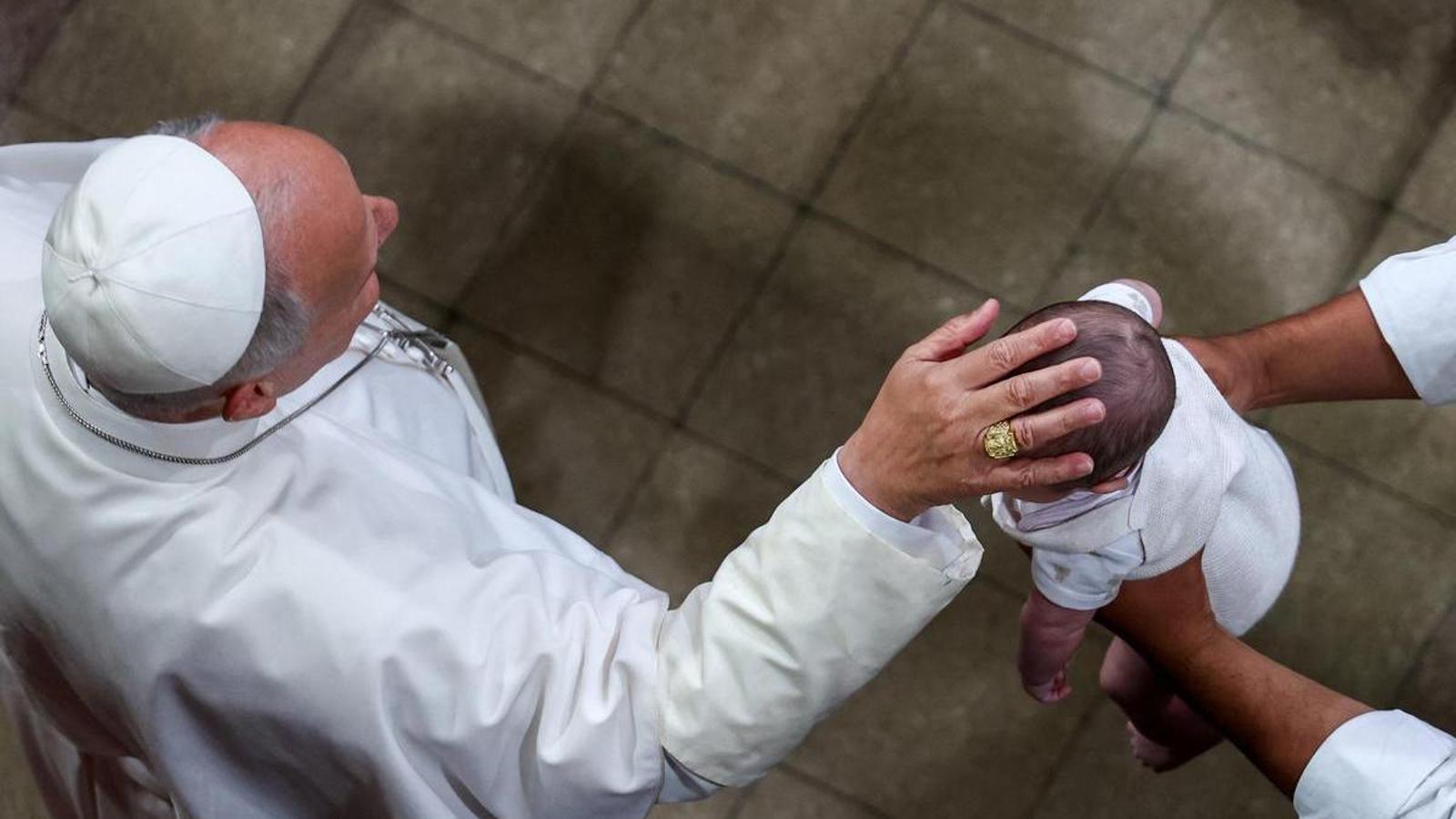

The visit of Pope Leo XIV to Madrid and Catalonia has turned public television into Vatican TV. And not only because of the hours they are dedicating to covering the event, but because of a treatment more akin to catechists than journalists, dragged uncritically by the show. The level of inflammation became grotesque in the pontiff's meeting with the diocesan community of Madrid at the Santiago Bernabéu. Any religious act practiced en masse in a stadium (it also applies to Barcelona's Lluís Companys) is of a disturbing industrialism that exposes the most fragile gears. The supposed recollection becomes a cathartic act of indoctrination through offerings of dubious results. In Madrid, the production brought the camera to the throat of David Bustamante, who sang with ecstatic shrieks that caused bewilderment. The most regrettable came with a kind of football choreography narrated by Manolo Lama and Paco González with a traditional passion that caused secondhand embarrassment. Through a ridiculous metaphor, they sang the supposed goals of the Church: “An open parish! Perfect attendance against loneliness! Goal! Goal! Goal! Goooal! [...] Next play, Paquito! Full dining room! No one asks where it comes from! They welcome you with a smile and make you feel at home! [...] Impeccable finish! Goal against inequality!” It is a disturbing infantilism.At Montjuïc it was not much different. The only thing that marked cultural differences were the Castellers de Vilafranca, with a tower so far from the Pope that the visual and emotional impact of this tradition was lost.It is understandable that the visit to Montserrat, perfectly carried out, was as it was. It is what befits the institution and television is limited to showing it. But the television wrapping of Tot es mou, with views of the Sagrada Família, was cloying. At TV3, broadcasts have forgotten the non-believing spectator or one disconnected from the Church. An audience, incidentally, for whom they have left few alternatives. On Wednesday morning, Helena Garcia Melero's program, imbued with a kind of celestial spirit, gradually lost its tone until it deflated. Public television should not force this transcendence. That is the job of the Church, not journalists. Even the program's team seemed dressed to go to a baptism. Melero, moved and excited, interviewed some experts with a discourse more suited to evangelization and indoctrination than to the desire to disseminate to the general public. They subjected us to an intensive and soporific course in catechism, but also very revealing. "The person who is visiting Catalonia and Barcelona, who need it so much these days, is precisely Jesus," they even told us. The banality and emptiness of the messages, typical of the most basic self-help, connect only with those who are already convinced. For the rest, good luck. There's less to go.
