20 years of 'The Wheel of Fortune', the contest that for two decades has seen millions of viewers have lunch
We discover 10 curiosities of the program and we review its trajectory
-
CAT -
CAST
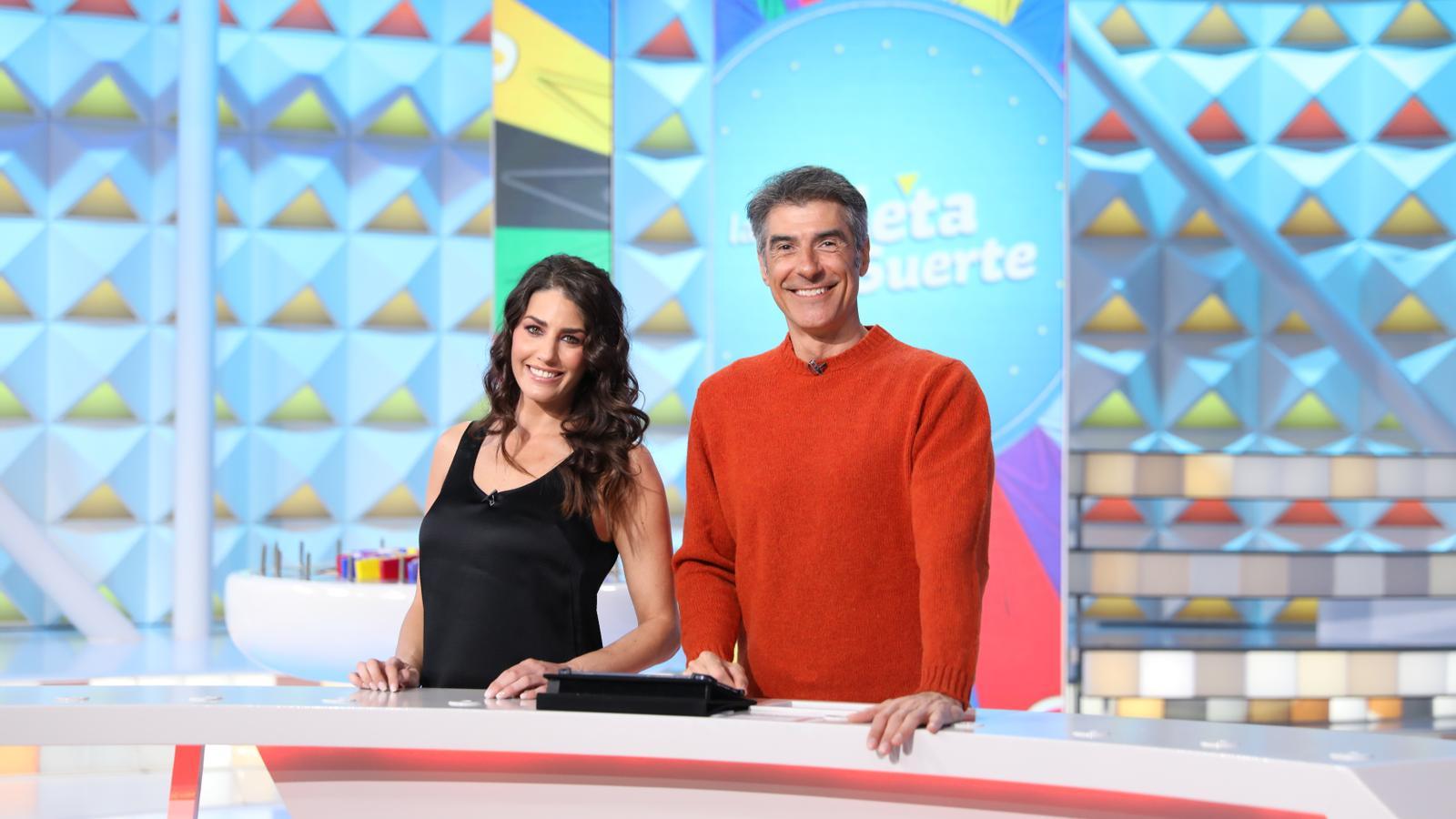
La ruleta de la suerte is celebrating: twenty consecutive years being one of the most successful programs on state television. It can long be considered a symbol of morning television entertainment, while also being one of the longest-running programs on the current grid.
Last Friday, the program aired the special episode for its anniversary on Antena 3. The show is based on an American formula that has evolved over the years, and which has not faltered throughout its trajectory. If we go no further, the previous season achieved a national average of 21.6% audience share, with an average of 1,564,000 viewers and more than 3,137,000 unique viewers; its best season since 2009. For the fourth consecutive year, the program achieves at least a 20% share, a figure that few television shows have the pride of achieving. At the same time, it has consecutively led its time slot for months uninterruptedly since May 2020.
La ruleta, like every anniversary, airs a special program, with surprises and many thanks. Last Friday, the episode opened with American announcer Jim Thornton, who since 2011 has been the voice of The wheel of fortune,the original format that has been airing for 43 years. The program also had special prizes prepared which, in thousands of euros, coincided with the number of years the show had been running. However, none of the three contestants managed to take home this amount.
When does the program format really begin?
We have to go back to 1975, when television presenter Merv Griffin created the show and managed to air it for the first time, on January 6 of the same year, on the National Broadcasting Company (NBC), in the United States. The first presenter of the format was Chuck Woolery, accompanied by Susan Stafford as co-host. Within a few years, adaptations of the show had already been made in more than 20 countries.
The program lands in Spain in 1990, under the name of La ruleta de la fortuna, and its journey is divided into three stages marked by the exchange between networks. It is broadcast for the first time on Antena 3, which becomes the first private television channel in the country to broadcast it. It remained on the air for two seasons, a time when the program had presenters such as Mayra Gómez Kemp – popular for Un, dos, tres... responda otra vez–, Ramón García and Belén Rueda, among others.

After two years, Telecinco took over and kept the program on its lineup for four more seasons. The most renowned presenters of this era are Fernando Esteso and Jesús Vázquez. In 1997, the show closed its doors and was out of circulation for practically a decade. In 2006, the show returned to Antena 3 with a name change – it went from being La ruleta de la fortuna to being La ruleta de la suerte–, with more interaction with the audience and a live band that has remained until this day, as well as its sole presenter, Jorge Fernández, the figure at the helm of the show's success for these twenty years.
For five years now, Antena 3 has been expanding the program's universe and bringing it to weekends by recycling weekday episodes. Furthermore, in October 2024, it made the leap to prime time with La ruleta de la suerte noche, also with an audience and a set filled with neon lights and a shining sun. The format, however, remains the same as the daytime version.
Who were the presenters before joining 'La ruleta'?
Jorge Fernández, born in Alicante but raised in Arrasate (Gipuzkoa), began his artistic career in 1999, after obtaining the title of Míster España. He made his television debut participating in 7 vidas, later presenting La ruleta and Esta casa era una ruina. But Fernández was not born a presenter. He graduated in physical education from the University of the Basque Country (UPV) and taught physical education for a year in a school in Vitoria.
After combining his studies with basketball, at twenty-five years old he debuted as an ACB professional with Saski Baskonia in the 97-98 season. A year later, he began working in a modeling agency in San Sebastián. Consolidated as a television presenter in 2006, the Basque received the Ondas award for best television presenter in 2008 and the Antena de Oro the following year.
What is the success of the show due to?
In an interview with El Confidencial, the program's director, Nacho Correa, attributes the success of La ruleta de la suerte to his team, which has kept almost all its members since the beginning, where everyone contributes ideas for the program's reinvention, thus avoiding content stagnation. Likewise, all proposals must first go through the format's owners. Periodically, he explains, all the program's representatives from the different countries where it is broadcast meet at a convention with the intention of comparing formats, presenting new initiatives, discussing audience response, and continuing to grow the reach of the formula.
The director also recalled 2020, when the pandemic forced a rethink of the program's execution. Correa explained that audiences increased because people who normally worked in person during that time slot, confined at home, discovered them and became loyal. It is a dynamic and family-friendly format that has managed to survive changes in television consumption habits and connect with various generations of viewers, and it seems it will continue to do so for many years to come.
- The contest has awarded more than 23 million euros in prizes – and has exceeded 24 million if we include the broadcasts of La ruleta de la suerte noche–. The two biggest prizes were awarded in 2025, with 39,350 euros, and in 2024, with 36,650 euros.
- A total of 43 cars have been given away.
- Almost 4,700 programs have been broadcast and there have been more than 15,000 contestants.
- The roulette wheel has 24 divisions and weighs 250 kilos.
- The technical team had to minimize the noise of the roulette wheel to avoid hearing damage to Jorge Fernández.
- The musical band – formed by Joaquín Padilla (vocals and guitar), along with Chema Bejarano (keyboards) and José del Val (drums) – has performed more than 6,000 songs.
- The screen is not touch-sensitive. The letters are always revealed in reading order.
- The program's highest historical audience was during the pandemic, on April 2, 2020, when it reached an average of 2,138,000 viewers.
- Three scriptwriters create the panels and each one is responsible for creating an entire program. They are contrasted with a database to avoid repetition.
- According to the program's director, Nacho Correa, there are no sponsorships. All prizes (car, radio, scale...) are paid for by Antena 3.
